
WBH - Waste Bag Holder
Obliczymy ostateczną cenę na podstawie wybranego pliku. Sprawdzisz ją i zaakceptujesz przed płatnością.
Orientacyjna cena wydruku pliku
0,80 € – 0,97 € netto (bez VAT)
Dla pliku: waste-bag-holder_2of2_0.4n_0.2mm_PLA_MINIIS_36m.gcode
To wstępna wycena jednego pliku. Dokładną cenę poznasz przed zamówieniem.
Plik i założenia wyceny
Plik użyty do wyceny
Średnia wycena orientacyjna: 0,88 € netto (środek widełek).
- Masa podana przez autora
- 17 g
- Czas druku podany przez autora
- 36 min
- Materiał u źródła
- PLA
- Materiał wyceny
- PLA
- Drukarka wyceny
- Bambu Lab P1S - 0.4 nozzle
- Proces wyceny
- 0.20mm Standard
Orientacyjna wycena wyłącznie wybranego pliku, oparta na masie i czasie druku podanych przez autora. Warianty plików nie są sumowane. Ostateczna cena zostanie obliczona po analizie pliku.
Zapisane na tym urządzeniu.

Stable, efficient, and adaptable parametric design—perfect for keeping your workspace clean and organized
- Ocena
- 5 / 5
- Polubienia
- 909
- Pobrania
- 2094
- Wydruki
- 17
- Wyświetlenia
- 11 894
- Oceny
- 17
Aktualizacja u źródła:
Informacje o modelu
- Źródło
- Printables
- Kategoria
- Office
- Licencja
- Creative Commons — Attribution — Share Alike
I came across an idea about workflow optimizations in a YouTube video, which made me reflect on the mess that often accumulates around my 3D printers—purge lines, skirts, and the occasional failed first layer every few months.
I tried using boxes in the past but PETG is typically not compliant enough to stay in a small container. This sparked a new interest in the topic and I came up with a series of prototypes that finally lead to this design:
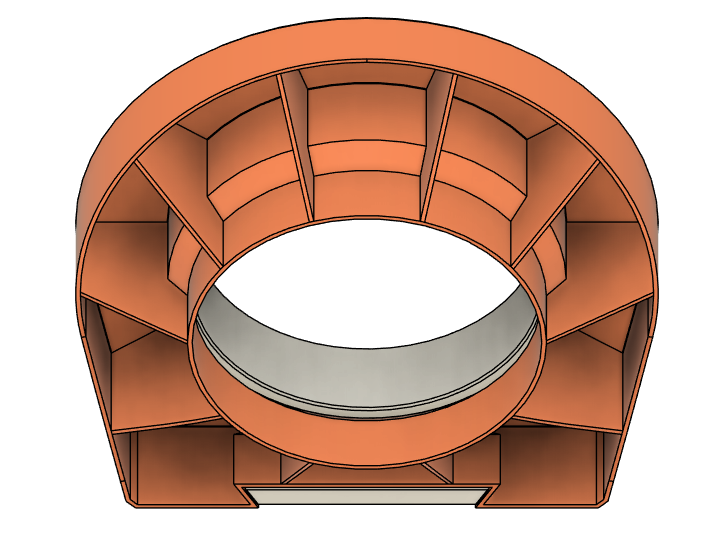
Features
This design focuses on balancing functionality, efficiency, and adaptability. Each feature has been carefully considered to ensure reliable printability, low material usage, and strong structural performance. The CAD model is designed to work well for its intended purpose while remaining flexible enough for customization. Below is a closer look at the main design elements.
Lofted Ribs
The most interesting feature of this design are the lofted ribs. They connect the inner ring and outer walls for a maximum in stability while maintaining excellent printability and low material consumption. As with all my models, a usable Fusion 360 file is just as important as the functioning in my specific use case. Finding a way to keep the CAD model resilient enough to handle most parameter combinations took countless iterations.

No Supports, Printable Overhangs
Much has changed in the last few years about what is considered a "printable overhang." While modern machines print 40° (measured from the build plate) well enough to be the standard setting in PrusaSlicer, I still think thin-walled models work best by keeping slopes above 50°. Nonetheless, the parameter printableOverhang is used for every slanted surface. If you like to, you could change it.

Consistent Wall Thickness
All vertical walls in this model are generated using the wallThickness parameter as a value for Thicken/Shell commands . On non-vertical surfaces this would lead to a line-width inconsistency that was addressed where necessary.
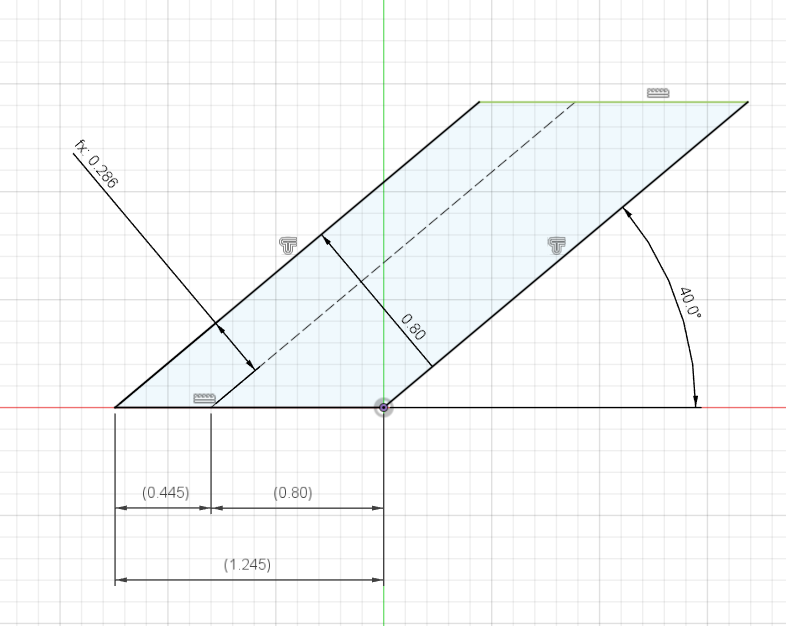
Fully Parametric
Apart from the overall shape, almost all dimensions can be altered without breaking any features. E.g. innerDiameter, ribCount, baseHeight and frontHeight

Print Instructions
The provided STL files are optimized for a 0.4 mm nozzle, all walls are designed to be 0.8 mm in thickness. If you plan on printing this model with thicker walls, I recommend adjusting the wallThickness parameter in the Fusion 360 file. The STL files are all already oriented as intended. When printing a custom backplate, make sure that the steep angle at the top is not printed as an overhang. Material-wise PETG, PLA, ABS/ASA will all work fine. In my testing I had one delamination with a backplate printed in PLA but if printed dry and at the right temperature that shouldn't be an issue.
Customization
Parameter names starting with _ are model-internal calculations and are there for documentation purposed, don't change these. All other parameters can be modified.
The file it surprisingly stable to even bigger changes, some may still break individual features. If that happens start resolving the conflicts in the timeline from left to right, some may clean up by themselves.
If you reduce the
innerDiameteryou will most likely need to changemountingPlateWidthas well.-When you change the
ribCountparameter, the last Combine Feature will throw a warning. Increasing the value requires updating the feature by selecting the additionally created ribs when decreasing the value, recalculate the feature by double-clicking it in the timeline and confirming it.
Variation: Waste Bag Holder for Festool MFT 3
I initially designed this exclusively for the Festool MFT/3 contest as a rectangular variation of the WBH. Since its first publication, I have slightly modified the design and added a generic mounting bracket to allow for both screw and adhesive mounting options.