
DNA-sequencing nanopore
Obliczymy ostateczną cenę na podstawie wybranego pliku. Sprawdzisz ją i zaakceptujesz przed płatnością.
Zapisane na tym urządzeniu.
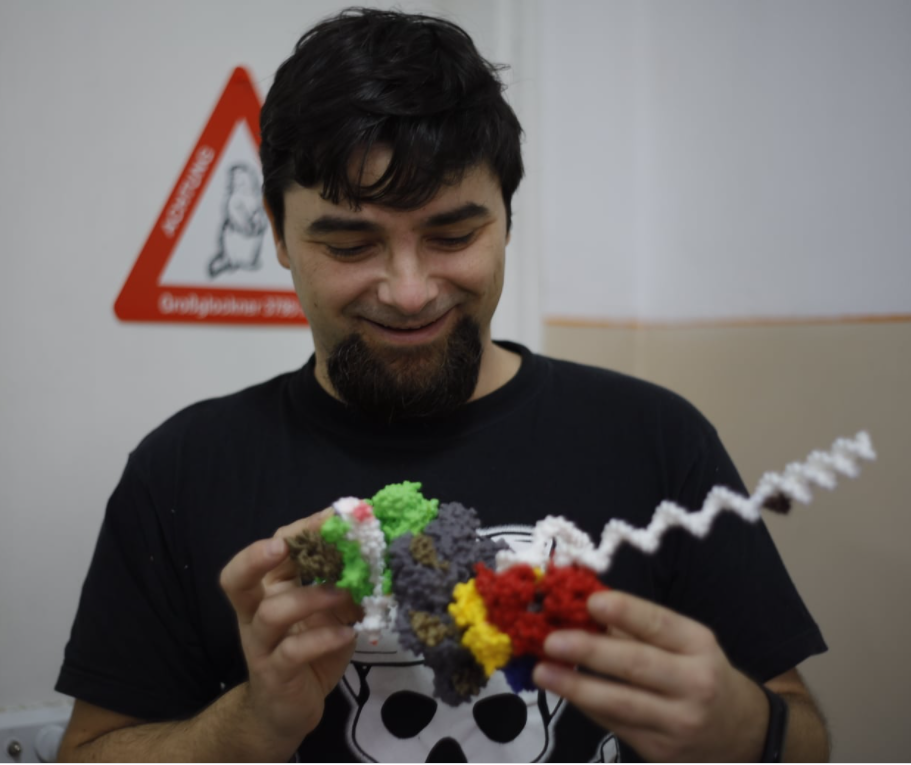
Molecular surface representation of a nanopore together with the bacteriophage phi29 DNA polymerase and DNA.
- Ocena
- 5 / 5
- Polubienia
- 18
- Pobrania
- 148
- Wydruki
- 1
- Wyświetlenia
- 1032
- Oceny
- 1
Aktualizacja u źródła:
Informacje o modelu
- Źródło
- Printables
- Kategoria
- Chemistry & Biology
- Licencja
- Creative Commons — Attribution
Molecular surface representation of a nanopore (PDB ID 6si7) together with the bacteriophage phi29 DNA polymerase (PDB ID 1xhz) and a piece of DNA. The nanopore and polymerase are sliced in half and have locations for magnets, while the DNA is printed in flexible TPU. The whole complex can be assembled and disassembled really easily. Got my inspiration from the PDB 101 Molecule of the Month page. These are great for explaining how the sequencing is performed in an ONT MinIon.
Segmentation Software: Prusa Slicer
3D Modeling/CAD Software: ChimeraX
Printer Technology/Material: Polylactic Acid (PLA)/Flexible
Printer Make/Model: Creality Ender 5 Pro
Print Units: mm
Scale At Given Print Units: 100x
Pre- and Postprocessing Instructions
Printed at 0.2 resolution with 2 wall lines and 5% infill. Extensive supports are required but were rather easy to remove. All DNA molecules were printed at 70%. The DNA from PDB ID 4ocb was printed, re-heated afterward with a heatgun, reshaped in order to fit through the pore, and then finally glued to a larger single-stranded DNA molecule. The single-stranded DNA pieces were heated and shaped so that it will fit through the polymerase. The double-helix was printed, but not used as it can be reconstituted from the single strands really nicely. Small magnets were glued into the dedicated slots with plain plastic glue.