
Reverse cartesian floating cubes that change density
Obliczymy ostateczną cenę na podstawie wybranego pliku. Sprawdzisz ją i zaakceptujesz przed płatnością.
Zapisane na tym urządzeniu.

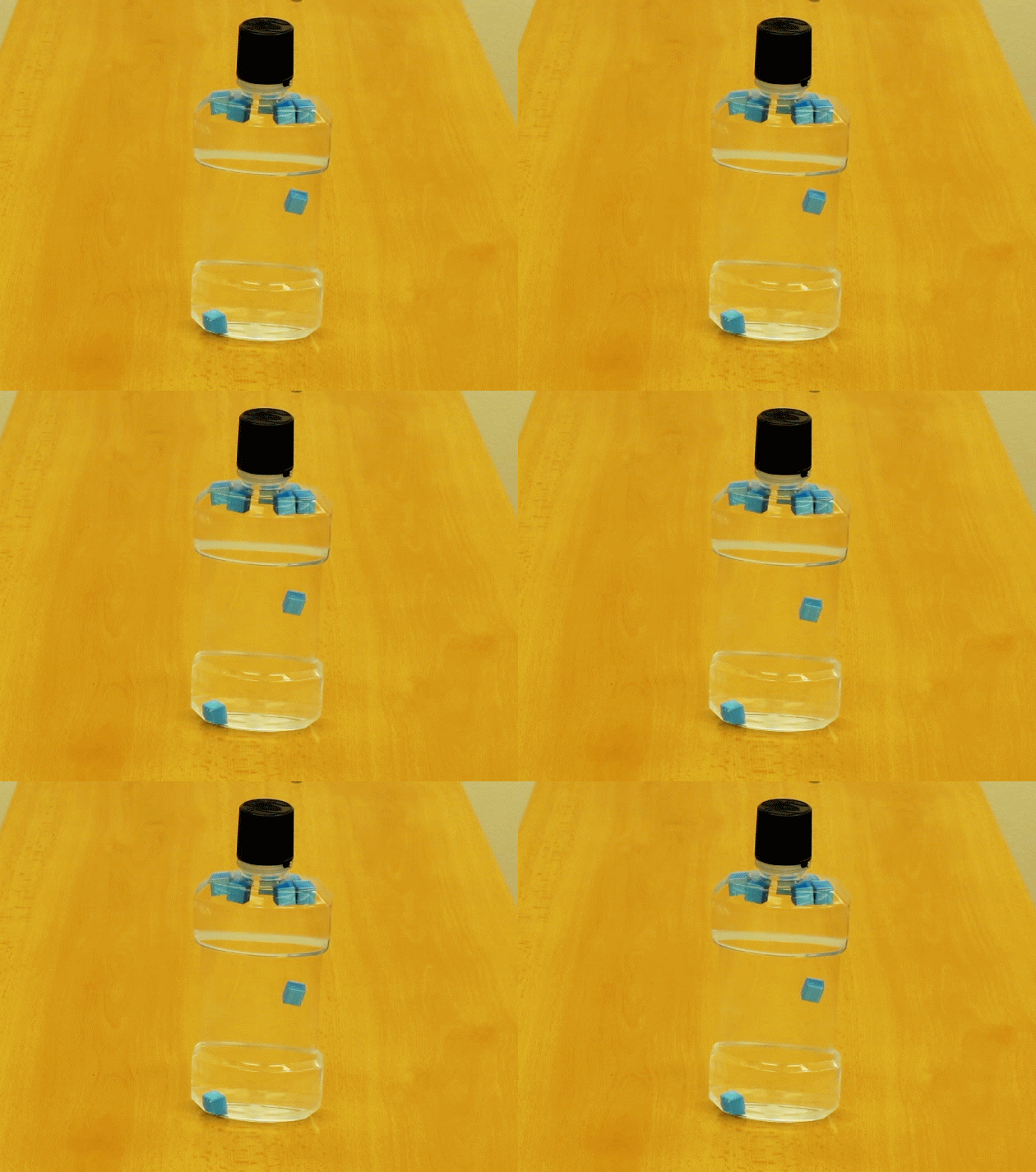
Science toy demonstrate principle of buoyancy. When press the bottle, cubes spontaneously floating or sinking.
- Ocena
- 4,5 / 5
- Polubienia
- 35
- Pobrania
- 152
- Wydruki
- 3
- Wyświetlenia
- 1750
- Oceny
- 2
Aktualizacja u źródła:
Informacje o modelu
- Źródło
- Printables
- Kategoria
- Other 3D Objects for Learning
- Licencja
- Creative Commons — Attribution
Reverse cartesian cubes
A Cartesian diver or Cartesian devil is a science toy which demonstrates the Archimedes' principle of buoyancy. It is named after René Descartes. When push the bottle from the front or side, the cubes rise or fall.
Micro-bubbles of dissolved gas from water are sometimes trapped on the surface of the cubes. You have to wait a few minutes for the micro bubbles to burst and the material pores to absorb a little amount water. After that the cubes work well.
Classic cartesian diver
If we press the PET bottle, the water pressure will increase. The air bubble in the cube is compressed and replaced by water. The mixed density of the cube increases and the cube sinks.
Reverse cartesian diver
The classic diver works in any plastic bottle. The reverse diver only works in a bottle that has a rectangular base. If we press the shorter side of the bottle, bottle have tends to form a circular shape and the pressure in the bottle decreases. The air bubble inside the cube expands and pushes the water out. The mixed density of the cube decreases. The cube that was at the bottom, starts to float.

Different volumes
The cubes of this model have different volumes of internal air buble. So some of the cube are floating and some are at the bottom. It depend on type of filament material. When push the bottle from the front or side, the cubes float or sing gradually step by step.
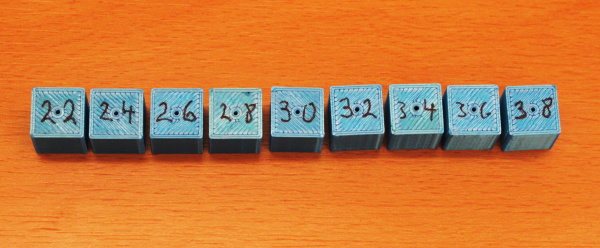
The density of PLA plastic is 1.25 g/cm^3 and the density of air is 0.00125 g/cm^3. The ideal ratio is slightly more than 20 volume percent air. This mixed density ensures that the cube floats.
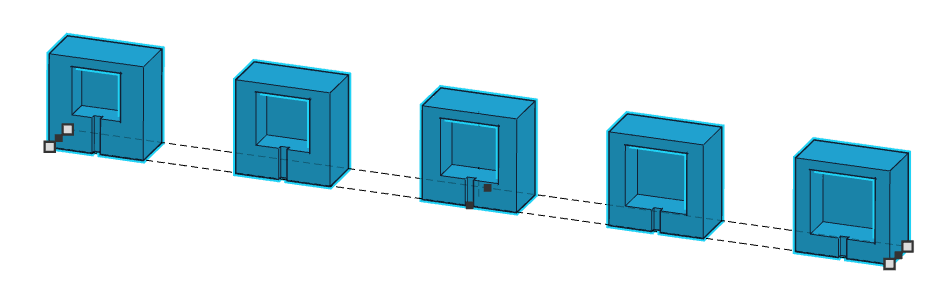
Print tips:
- 100% linear infil
- Model is scalable
- Recommend PLA or PETG