
Molecule balance learning game
Obliczymy ostateczną cenę na podstawie wybranego pliku. Sprawdzisz ją i zaakceptujesz przed płatnością.
Zapisane na tym urządzeniu.
Informacje o modelu
- Źródło
- Printables
- Kategoria
- Haptic Models
- Licencja
- Creative Commons — Attribution — Share Alike
This game lets you test your fine motor skills as well as your chemistry knowledge.
The game features several basic elements with connecting points placed accordingly. The size ratio of the spheres is the same as the actual elements. To connect these you can use single or double bond.
There is one stand with interchangeable bases. Wider base means more stability.
(If you would like me to add some elements just write me a message.)
Printing:
I tried to make it as 3D-printing-friendly as possible. It should be possible to print it on every decent machine.
I used 2-4 perimeters 15%-30% infill and no supports. You can play with different infills or even different centers of gravity (add off centre shape with 100% infill inside the "element") to make it more fun.
You might want to slow down your perimeters to make the spheres perfect.
Making the weight ratio with infill while keeping the correct size is unfortunatelly not possible. (iron is 55x the weight of hydrogen). But you can at least keep the sequence right. H<C<N<O<S<Fe
A 0.1 mm clearance between the "bond" and the "element," combined with the compliant ends of the bonds, creates the perfect "sweet spot"—easy to connect, yet secure enough not to fall apart. I tested this on my MK4S and MK3S with great results.
Orientation: The bonds are designed to be printed horizontally to reduce the risk of structural failure upon impact. Every model is oriented correctly.
Precision: Note the teardrop shape at the top of the holes. I used this shape on the bottom face as well to ensure the seam does not affect hole precision.
Recommended starter set: I suggest starting with: 14x H, 12x C (6+6), 8x O, 10x N (5+5), 2x S, 4x Fe, approximately 30 single bonds, and 10 double bonds.
Playing:
For every mode it is adviced to set a timer to balance the molecule. (10-20 seconds)
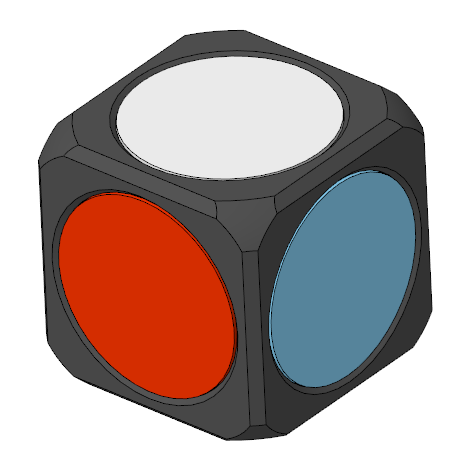
Easy mode: Take turns placing 1 "bond" and 1 "element" without any particular structure. The objective is to keep the molecule from falling over. This mode is for kids or casual players. You can either choose to only hold down the molecule while placing your bonds and elements or take the whole molecule in your hands and after insertion of your pieces place it back however you want. Bonus idea: Print a colored dice and play the element color that you land on!
Normal mode: You are given a chemistry formula of some molecule. Build it up from memory and place it balanced on a pedestal. Points are awarded for both the correct formula and successful balancing.
Hard mode: You take turns placing bonds and elements to make a chosen molecule but you cannot take it off or change the contact part. You are only allowed to hold it steady and rotate it. If you place something wrong you are out. If it falls you are out.
Examples:
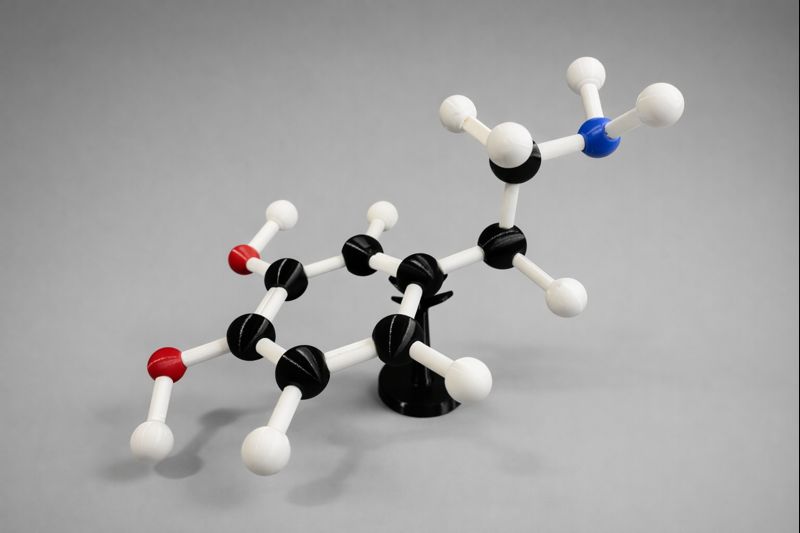
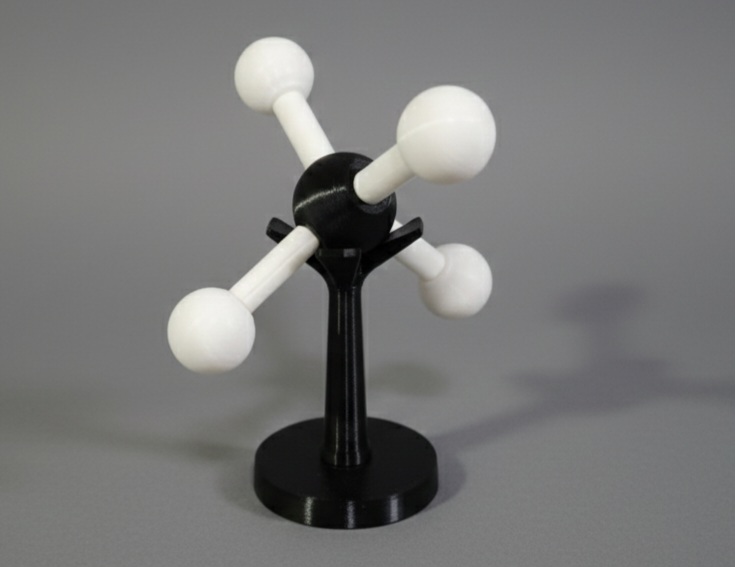
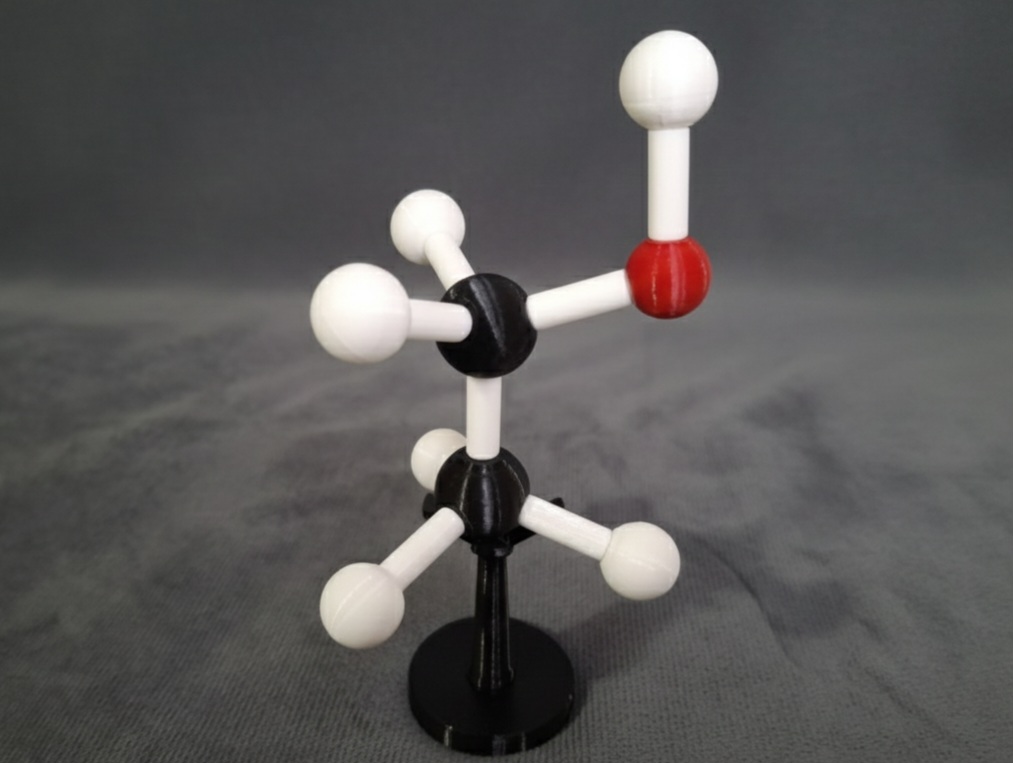
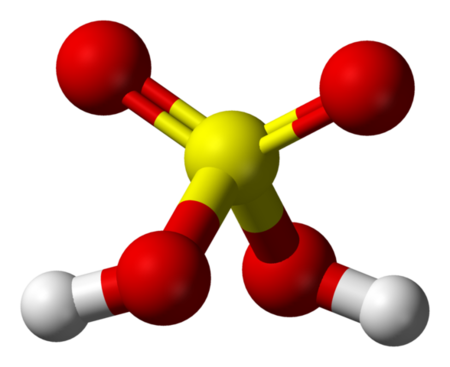
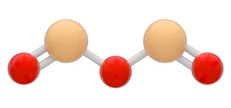
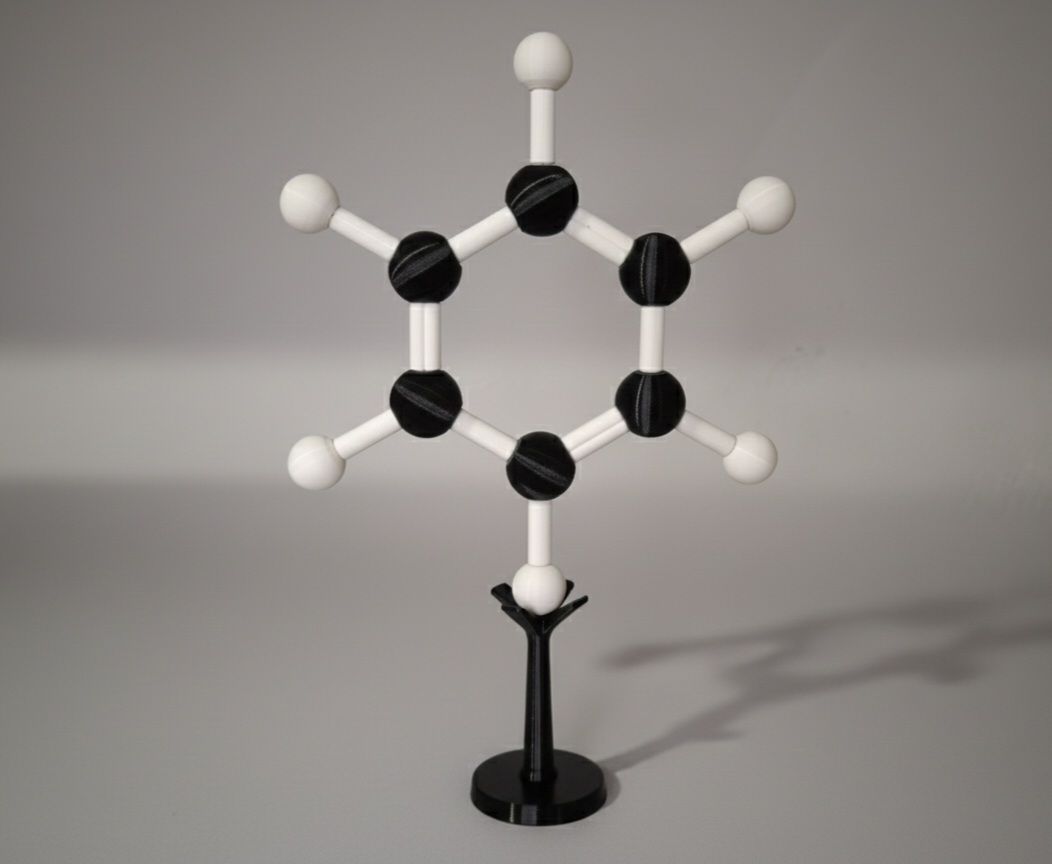
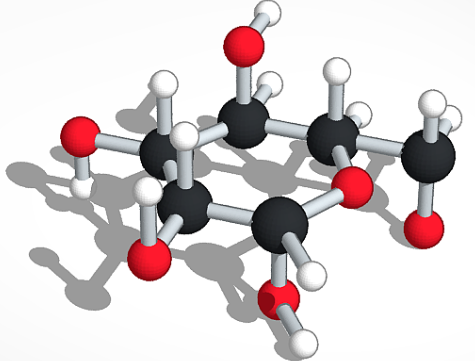
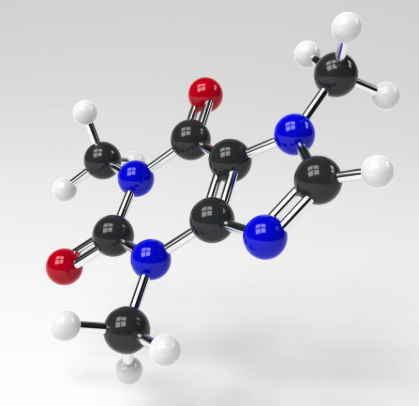
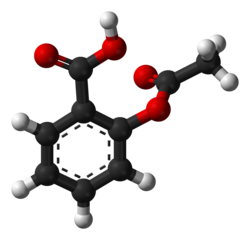
(pictures without the stand are reference images from the web; those with the stand are my creations. Some, like the benzene ring took minutes of careful positioning to balance before I took the picture. I have only modified the backgrounds for a uniform look)
Level 1:
Water (H2O)
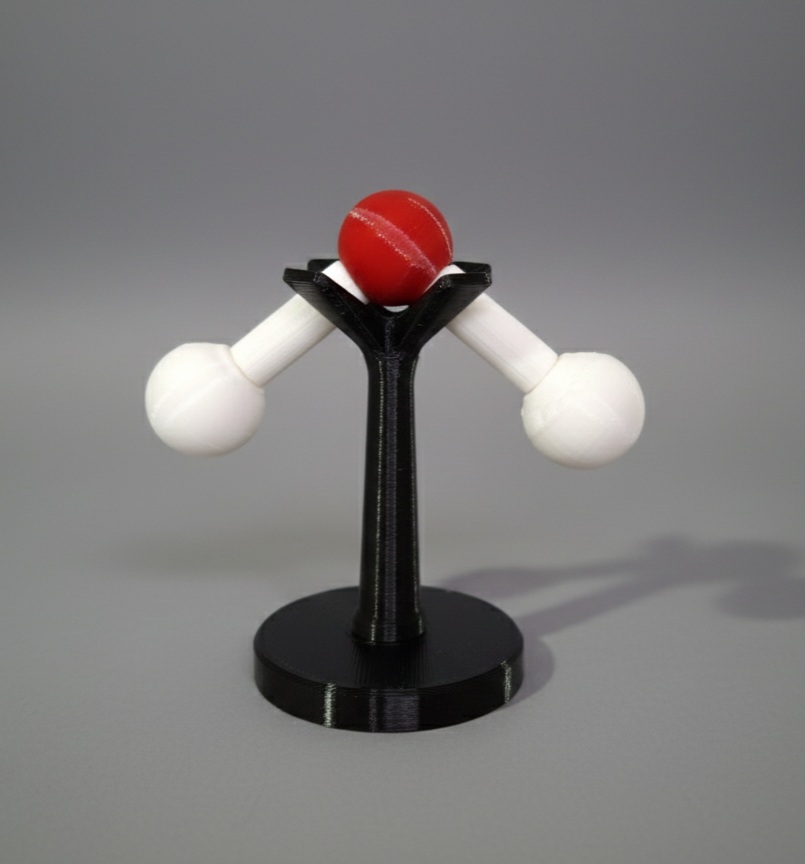
Carbon dioxide (C02)
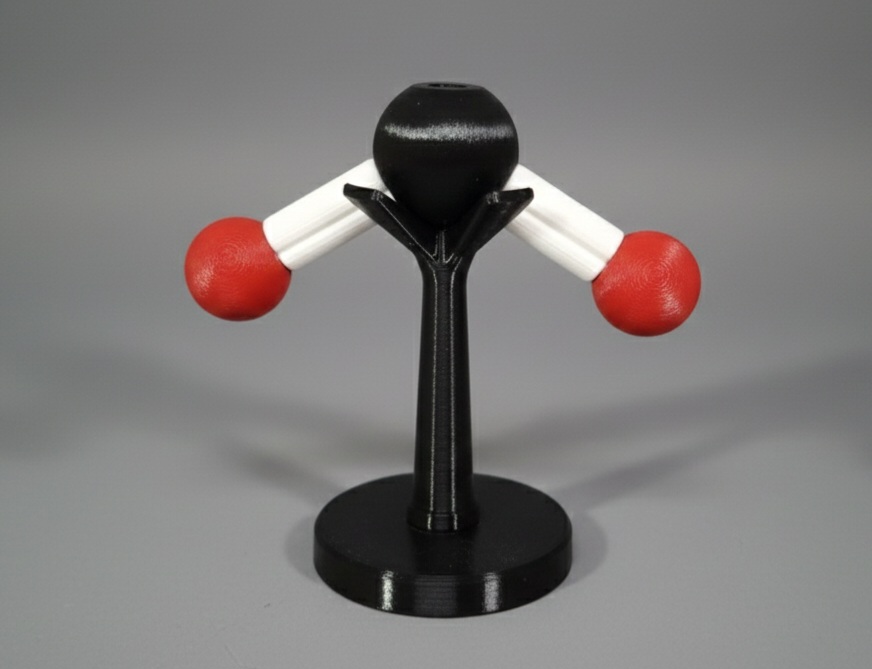
Methane (CH4)
Level 2:
Ethanol (C2H5-OH)
Sulfuric acid (H2S04)
Iron oxide (Fe2O3)
Level 3:
Benzene (C6H6)
Glucose (C6H12O6)
Level 4:
Caffeine (C8H10N4O2)
Dopamine (C8H11NO2)
Aspirin (C9H8O4)
Note: I am no chemist so I have no idea whether my research is actually correct or that I understood everything correctly. Be free to correct me.