
Dizzy Bumblebee Puzzle
Obliczymy ostateczną cenę na podstawie wybranego pliku. Sprawdzisz ją i zaakceptujesz przed płatnością.
Zapisane na tym urządzeniu.
Informacje o modelu
- Źródło
- Printables
- Kategoria
- Puzzles & Brain-teasers
- Licencja
- Creative Commons — Attribution — Noncommercial — Share Alike
Buzzy the Bumblebee was flying from flower to flower, happily drinking nectar, when he got tangled up in one of the flowers! Buzzy did not want to harm the flower, so he tried to carefully get himself unstuck. He spun round and round and ended up getting even more tangled! Can you help Buzzy escape from the flower without harming or removing the petals?
Background
This puzzle was inspired by William Keister's Spin-Out puzzle, invented in 1970 and sold commercially by Binary Arts in the late '80s. I thought it would be interesting to make a circular version, which replaces the long sliding frame with a circular piece in the middle (the bee). This design also avoids the shortcut solution which is possible with the original one due to the frame being too short.
This is an example of an N-ary puzzle, where the number of moves increases exponentially with each added piece. If you start from an initial position furthest from the solved state, it will take 64 spins of the petals and 64 spins of the bee to get free. Try not to get dizzy!
Printing
Print all 9 pieces in the file. You'll need supports for the overhanging handles (stamens). I used normal supports on my Bambu A1 Mini, which I think works well on broad flat overhangs like these. The hole on the underneath of the bee should print fine with just bridging, but I accidentally had supports there too and it printed fine.
I printed the bee and its base in one color, and the frame in another color. I also used 2 colors for the "petals" by pausing the printer and changing the filament right above the 5 mm height to have a color for the petal and a color for the stamen.
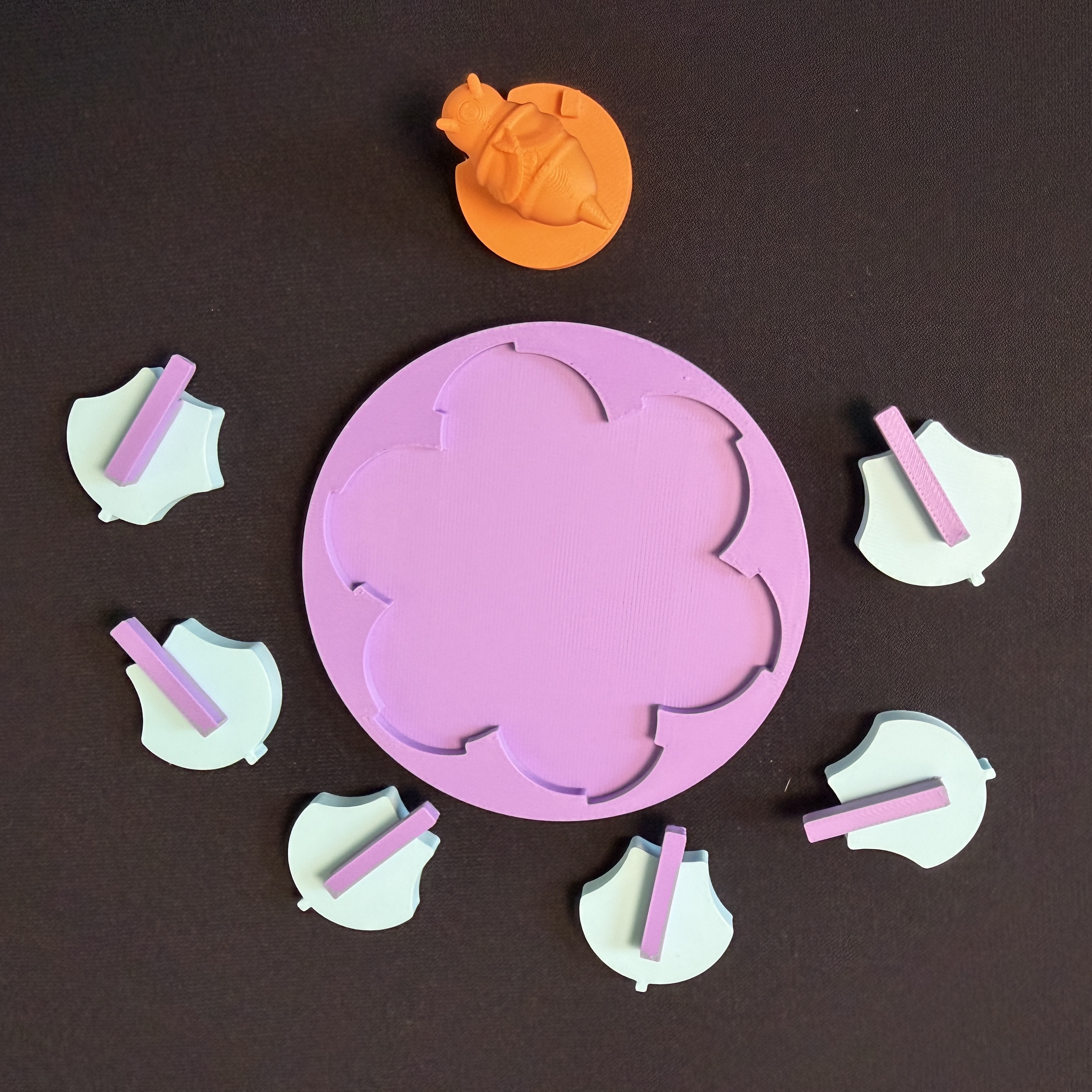
Assembly
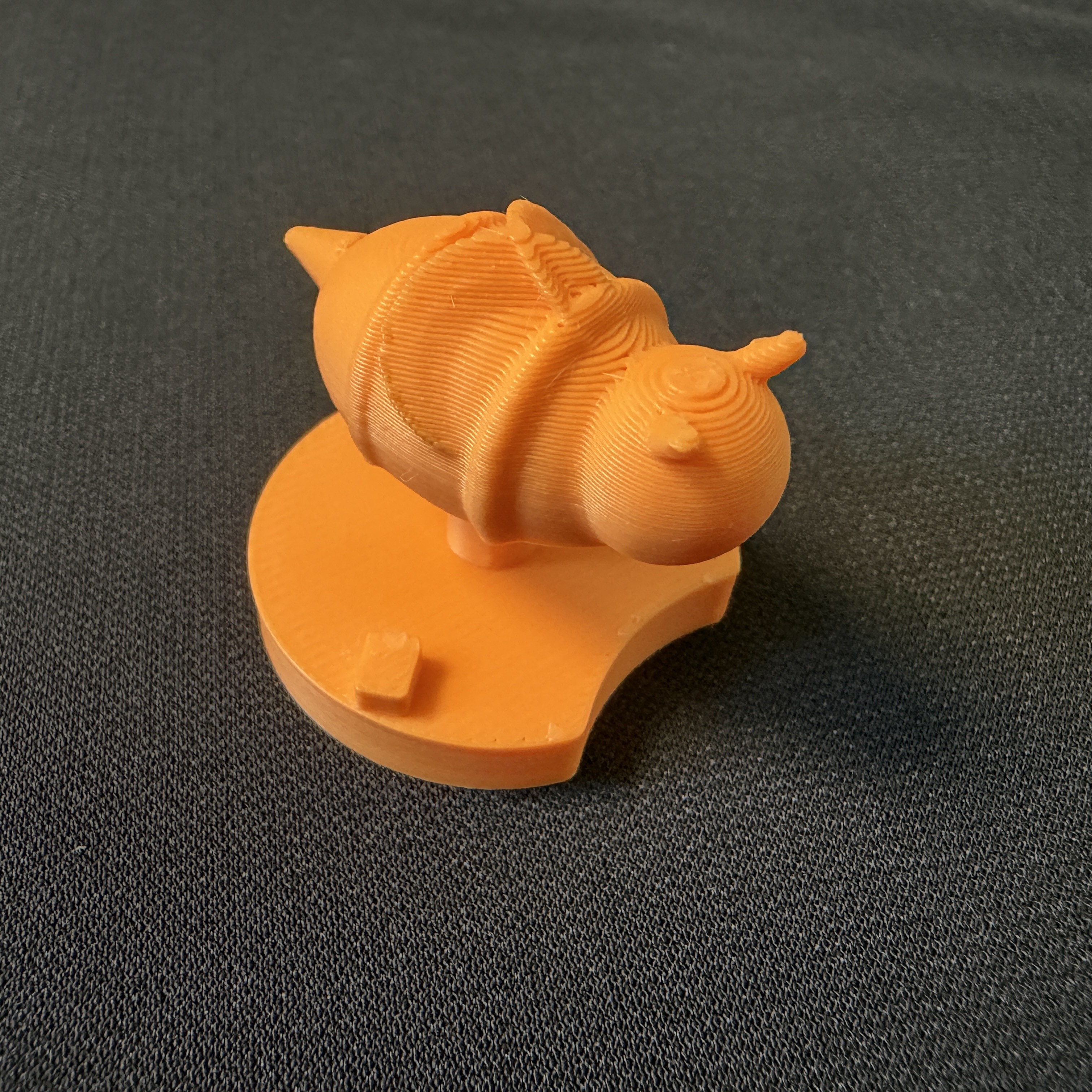
Glue the bee to the stand. The orientation doesn't really matter, but I have it facing the circular cutout so that it will be looking at the petal that needs moving when solving the puzzle. He goes in the middle of the flower.
Petal Pieces
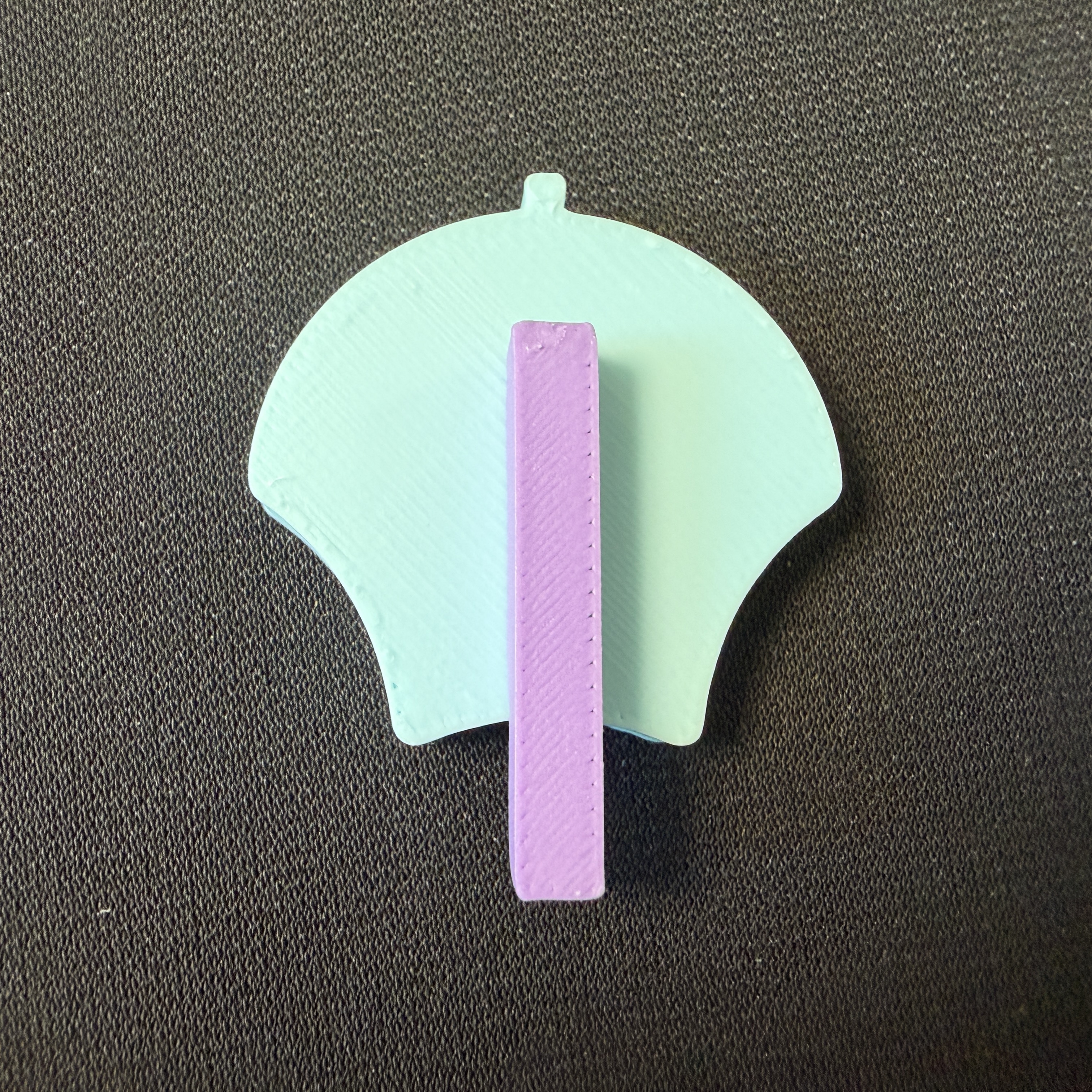
There are 2 types of petals that go into the flower frame - 5 regular petals and 1 special petal.
The Regular Petals
The pedals have a stamen that block the bee's escape. The regular petals have 3 circular cutouts (left, right, and bottom).
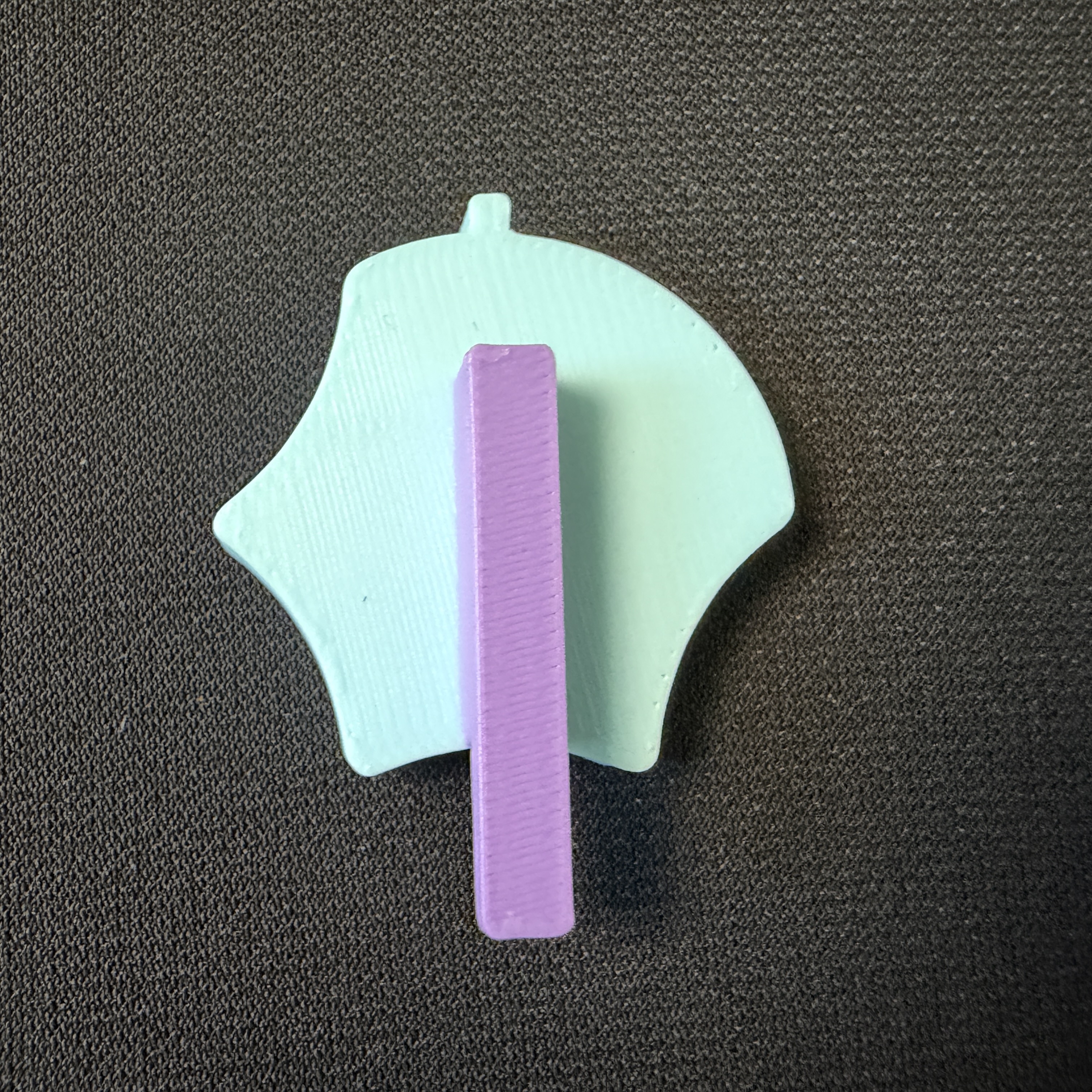
The Special Petal
This piece looks similar to the other pieces but has 4 cutouts instead of 3. It's stamen is also raised a little higher so it does not actually block the turning of the bee. When starting the puzzle, the circular cut-out of the bee should be facing the Special Petal.
Set-Up
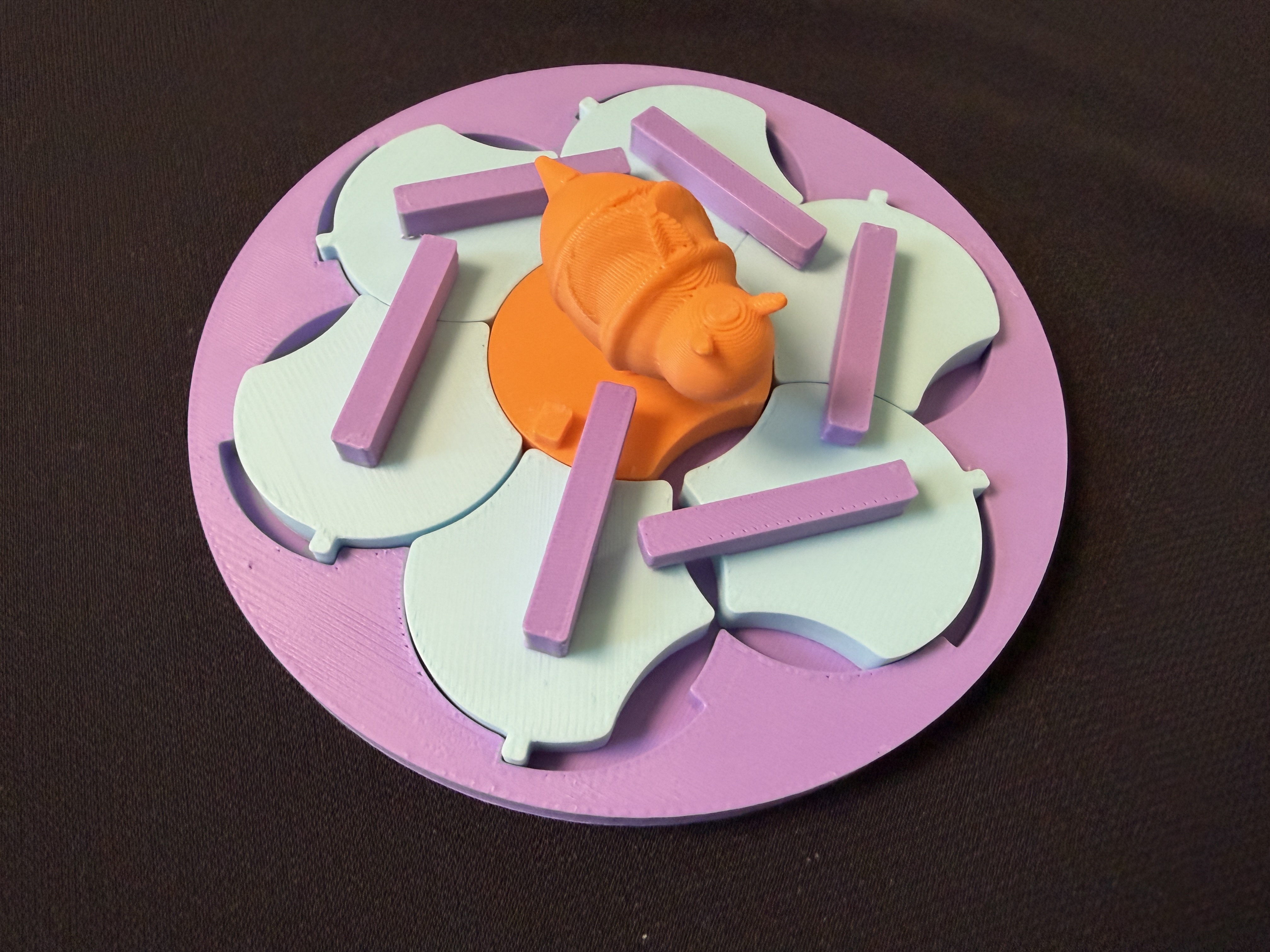
Set up the puzzle as in the above picture. All of the regular petals should be pointed to each other (away from the bee). Only the Special Petal should be pointing at the bee.
There is a second option to start with all petals pointed at the bee, similar to the initial configuration for Spin-Out. This reduces the number of steps needed but also makes you choose your first step carefully. If you go with this set-up, make sure the circular cut-out on the bee is facing the Special Petal to start.
Goal
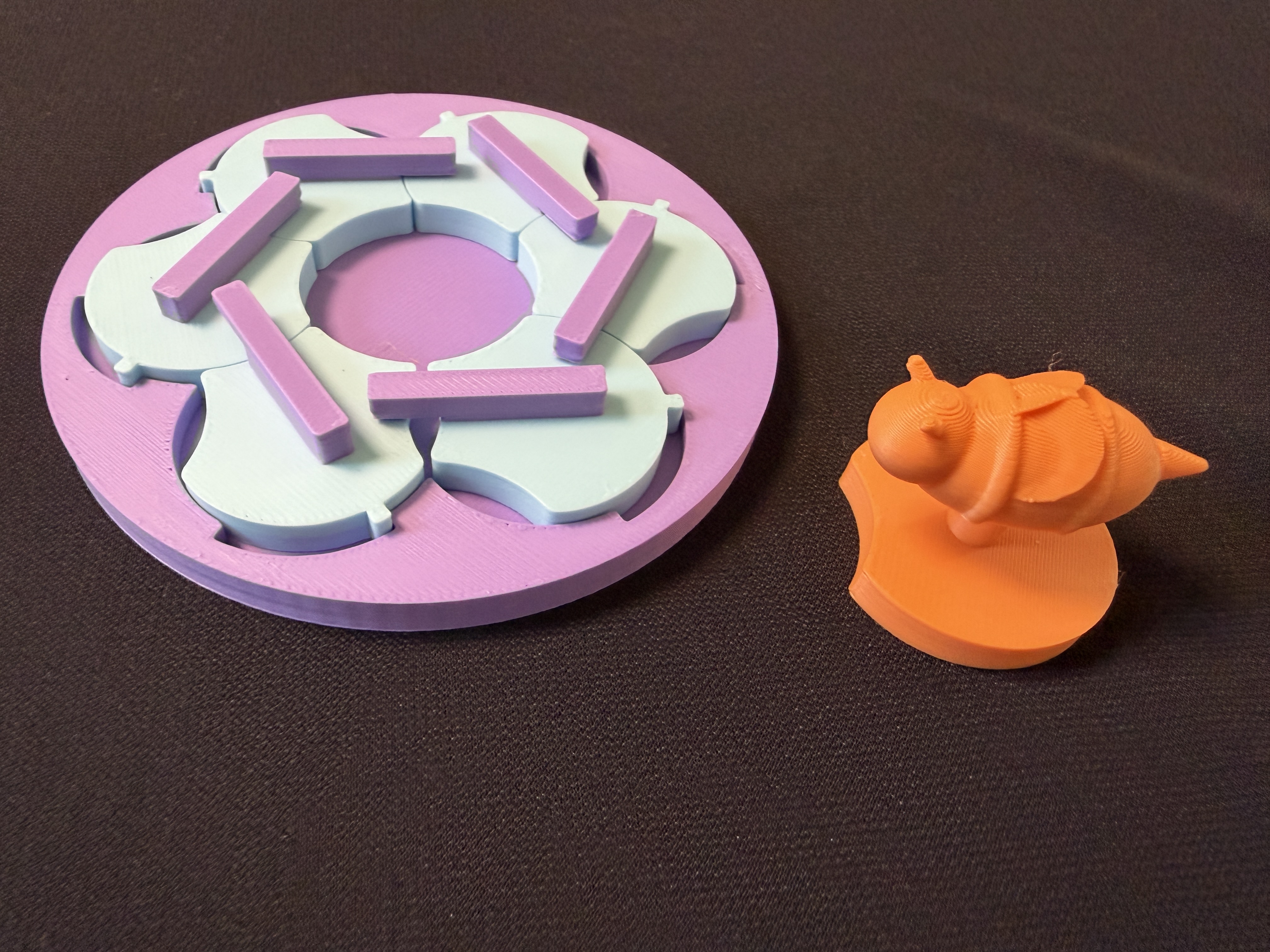
You have solved the puzzle once none of the stamens are blocking the bee and the bee can be lifted out without being blocked. The end state is shown in the above picture. There's nothing stopping you from cheating but what fun is that? You want to get the bee out without damaging the petals, so move them all away first before flying off.
Acknowledgements
I used Gemini (May 2026) to produce the OpenSCAD code to make the bee.