
Low tone pocket snake flute rolled into the hexagonal shape
Obliczymy ostateczną cenę na podstawie wybranego pliku. Sprawdzisz ją i zaakceptujesz przed płatnością.
Zapisane na tym urządzeniu.

This hexagonal model is the equivalent of a 40 cm flute tuned in G4 which is rolled into a snail (snake) shape.
- Ocena
- 4,533 / 5
- Polubienia
- 265
- Pobrania
- 1312
- Wydruki
- 17
- Wyświetlenia
- 6056
- Oceny
- 15
Aktualizacja u źródła:
Informacje o modelu
- Źródło
- Printables
- Kategoria
- Music
- Licencja
- Creative Commons — Attribution — Noncommercial — Share Alike
Introduction
The flute (recorder) is a member of a family of musical instruments in the wind group. Flute producing sound with a vibrating column of air. The air path goes from the split edge to the end of the pipe. By covering the finger holes, we change the length of the path and consequently manipulate with the frequency of the sound. By correctly placing the holes, we get tuned tones.
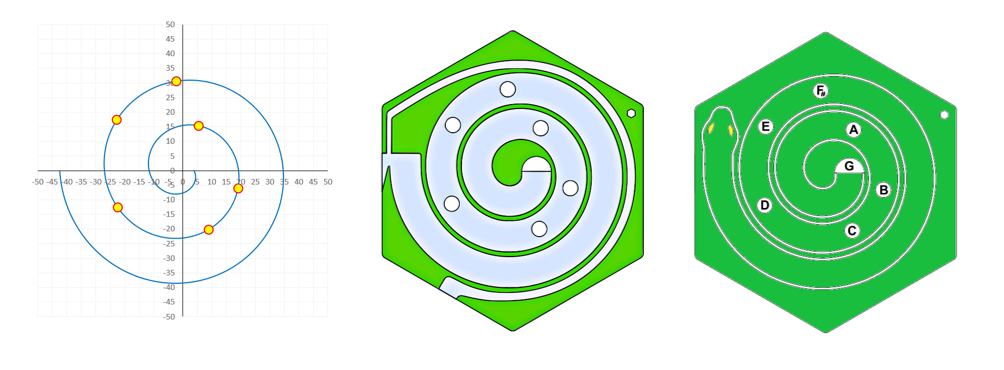
A long flute gives a deep sound. This hexagonal model is the equivalent of a 40 cm flute tuned in G4 which is rolled into a snail (snake) shape. All this then fits in a pocket.
How to print
The recommended low shrink material is PLA, but transparent PETG looks amazing. Add extra thickness to the sidewalls (shell) and extra thickness for tom and bottom layers to achieve complete airtightness.
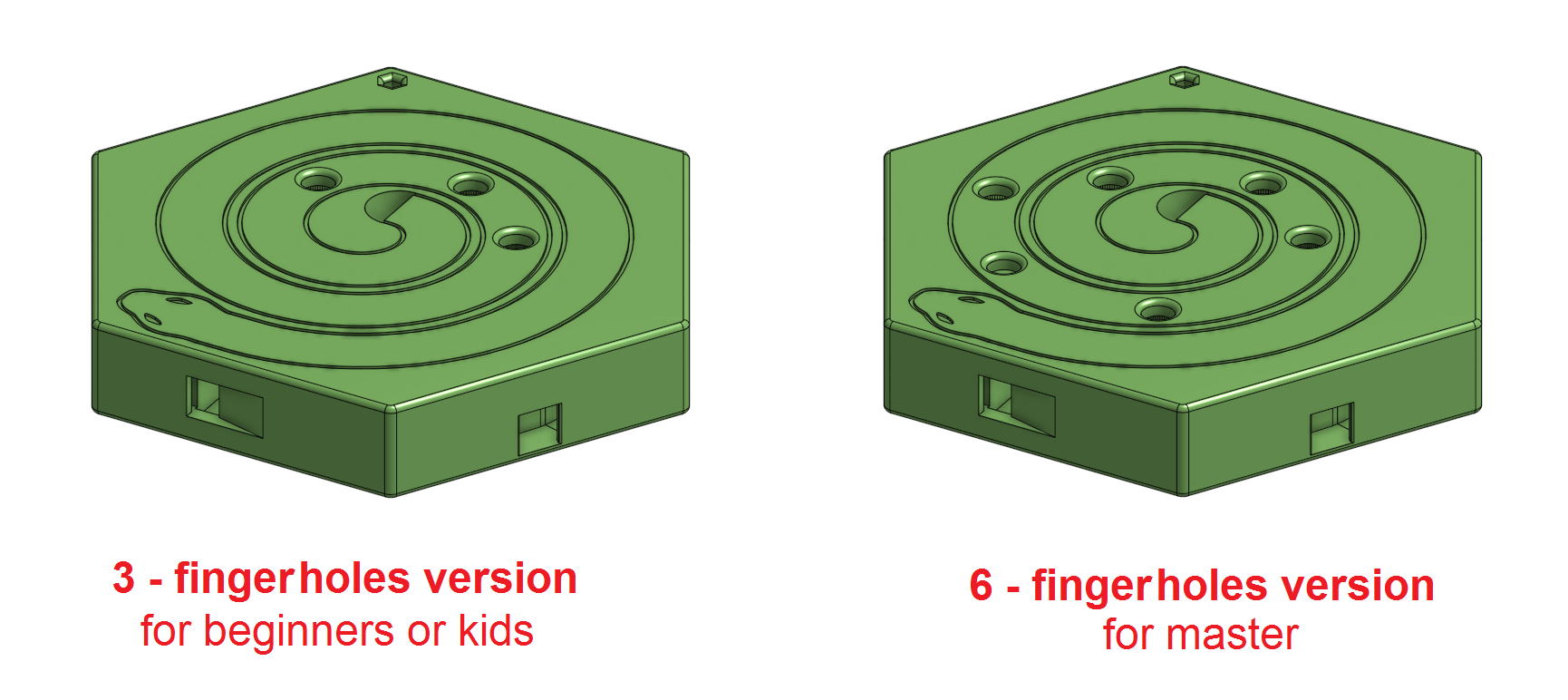
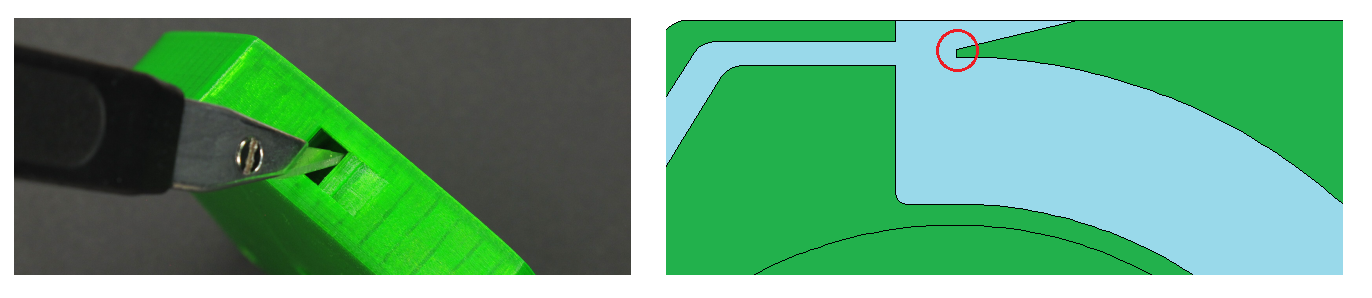
Print model in place that the orientation of finger holes will by faced on the bed. For beginners or children is intended a 3-hole version. Is recommend pausing the printer before closing the flute chamber (z-axis 14.8 mm) and cleaning the strings. At the end, after printing, clean the split edge with a scalpel from strings and create a miniature facet as labeled in red circle. If the flute after printing produce a stable sound, no needs doing nothing. The model is scalable, larger scale gives lower tones. The frequency will change, but the tuning between the holes will remain.
How to play
Hold the instrument with both hands. Cover the three finger holes with your left hand. Cover the other three finger holes with your right hand.
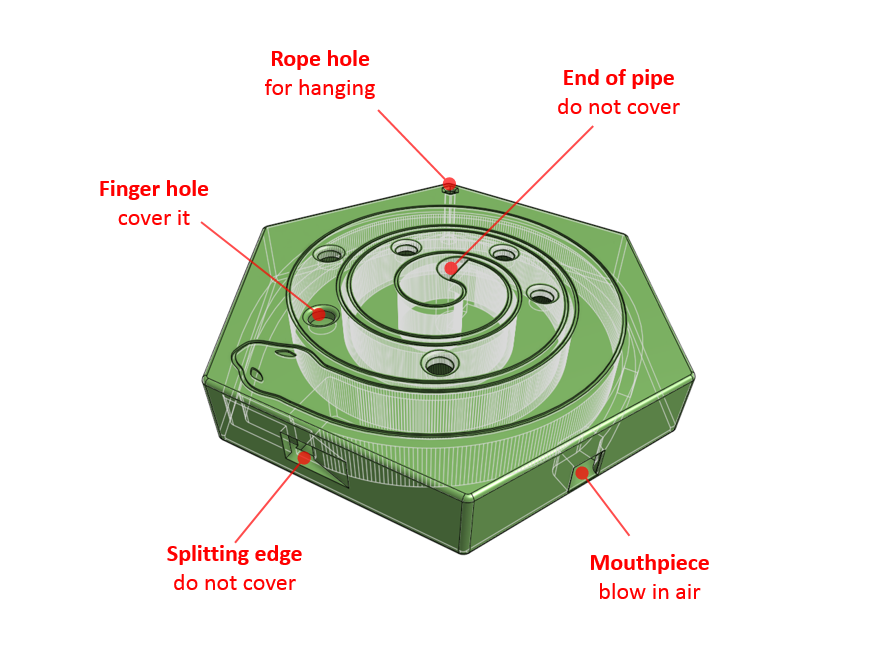
Blow into the mouthpiece. Before playing, warm up the instrument with your breath. Gradually uncover the finger holes, step by step from the tail of the snake to its head.
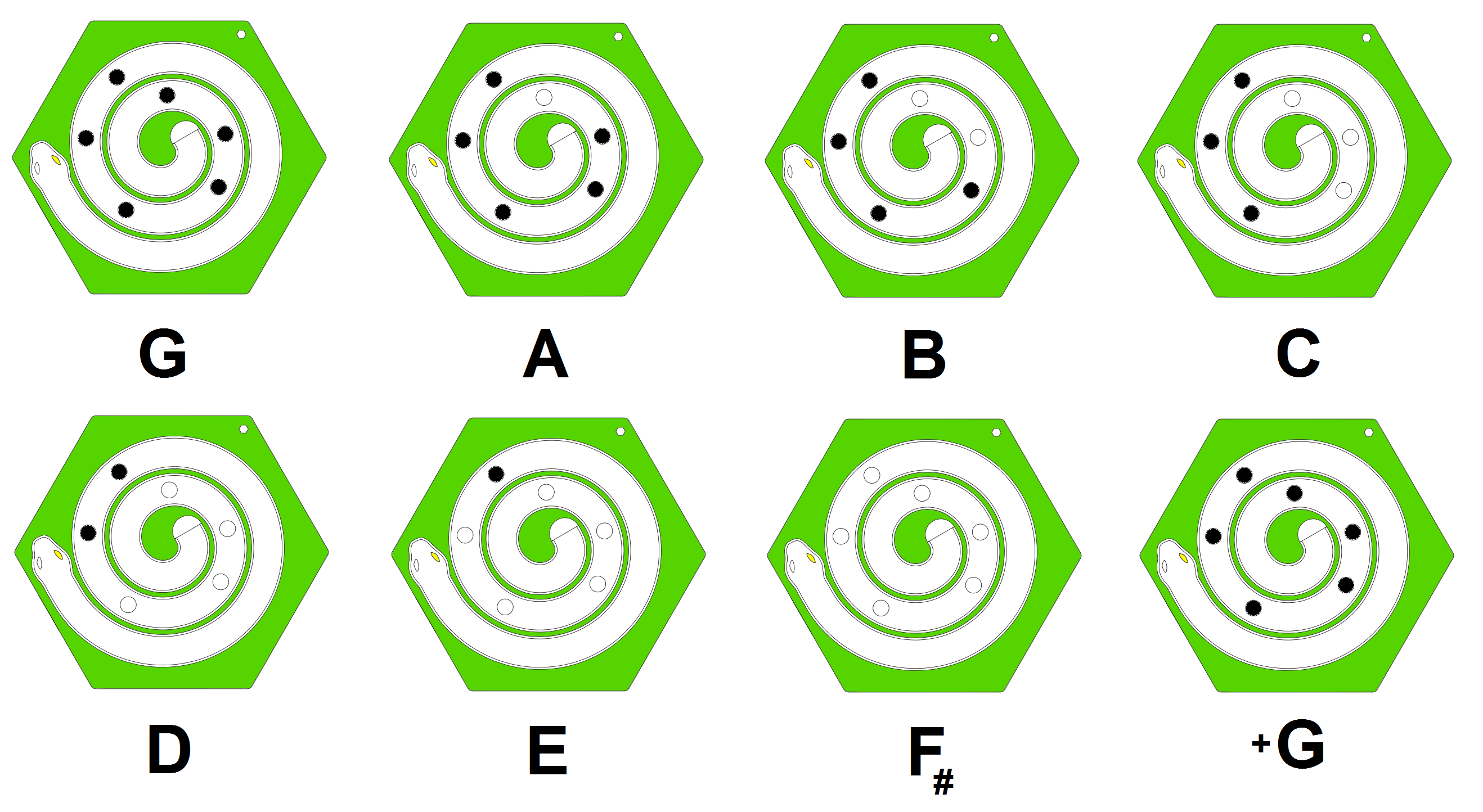
Strong blowing will cause a transition to a higher octave. Occasionally it will be necessary to blow off the condensed water steam.
Perfect pitch
The frequency may be slightly different after printing. The pitch is affected by:
- temperature
- humidity
- pressure
- altitude
- printer accuracy
- material shrinkage