
Zenkit v1.0
Obliczymy ostateczną cenę na podstawie wybranego pliku. Sprawdzisz ją i zaakceptujesz przed płatnością.
Zapisane na tym urządzeniu.

Zen geeks mind blowing all in one pack, which parts can be 3d printed each. Add sands and moss gets your perfect world.
- Ocena
- 0 / 5
- Polubienia
- 95
- Pobrania
- 224
- Wydruki
- 0
- Wyświetlenia
- 1344
- Oceny
- 0
Aktualizacja u źródła:
Informacje o modelu
- Źródło
- Printables
- Kategoria
- Other Art & Designs
- Licencja
- Creative Commons — Public Domain
Welcome to Zenkit v1.0
Zenkit includes…

accessories for complete Zen garden enjoyment.
- Turtle
- Bridge
- Sanzon stones
- Turujima stones (represents a crane)
- Funaishi stone (represents a boat)
- Island stones
- Stepping flat stones
- Chozubachi stone and wooden ladle
- Moss mat
- Porch
- Tools for drawing and erasing waves
- Sandbox (two sizes)
<Trivia for Zen geeks>
A standing stone is placed in the center to resemble the Three Buddhas, with small standing stones on both sides. A group of three stones in Zen gardens is called a Sanzon stones. This is the center and origin of Zen garden.
A set of a crane and a turtle is placed to pray for longevity, as it is said that a crane lives a thousand years, a turtle lives a million years.'' in Japan.
Boat-shaped stones are placed on the white sand to represent the shape of heading towards the deep mountains and valleys where hermits and a Buddha live.
A vessel originally used to hold water to purify oneself in front of a shrine or Buddha. Like lanterns, they began to be used for the purpose of appreciation with the development of the tea ceremony.
Requirement
- White sands (not grayish or brownish)
- Bonsai trees (if you are interested)
- Moss balls (if you are interested)
Color recommendation
I recommend the following colors to maximize the Japanese feel and enjoy Zen.
- Dark gray for roof
- Green for moss
- Wooden brownish colors for ladle and porch
Assembly
No assembly required. However, expressing harmony is the most difficult thing in Zen. Enjoy your Zen world by placing stones and drawing waves in a well-balanced manner as below.
How to enjoy Zen garden in an authentic way
What is Zen garden?

Zen is one of religious cultures originated from Buddism in Japan, and its Zen garden represents instead of having a pond, it uses stones and sand to create a waterscape. Islands are represented by large stones, and water is represented by gravel such as white sand. Zen represents the religious view of Buddhism, not Shinto. It's as different as Catholic and Protestant. Also it is easy to be mistaken for the religious culture of China or Korea geographically close to Japan. I would be happy if you could use it as an opportunity to express the real world of Zen. Enjoy!
How to place stones?
 Just like in design theory, odd numbers are preferred in Zen gardens. It looks good if you place stones in odd numbers. Remember 3, 5, 7.
Large stones
 Stones are placed to represent the island. Moss may grow where the stones are placed. By combining the green moss with stones, it looks more like a natural island. In Zen gardens, waterfalls are also expressed using only stonework.
White sands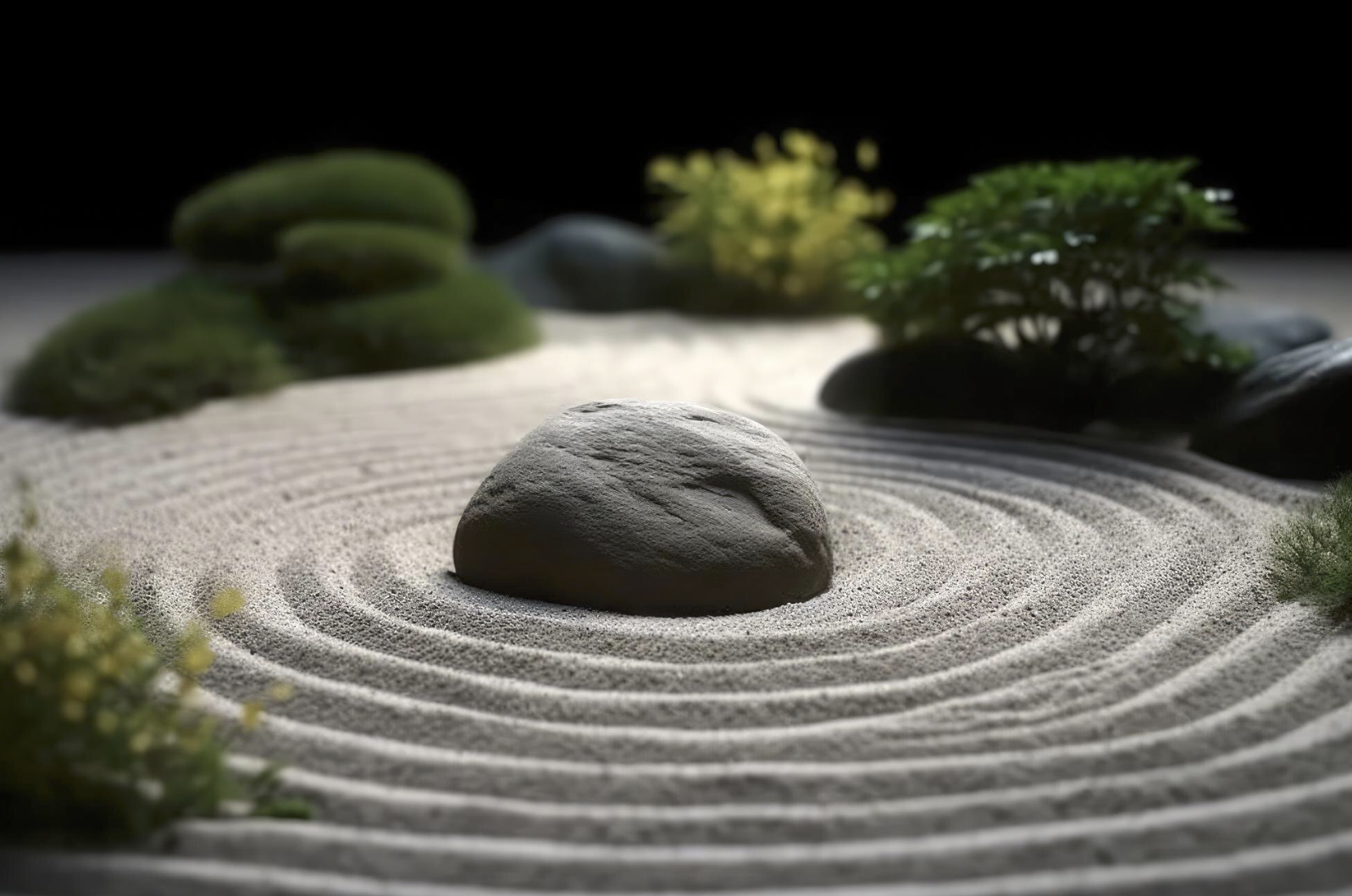
Sand ripples sometimes represent waves and eddies in the ocean, and sometimes they represent the flow of a river. Water ripples represent the spreading of waves from a drop of water on the water's surface, and are often drawn around stones placed in Zen gardens.

From here…
Try laying down real moss or using dried moss around your sandbox. It's also interesting to try replacing the stone with real stone or painting kit stones to look like stone.