
1 / 2
Pinhole Exposure Calculator
Zamów wydruk tego modelu
Obliczymy ostateczną cenę na podstawie wybranego pliku. Sprawdzisz ją i zaakceptujesz przed płatnością.
Zapisane na tym urządzeniu.

Calculator for determining the exposure time of a pinhole camera.
- Ocena
- 5 / 5
- Polubienia
- 88
- Pobrania
- 509
- Wydruki
- 5
- Wyświetlenia
- 3929
- Oceny
- 2
Aktualizacja u źródła:
Informacje o modelu
- Źródło
- Printables
- Kategoria
- Photo & Video
- Licencja
- Creative Commons — Attribution — Noncommercial — Share Alike
SzczegółyPliki (4)Wydruki i komentarze (Wydruki: 5) (Komentarze: 8)Remiksy (0)Kolekcje (135)Powiązane
Pinhole Exposure Calculator, inspired by Richard Koolish paper calculator, is a model designed to assist users in determining the optimal exposure time for pinhole cameras. The calculator comprises three disks, each contributing essential parameters to the exposure calculation:
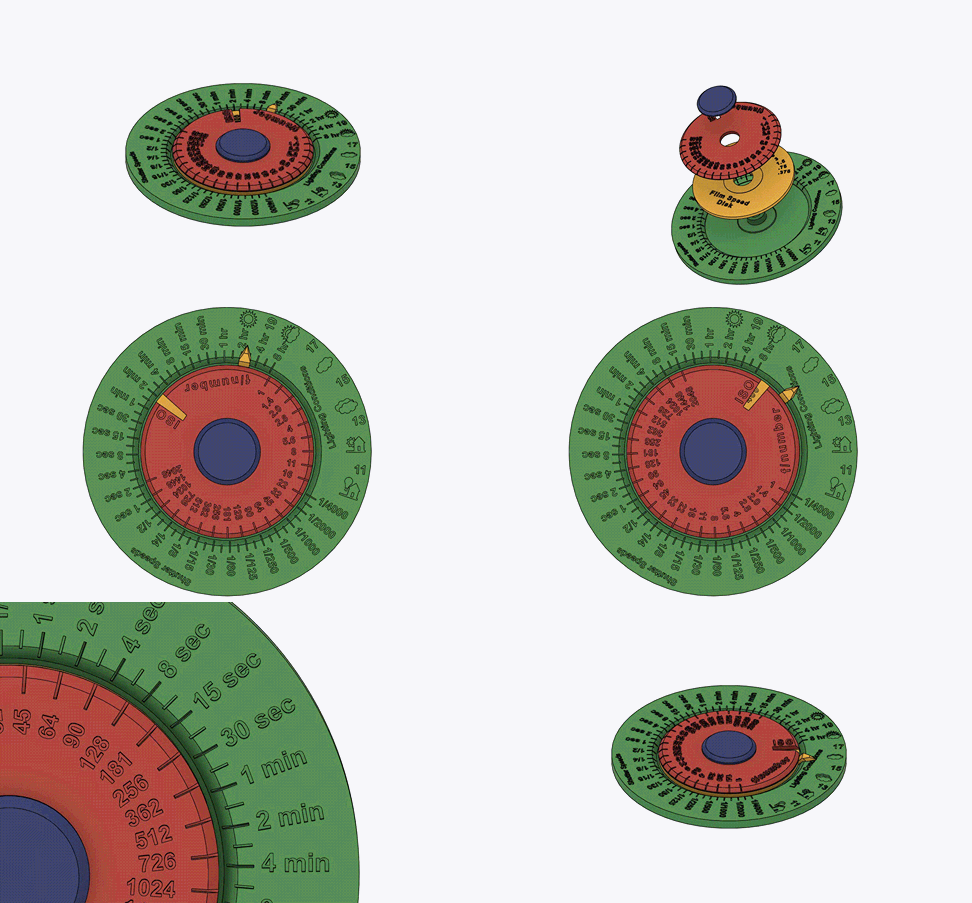
- Shutter Speeds and Lighting Conditions Disk:
The first disk contains shutter speeds values ranging from 1/4000 sec to 8 hours and values for lighting conditions. Lighting conditions are defined within the range of values 10 to 20, which signify: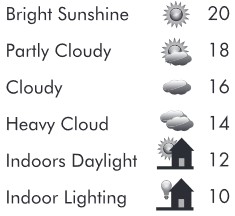
- Film Speed (ISO) Disk:
The second disk contains ISO values ranging from 0.375 to 3200.
- Aperture (f-number) Disk:
The third disk contains aperture size values (f/number) in the range of 1 to 2048.
How to Use:
- Determine the aperture size (f/number) of the pinhole used in your camera.
(If you are yet to manufacture your pinhole camera, I recommend using PinholeDesigner or Pinhole Size Calculator to select an appropriate aperture size.) - Use the arrow on the second disk to set the lighting conditions prevailing at the location where you will be exposing the photograph.
- Rotate the third disk to select the ISO value of the photographic material (135/120 film, photo paper, etc.).
- On the third disk, find the aperture size that corresponds to the aperture size used in your pinhole camera.
- Now, read off the shutter speed from the first disk at the point where it intersects with the number corresponding to your aperture number.