
3DP optimized buckle
Obliczymy ostateczną cenę na podstawie wybranego pliku. Sprawdzisz ją i zaakceptujesz przed płatnością.
Zapisane na tym urządzeniu.
partially parameterized, 3DP optimized, dovetail style buckle
- Ocena
- 0 / 5
- Polubienia
- 3
- Pobrania
- 45
- Wydruki
- 0
- Wyświetlenia
- 342
- Oceny
- 0
Aktualizacja u źródła:
Informacje o modelu
- Źródło
- Printables
- Kategoria
- Outdoor Sports
- Licencja
- Creative Commons — Attribution — Noncommercial
Prior art
a lot of 3DP buckles I found still required supports, often because they were simply side release buckles, whose typical design require supports & work better with the better (relatively speaking) isotropy afforded by injection molding

even the robust buckles model still requires support
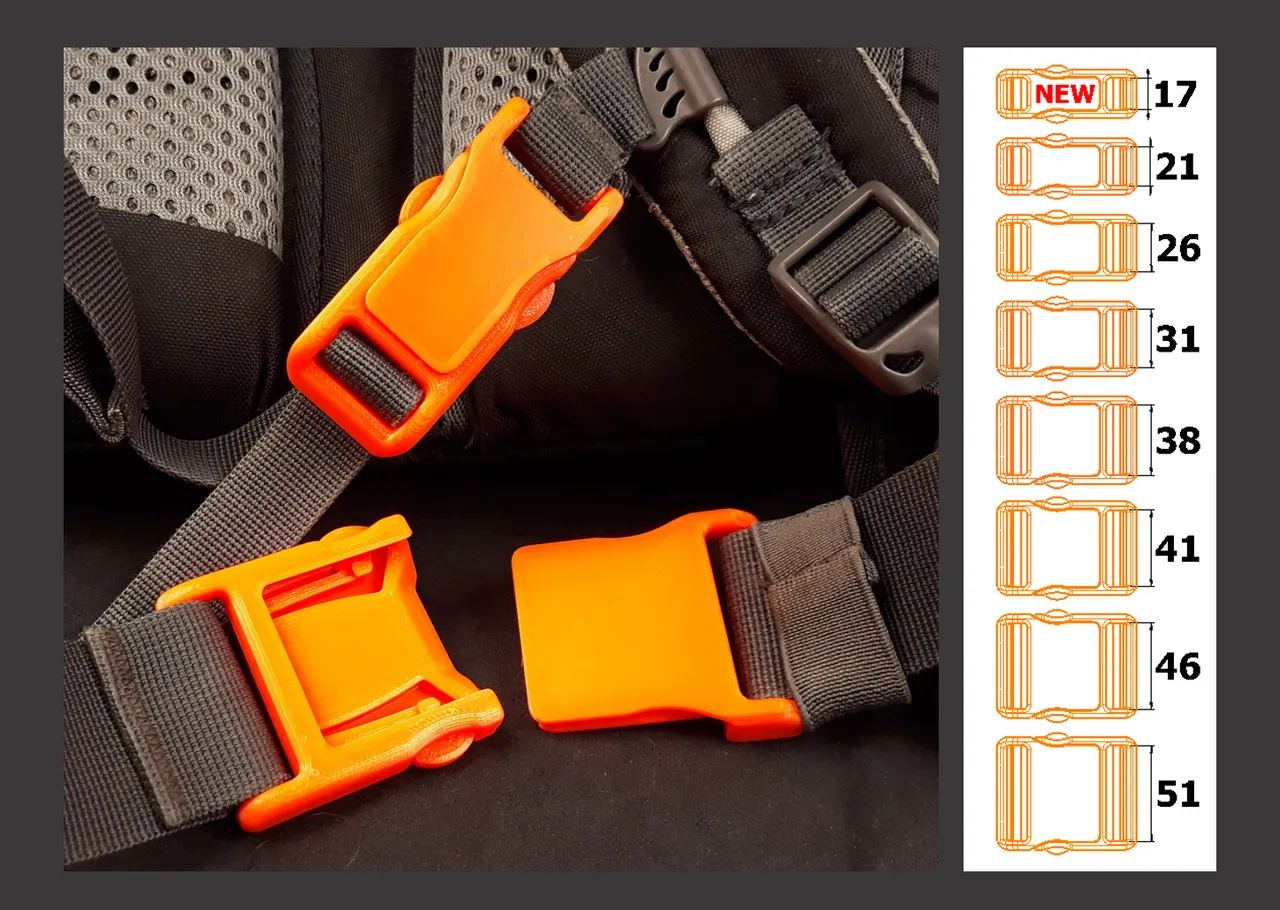
this design doesn't require support, but I had some doubt about the strength – by appearances, a bunch of load goes through layer adhesion across a relatively small perimeter (unless printed at 100% infill, in which case it's a relatively small cross section)
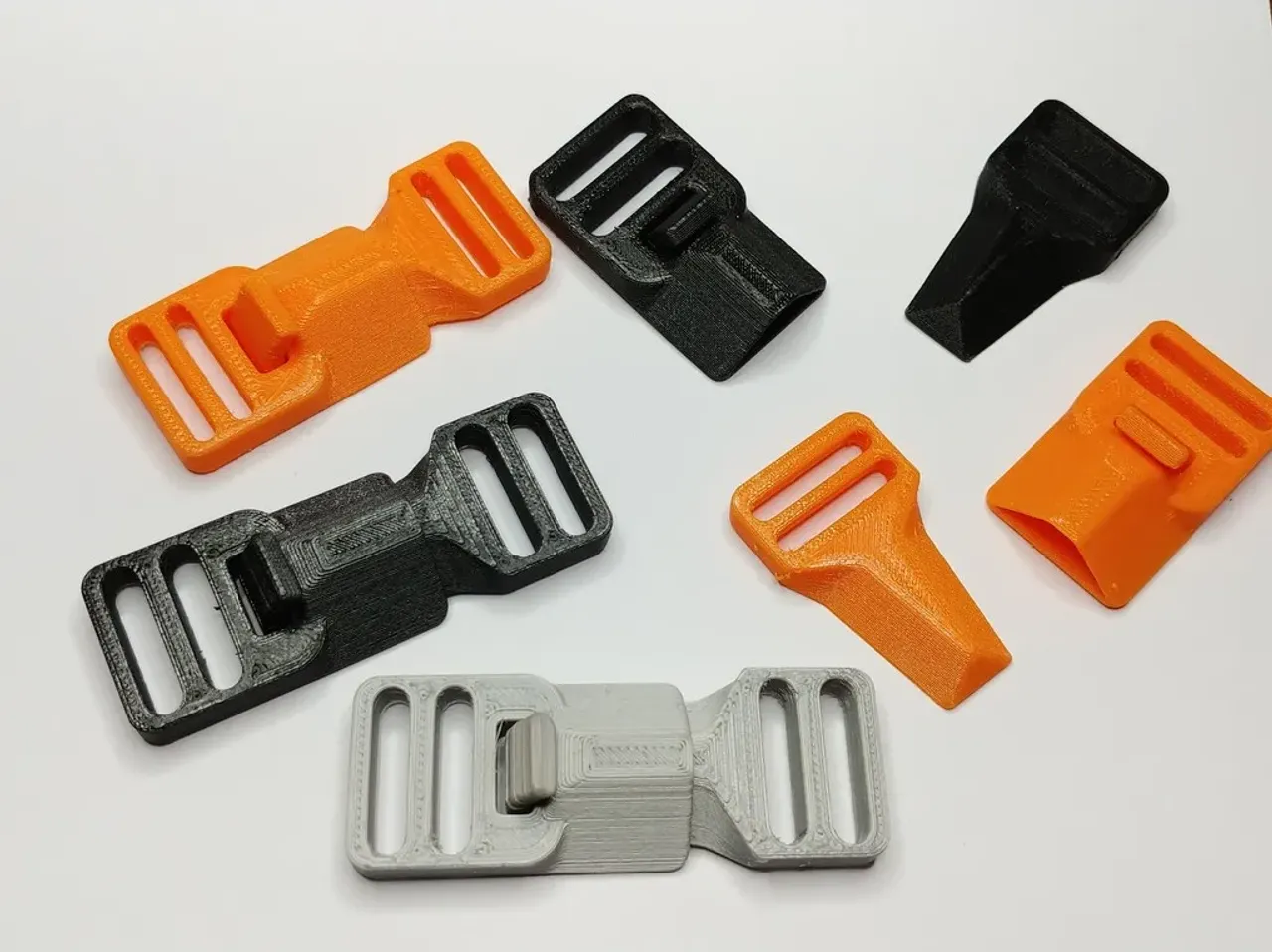
this center release buckle is a lot better than the previous, but still relies on layer adhesion for strength
note: at some point there is sufficient layer adhesion that it is no longer the limiting factor in strength
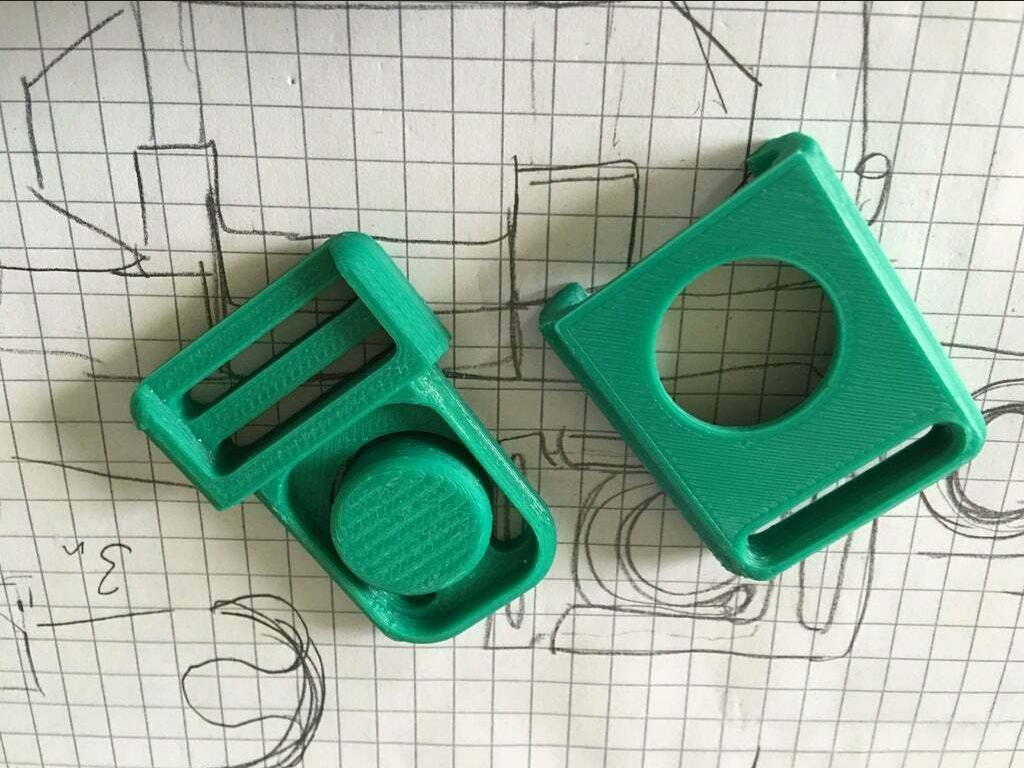
Summary
this design was intended to be more of a thought experiment & as of 2024-04-01, I have no real plans to print & test it
all versions prior to V2 are very exploratory & probably not functional
Considerations
provisions for webbing, much like this other design of mine
ease of release & connection
this is doubly important for connecting straps under tensile load, where a twist lock could be very cumbersome
3D print optimized
no supports
strength
stresses should be located in favorable scenarios
snaps & flexures tend to work much better in plane – flexures should be printed parallel to print bed
parameterized
design largely driven from few dimensions
Parameterization
revisions 1-2, at least, use the slot length as the principle driver for nearly all other dimensions
Revision 2
note the 0.5 mm
D TAIL LENGTH CLEARANCEon both sides ensures the snap latches over (later discussed)inspiration for this design borrowed from my previous work here
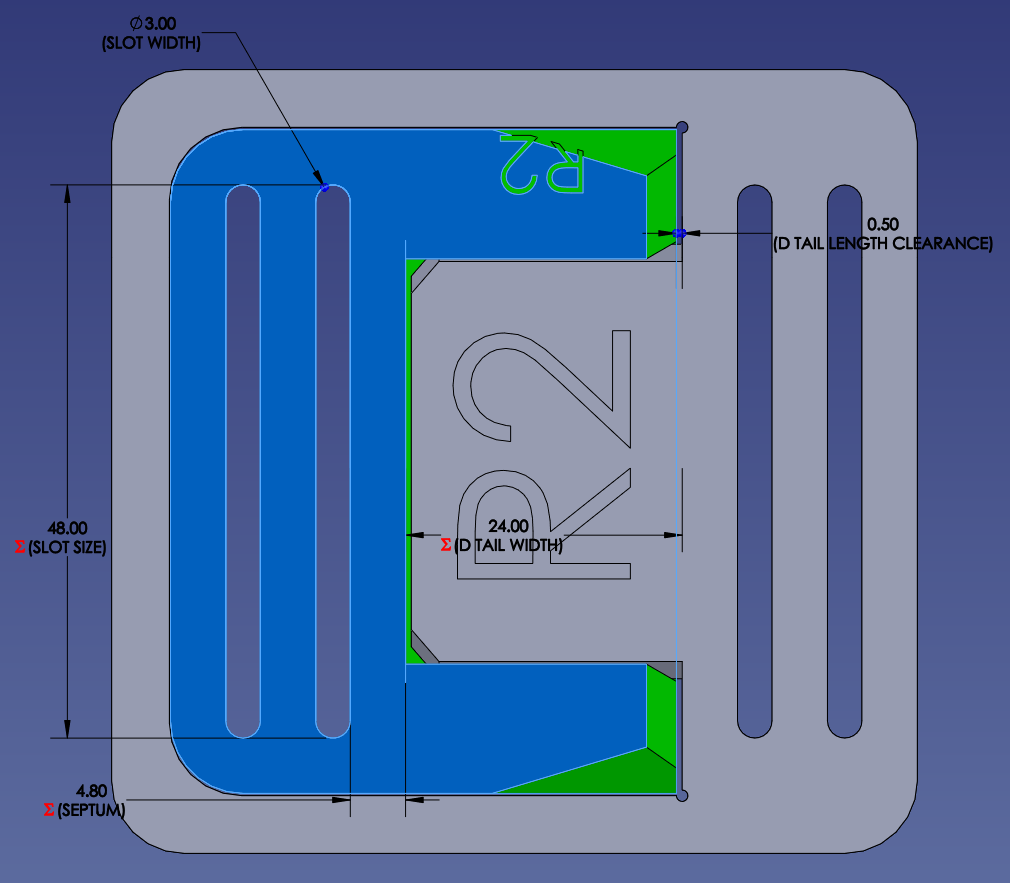
Dovetail profile
to fasten the 2 parts together, we need to immobilize all 6 degrees of freedom
dovetails are a great, very strong way to immobilize 5 DoF
furthermore, dovetails don't require supports
in this embodiment, 30 deg overhang angles are used
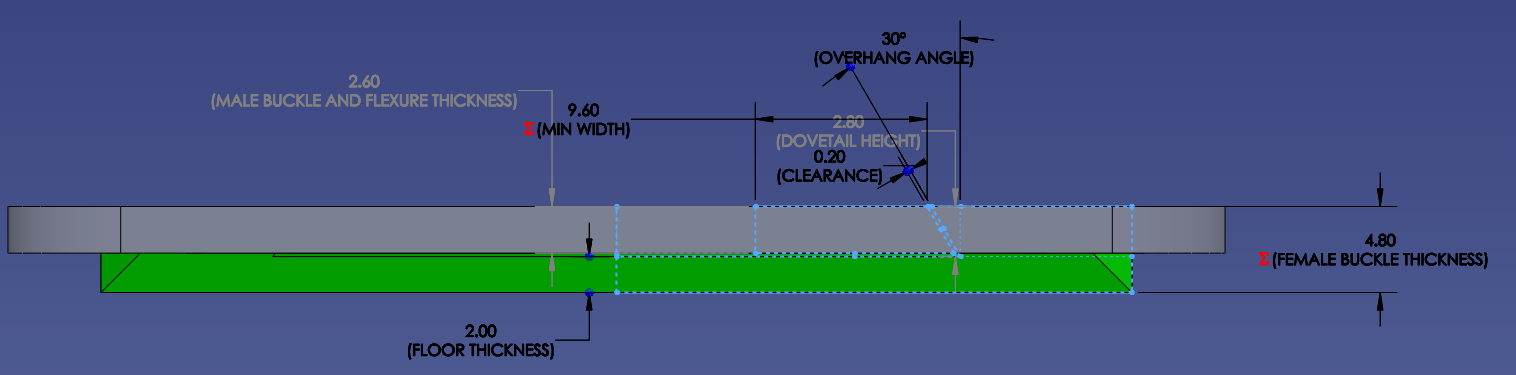
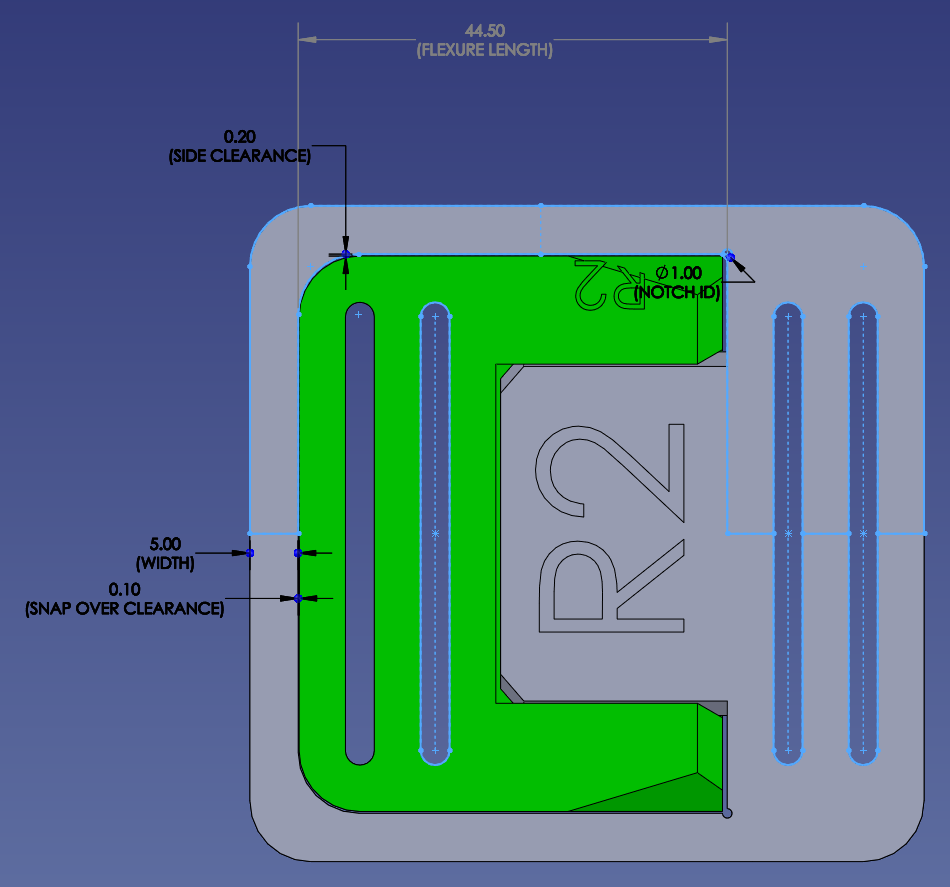
MALE plate
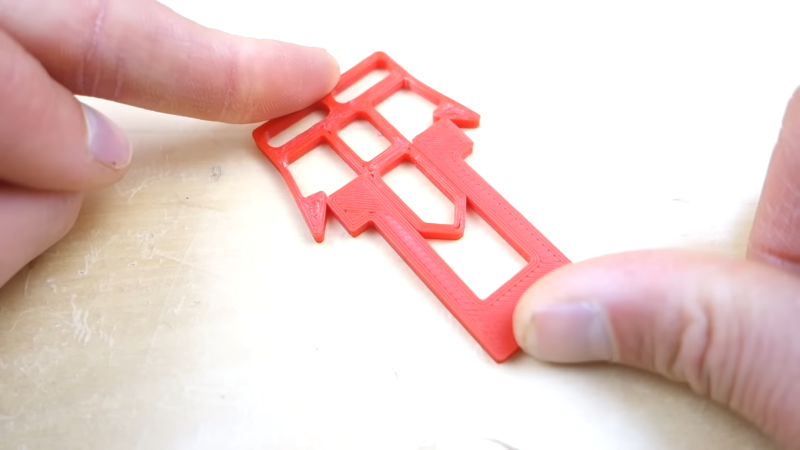
the last DoF, translation, is locked by the use of a loop snap fit
the flexure length is 44.5 mm, as shown below
in this way, the stress is tensile when the joint is loaded normally
this is advantageous because little bulk is required to achieve considerable tensile capacity for typical 3DP filaments
the clipped end is held in shear relative to the 2 legs which form the loop
the compressive stress borne by the FEMALE plate is across a large face that must exist anyways to achieve the basic function of connecting to webbing
in thinking about this problem, pretty much any other method of retention requires an abrupt change in cross section across the thickness of either plate, which then means layer adhesion carries a more significant fraction of the load
releasing this buckle is as simple as flexing the “latch”
Challenges with side release architecture
I eschewed side release buckles for a number of reasons
snaps being released by squeezing (like the typical side release buckles) concentrate stress across small lands of adhered layers & require supports to develop the enclosed cavity which immobilizes the same 5 DoF as dovetails do
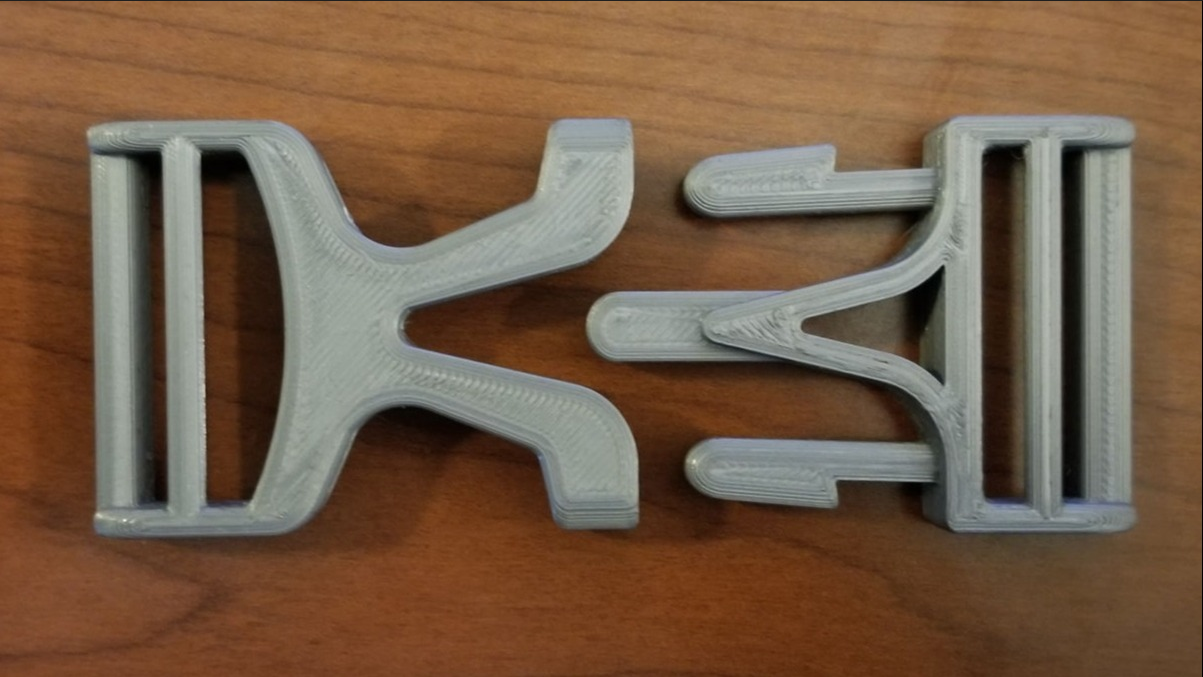
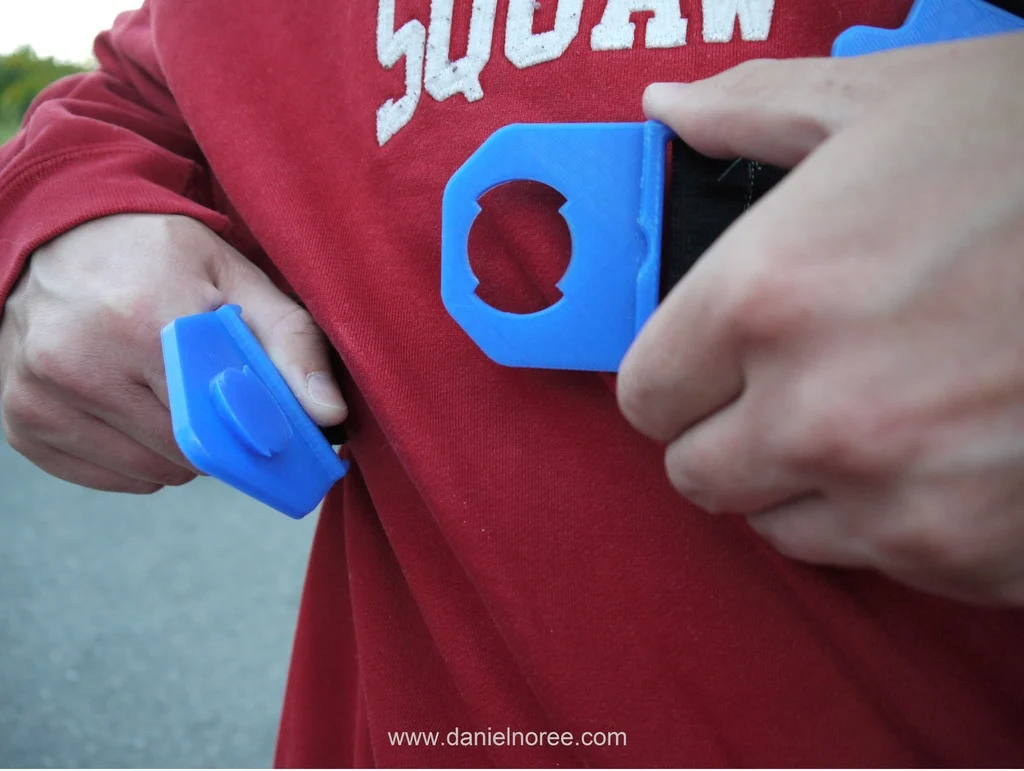
snaps released by spreading suffer from a usability problem: it's no longer a 1 handed affair to spread the snaps to disengage – example here
without some other mechanism to make it a 1 handed affair (which could be more parts & complexity), ease of use is quite poor
Future improvements
male & female plates are not uniformly thick & consequently webbing sits at different heights under tension
ease of connection
the layout as shown presents the flexure first, then the dovetail second
it would be best to present the dovetail first immobilize more DoF sooner
still not as good as an injection molded side release buckle
a lot of side release buckles are symmetric in that either side can be rolled 180 deg (about the axis of connection/disconnection) & still latch correctly
this buckle, as of 2024-04-03, given the way the webbing is supposed to route, precludes the latch from working in both orientations