
Atomix
Obliczymy ostateczną cenę na podstawie wybranego pliku. Sprawdzisz ją i zaakceptujesz przed płatnością.
Zapisane na tym urządzeniu.

An object to visualise heat treatment effects on metals
- Ocena
- 0 / 5
- Polubienia
- 10
- Pobrania
- 20
- Wydruki
- 0
- Wyświetlenia
- 511
- Oceny
- 0
Aktualizacja u źródła:
Informacje o modelu
- Źródło
- Printables
- Kategoria
- Engineering
- Licencja
- Creative Commons — Attribution — Noncommercial
Inspired by the Atomix desk toy from 1972:


For calculating the number of balls on a given area I used this website. On 100 X 100 mm around 2800 balls 2 mm diameter ocuppies the full area. Therefore I used ~2000 balls to have some empty volume to play around. I purchased the 2 mm diameter balls from aliexpress on this LINK.
About the clear window pieces, there are two options:
| Item | Quantity |
| DXF file for cutting on acrylic 1mm thick | 1 |
| OR | |
| STL file for printing on clear PTEG. | 2 |
Balls are placed in between the two clear windows, kept laterally by the separator piece:

Assembly basically is bottom up:
- Slightly glue the backframe to bottom clear window, just enough to keep in place.
- Slightly glue the separator to bottom clear window, just enough to keep in place.
- Place the 2000 balls inside the separator. Slowly! they jump like monkeys.
- Place the top clear window and secure by bolts.
On step 3: If too fast those tiny balls will be never found even if you live to see two more sun full eclipses. Use a flat bowl or similar to easily collect missing balls.
Metal hardware you would need:
| Item | Quantity |
| Counterbore M5X20 mm bolts | 8 |
| M5 nuts OR threaded inserts (both STLs are available) | 8 |
| Balls 2 mm diameter | Approx. 2000 |
IF making the clear windows on transparent PETG I recommend following the indications given on this link:
| Print in Clear PETG |
| 0.1 mm layer height |
| 10 mm/s |
| 100% aligned rectilinear infill |
| print hot! |
| 102% flow |
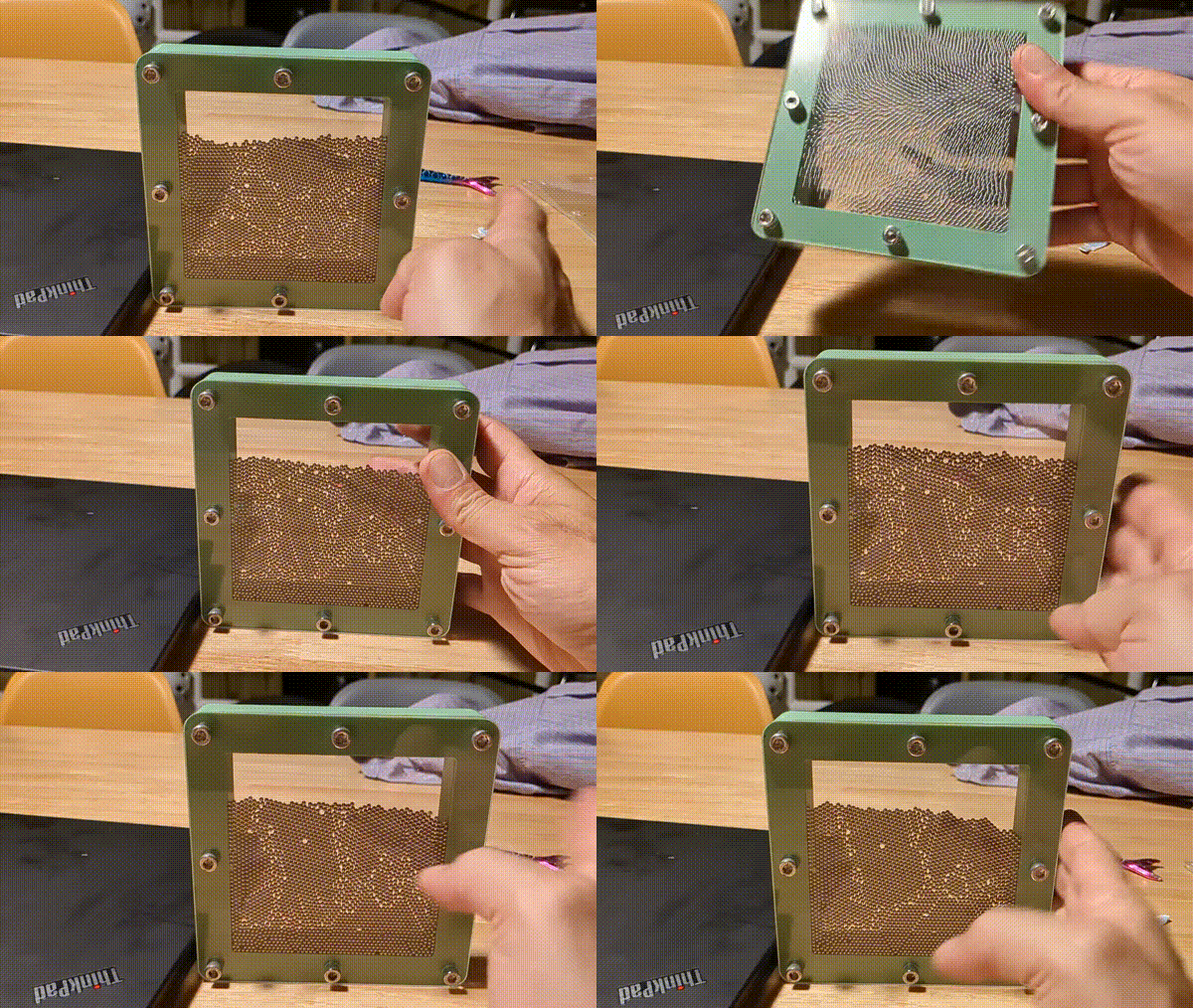
The heat treatment effect (grain growth) can be induced by hand shaking the frame:
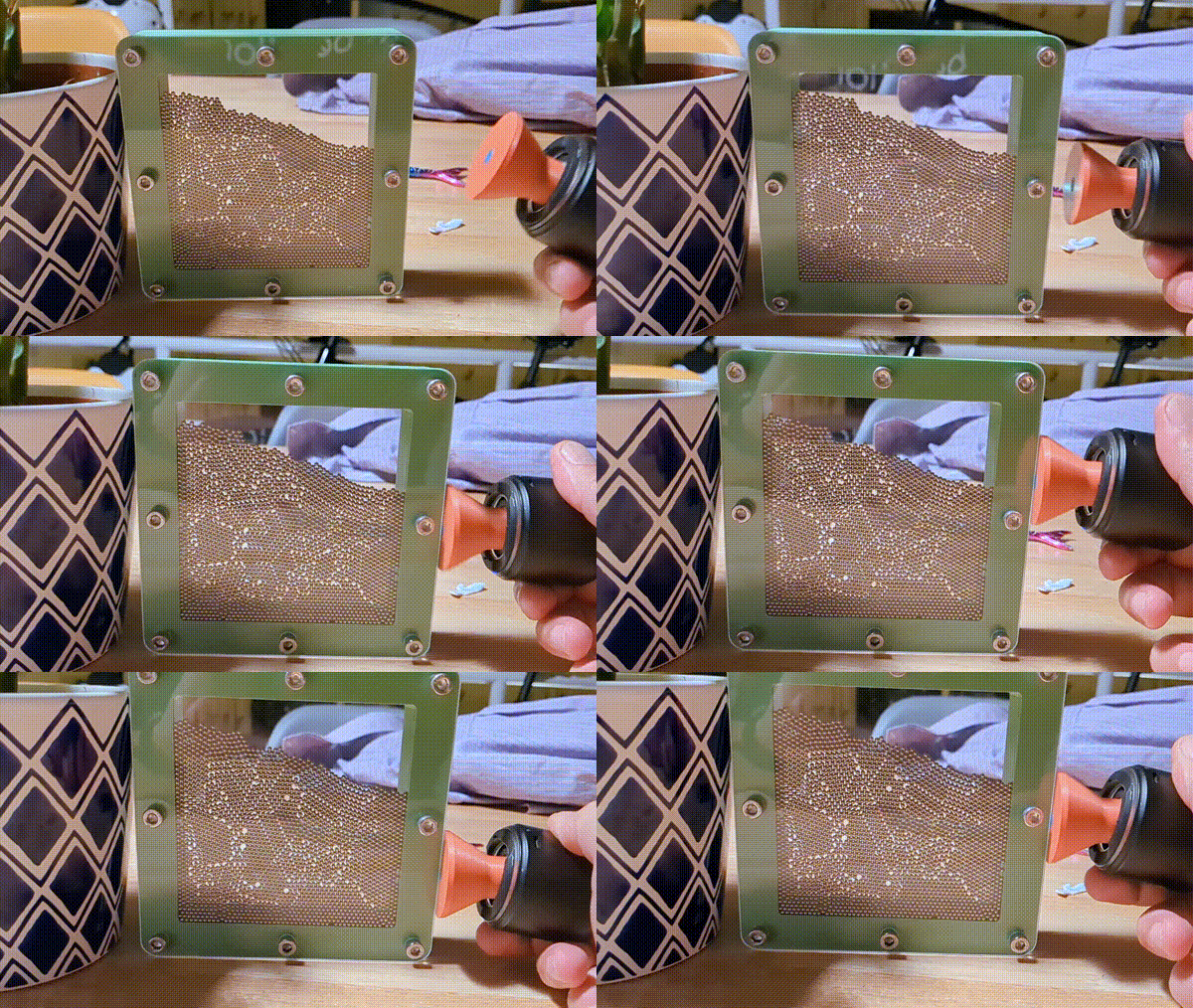
…or by vibrations from a speaker. I used this android app to find resonating frequency:
The Steve Mould video that inspired me: LINK
