
OR Blocks Logic Puzzle - Introduction to Sequential and Systematic Thinking for Novice Programmers. [Original Design]
We calculate the final price from your selected file. You review and accept it before payment.
Saved on this device.

Requires no electricity, and feels great on the hands, It's a puzzle set that helps you get a grasp on logical thinking.
- Rating
- 0 / 5
- Likes
- 41
- Downloads
- 52
- Makes
- 0
- Views
- 857
- Reviews
- 0
Updated at source:
Model information
- Source
- Printables
- Category
- Other 3D Objects for Learning
- License
- Standard Digital File License
Update:
Added Grid 3x3 Perforated model. (Function the same as Grid 3x3 but prints faster)
Note:
Feel free to contact me directly or leave a comment if you have any feedback or request.
Introduction
Noticed the lack of physical learning tools that promote logical thinking and systematic problem-solving skills, specifically for the field of computer science, without resorting to computers, electric devices, and breadboards.
The goal of this project is to create a physical education tool that focuses on helping students gradually develop the basic logical skills necessary in software development.
The tool must…
Promotes logical thinking, and systematic problem-solving.
Provides great physical feedback.
Work right out of the print plate.
Requires no electricity. Perfect for learning outside the computer room.
Easy to assemble, disassemble, and transport.
The puzzle can be played without supervision. Great for large classrooms.
and here's my take on this.
OR Blocks: Puzzle game for an aspiring programmer.
Work your way from the start or the end, this puzzle set will help ease you or your student into the world of systematic problem-solving.

Type of Blocks:
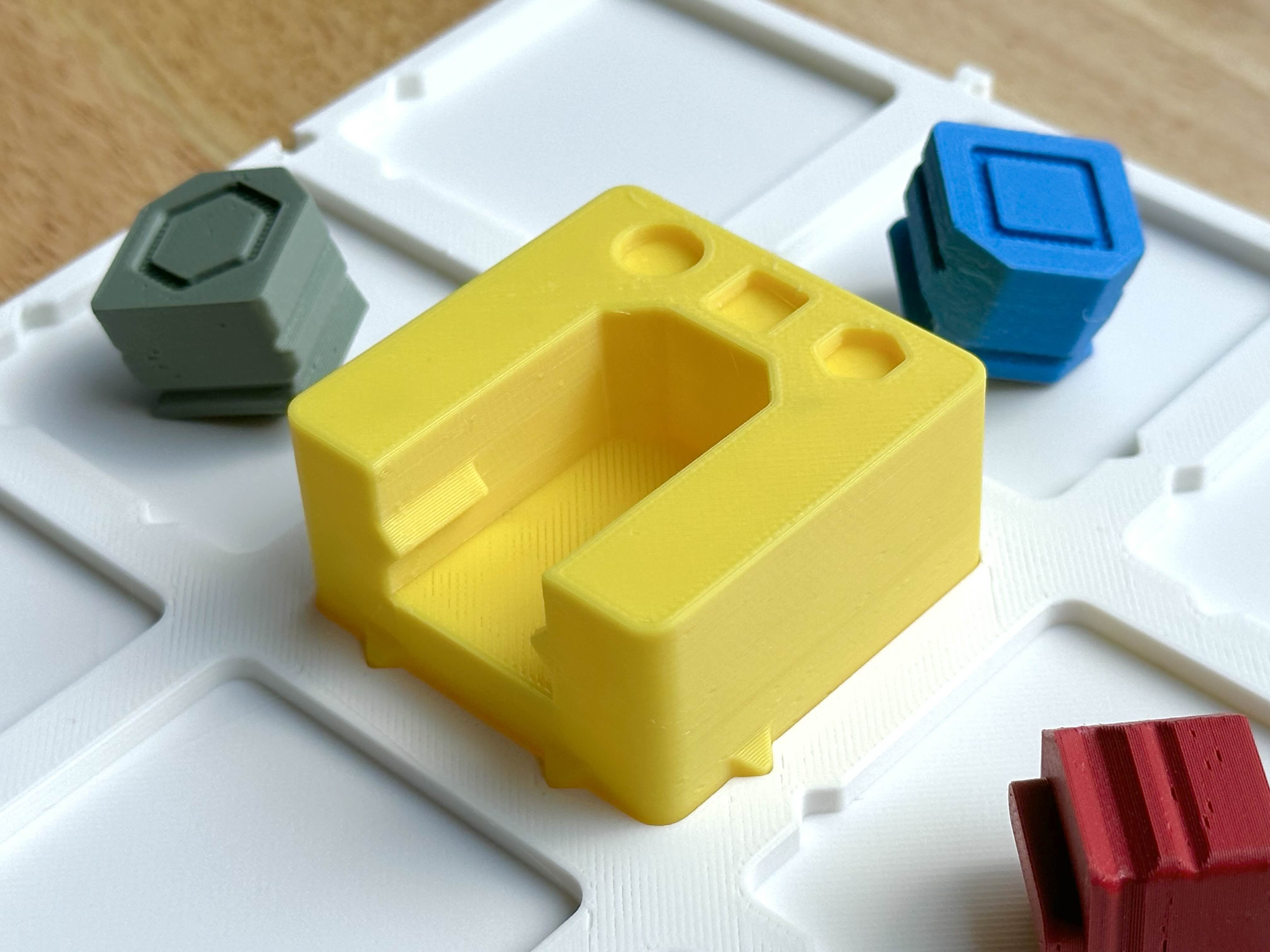
Start Block:
The start of our journey. A simple block that allows all symbol pieces to be inserted from the top and slide out the side.
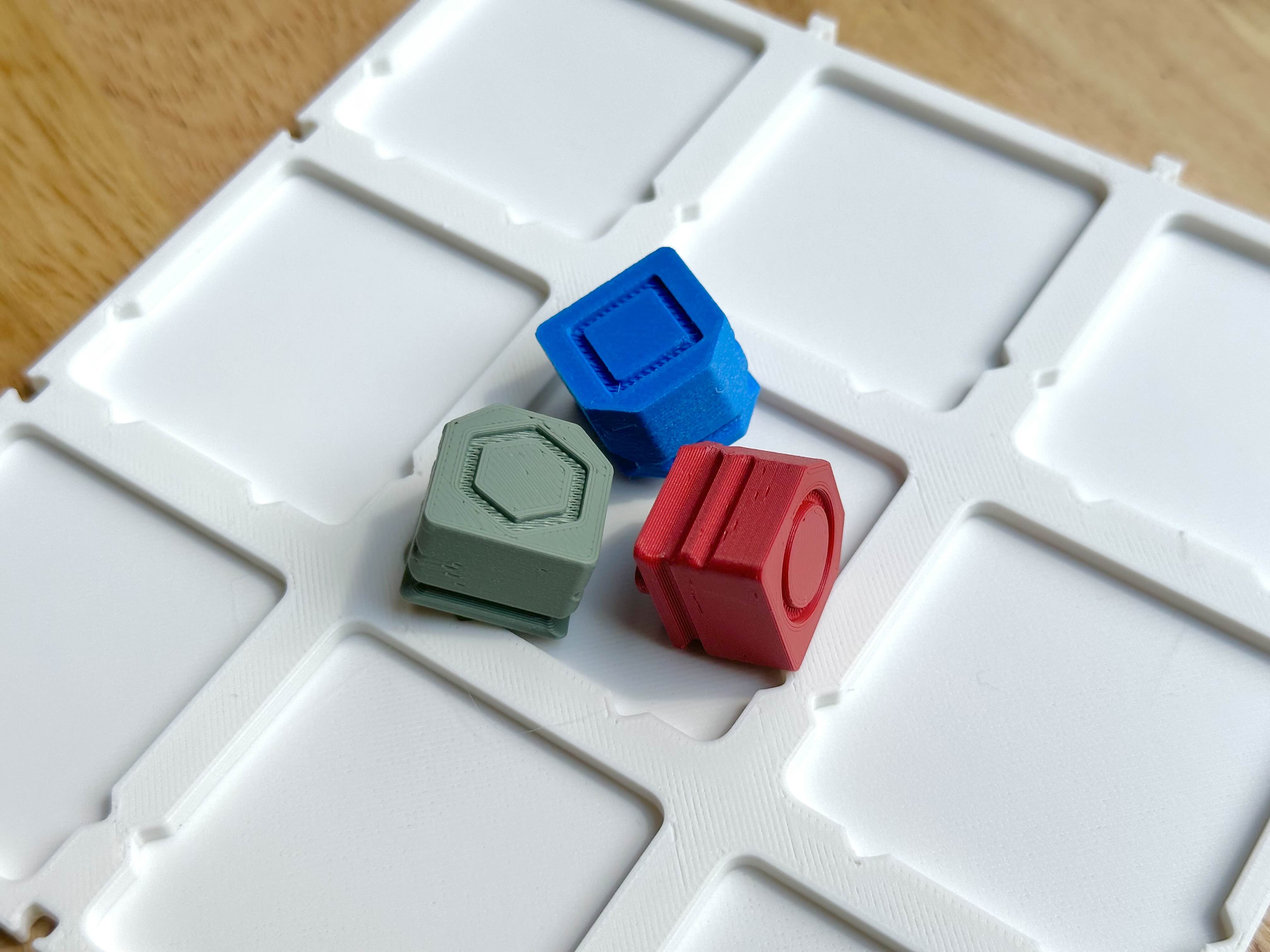
Symbol Pieces:
Our playpiece. A charming little cube that comes with several grooves that are specific to the symbols on top. This allows the piece to pass through paths that are specific to them.
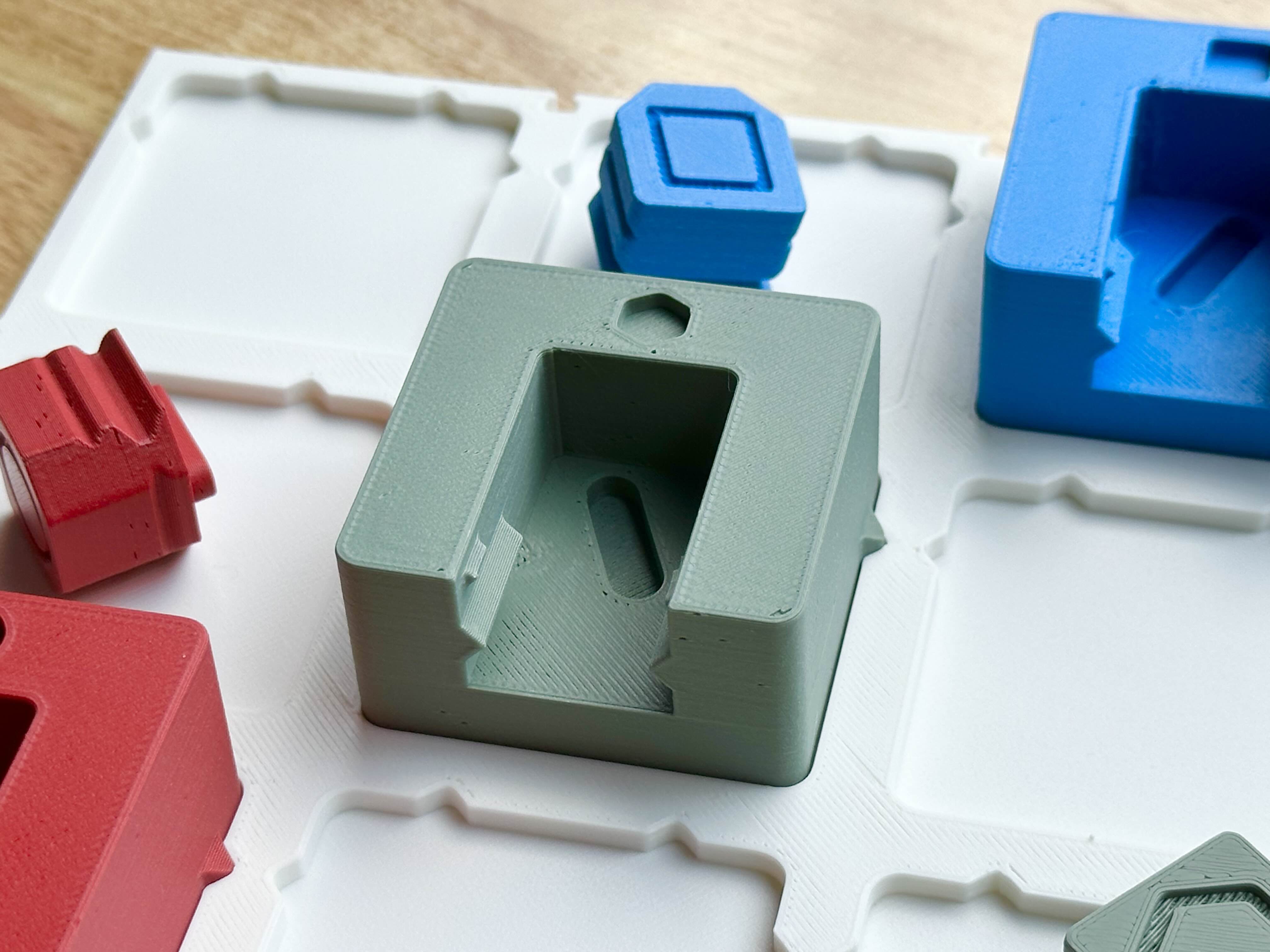
End Blocks:
One for each of the symbol pieces. The End Blocks are equipped with rails that only allow a specific piece to go through.
Once the piece has reached the center a symbol-specific slot will allow the piece to drop in place producing a satisfied click!


OR Blocks (Right and Left):
Equipped with several features.
General guide rails that allow the piece to slide through.
Symbol-specific drop slot that allows for only two specific pieces to drop into.
Symbol-specific rails at the end allow one specific piece to pass while preventing others from passing.


(Left: shows red piece sliding over the drop insert and slide out through the symbol-specific rails.)
(Right: shows green piece dropping down the insert slot and slide out the side.

Grid:
A Simple 3x3 grid with directional slots. It's impossible to put the block in the wrong way.
Multiple grids can be connected to create a larger playing field.
How to play:
Placing the Start Block and the End Blocks according to the provided preset (Please refer to the Setup Guide at the bottom of the description).
Arrange the OR Blocks to guide the pieces from the Start Block to their corresponding End Block. (eg: Circle piece to Circle End Block)
The final combination of the OR Blocks should allow all the pieces to reach their corresponding End Block without swapping out the OR Blocks mid-play.
The player is encouraged to try out different setups and gradually work their way to the final combination through trial and error.
Printing Guide:
No support is needed for any of the models (symbol pieces should be printed face down).
The maximum overhang angle that the printer needs to be able to print is 43 deg.
You can reduce the printing time of Grid 3x3 by cutting out the first 1mm of the model. The resulting grid will be hollow but will still work on a flat surface. Or prints Grid 3x3 Perforated instead.
Infill: ≥5%
(Any percentage that allows the printer to create a flat surface on top of the infill.)Material: PLA
Layer Height: 0.2mm
(Any value that allows the printer to be able to print the required overhang angle.)
Introduction Set: (12 Pieces)
2 - Grid 3x3
1 - Start Block
Full Set of the Symbol Pieces (3 objects)
Full Set of the End Blocks (3 objects)
Full Set of OR Blocks (Right) (3 objects)
Standard Set: (17 Pieces)
4 - Grid 3x3
1 - Start Block
Full Set of the Symbol Pieces (3 objects)
Full Set of the End Blocks (3 objects)
Full Set of OR Blocks (Right) (3 objects)
Full Set of OR Blocks (Left) (3 objects)
Sample Set: (7 Pieces)
Only for trying out the mechanics of the physical blocks.
1 - Grid 3x3
1 - Start Block
1 - Symbol Piece (Circle)
1 - End Block (Circle)
Full Set of OR Blocks (Right) (3 objects)
Learning Points:
The sequential nature of the puzzle mimics the nature of software.
To solve the puzzle effectively, students need to think systematically. Break down tasks into smaller ones and focus on adjusting existing solutions to comply with new constraints.
The design allows the student to easily play out the setup they have in mind. Don't need to have the whole thing figured out, try your idea and see what happens, then work from there!
The design allows the student to easily try out different combinations of blocks, promoting feedback loops that allow for a gradual understanding of the problem.
When a piece took an unexpected turn, the blocks provided both visual confirmation and physical feedback as to which path was the problem.
Accessibility & Printability
The largest model is only 16.3x16.3cm. Printable on a small 3d printer (eg: Prusa MINI+)
Portability and Storage
Grid can be disassembled and stacked on top of each other.
Snap each of the blocks to the grid plate.
A dissembled standard set will only take 16.3x16.3x6 cm of space. Put the whole thing in a bag and you are off running!
Setup Guide:
Some of the board setups to get going!
(Notice how D2 is a subproblem of E1, this might come in handy when trying to introduce the concept of systematic problem-solving to students.)
A1:
Can be played on: | Sample Set, Introduction Set, Standard Set | |||||||||
Estimate time: | 0.5 - 1 min | |||||||||
Block position: |
| |||||||||
Board face: |
|
A2:
Can be played on: | Introduction Set, Standard Set | ||||||||||||
Estimate time: | 0.5 - 1 min | ||||||||||||
Block position: |
| ||||||||||||
Board face: |
|
B1:
Can be played on: | Introduction Set, Standard Set | ||||||||||||||||||
Estimate time: | 1 - 3 mins | ||||||||||||||||||
Block position: |
| ||||||||||||||||||
Board face: |
|
B2:
Can be played on: | Introduction Set, Standard Set | ||||||||||||||||||
Estimate time: | 1 - 3 mins | ||||||||||||||||||
Block position: |
| ||||||||||||||||||
Board face: |
|
C1:
Can be played on: | Standard Set | ||||||||||||||||||||||||||||||||||||
Estimate time: | 5 - 10 mins | ||||||||||||||||||||||||||||||||||||
Block position: |
| ||||||||||||||||||||||||||||||||||||
Board face: |
|
C2:
Can be played on: | Standard Set | ||||||||||||||||||||||||||||||||||||
Estimate time: | 5 - 10 mins | ||||||||||||||||||||||||||||||||||||
Block position: |
| ||||||||||||||||||||||||||||||||||||
Board face: |
|
D1:
Can be played on: | Standard Set | ||||||||||||||||||
Estimate time: | 5 - 10 mins | ||||||||||||||||||
Block position: |
| ||||||||||||||||||
Board face: |
|
D2:
Can be played on: | Standard Set | ||||||||||||||||||
Estimate time: | 5 - 10 mins | ||||||||||||||||||
Block position: |
| ||||||||||||||||||
Board face: |
|
E1:
Can be played on: | Standard Set | ||||||||||||||||||||||||||||||||||||
Estimate time: | 5 - 10 mins | ||||||||||||||||||||||||||||||||||||
Block position: |
| ||||||||||||||||||||||||||||||||||||
Board face: |
|
E2:
Can be played on: | Standard Set | ||||||||||||||||||||||||||||||||||||
Estimate time: | 5 - 10 mins | ||||||||||||||||||||||||||||||||||||
Block position: |
| ||||||||||||||||||||||||||||||||||||
Board face: |
|
F1:
Can be played on: | Standard Set | ||||||||||||||||||||||||||||||||||||
Estimate time: | 5 - 10 mins | ||||||||||||||||||||||||||||||||||||
Block position: |
| ||||||||||||||||||||||||||||||||||||
Board face: |
|
F2:
Can be played on: | Standard Set | ||||||||||||||||||||||||||||||||||||
Estimate time: | 5 - 10 mins | ||||||||||||||||||||||||||||||||||||
Block position: |
| ||||||||||||||||||||||||||||||||||||
Board face: |
|
Ending Note:
I want to create a learning tool I wish we had during our first year of university as a computer science major. The struggle of adapting to the new mindset required by programming is brutal and many would drop out of the course just because of this alone. By easing this initial learning curve, I hope to inspire more people to stay and discover the joy of programming as I have experienced until this day.
Future Improvements:
More Preset:
At the current state, the number of possible setup is limited and does not promote replayability. New logic blocks or more symbol pieces might help.
Reduce Confusion:
Minimize the potential of pieces going where they should not go.
Reduce Print Time:
Some of the models should be redesigned to reduce print time. (eg: Grid 3x3)
Improves Handling:
Sometimes paths are quite stiff, increasing the tolerance value for rails and slots might create a smoother playing experience.
Reduce Size and Number of Pieces:
Bi-directional logic blocks will eliminate the need to have a separate model for left and right logic blocks.
Consider Supporting!! Your support will allow me to continue sharing my design.
buymeacoffee.com/supanut.tho

Happy Printing!