
Alpha-amylase with flexible amylopectin
We calculate the final price from your selected file. You review and accept it before payment.
Saved on this device.
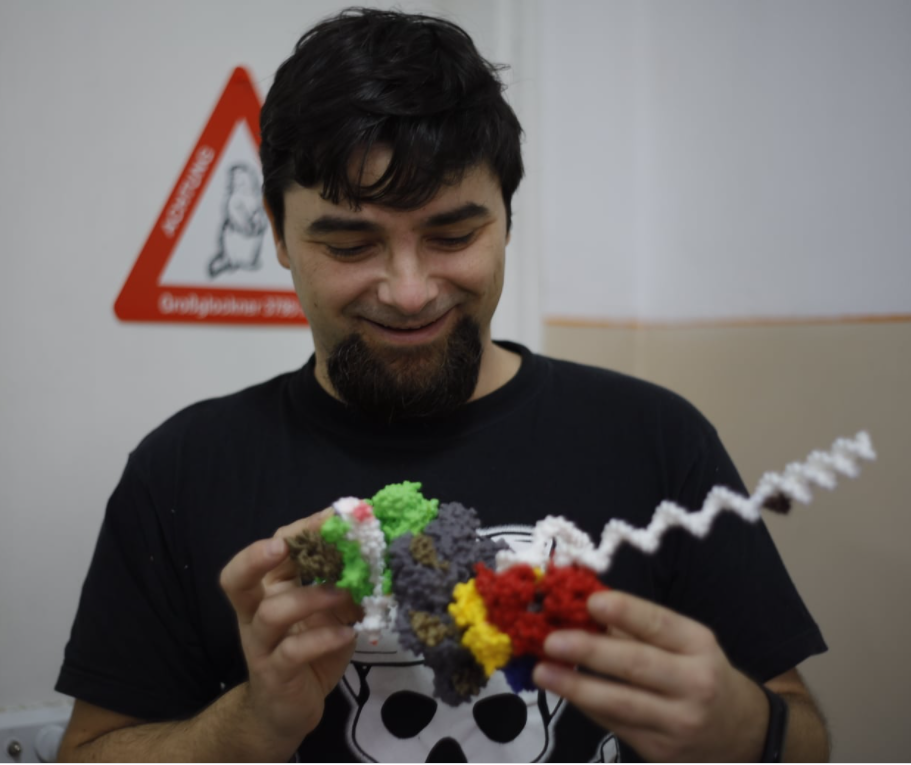
Molecular surface representation of a mammalian alpha-amylase (PDB ID 1PPI) and its substrate amylopectin.
- Rating
- 0 / 5
- Likes
- 16
- Downloads
- 61
- Makes
- 0
- Views
- 631
- Reviews
- 0
Updated at source:
Model information
- Source
- Printables
- Category
- Chemistry & Biology
- License
- Creative Commons — Attribution
Molecular surface representation of a mammalian alpha-amylase (PDB ID 1PPI) and its substrate amylopectin. The sugar component is printed in flexible TPU and can be inserted and removed from the amylase catalytic site. The model is great for explaining the structure of starch and its degradation by amylolytic enzymes.
The atomic coordinates of amylose and amylopectin are from Proteopedia - Life in 3D - a collaborative & free 3D-encyclopedia of proteins & other biomolecules.
Segmentation Software: Prusa Slicer
3D Modeling/CAD Software: ChimeraX
Printer Technology/Material: Polylactic Acid (PLA) and Flexible TPU
Printer Make/Model: Creality Ender-3 V2
Print Units: mm
Scale At Given Print Units: 200
Pre- and Postprocessing Instructions
Printed at 0.2 resolution with 2 wall lines and 5% infill. Extensive supports are required but were rather easy to remove. The amylopectin was reconstructed using the 30 residues amylopectin and amylose atomic coordinated available on Proteopedia (https://proteopedia.org/wiki/index.php/Carbohydrates_II) . The amylose was re-heated afterwards with a hotgun, and slightly reshaped in order to fit in the amylase catalytic site. Once the right bend was achieved, the amylose piece stuck to the amylopectin piece by simply re-melting the two ends and fusing them together.