
"Shin" with four arms - "שי"ן" עם ארבע זרועות
We calculate the final price from your selected file. You review and accept it before payment.
Saved on this device.
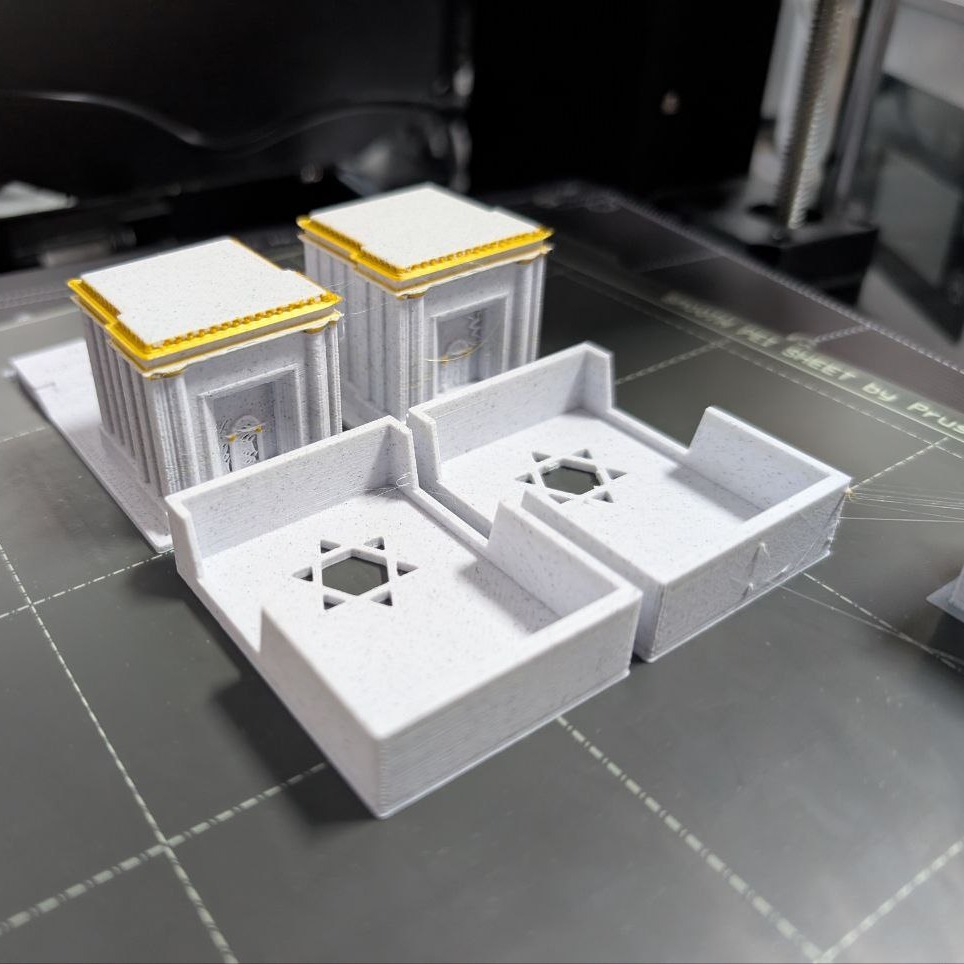
"Shin" with four arms - for your use - "שי"ן" עם ארבע זרועות - לשימושכם
- Rating
- 0 / 5
- Likes
- 2
- Downloads
- 15
- Makes
- 0
- Views
- 66
- Reviews
- 0
Updated at source:
Model information
- Source
- Printables
- Category
- Other Art & Designs
- License
- Creative Commons — Attribution
On the verse in the Book of Deuteronomy: "And all the people of the earth shall see that the name of the Lord is called upon you, and they shall fear you," the Gemara says in its offerings: "These are the tefillin on the head."
One of the names of the Lord that cannot be erased but is permitted to be said. It is: Shadi, and the "Shin" engraved on both sides of the house of the head is the beginning of this name, and therefore it can be seen as representative. The other letters appear in other ways and in other places between the parts of the tefillin: the letter "Dal"t is designed by means of the knot of the head band - the knot placed on the nape of the neck, and the letter "Yod" is revealed in the knot of the wrist band, adjacent to the house of the hand. All this according to the halakha of Moses from Sinai. The details will be explained later.
The "Shin" engraving on the head tefillin is on both sides, but on one side appears an unusual "Shin", a "Shin" with four arms. What is the point of this special "Shin"?
Some say that it is against three fathers and four mothers, and some say that in this matter we can find a hint of what is said in the Torah about the special nature of the writing on the tablets of the Covenant, as it says: "Engraved on the tablets" or "From this and from this they are written." And indeed, what is the connection between the tefillin of the head and the tablets?
A careful examination of this "Shin" reveals that we are faced with a regular "Shin" but "sunken," that is, between its four arms there are three air spaces, and these create a "Shin," which is made of both air spaces and the three arms engraved deeply, in the "bottom" of the surface of the wall of the house. We have therefore received, in addition to the "Shin" that protrudes above the surface of the wall, another "Shin" of depth.
על הפסוק בספר דברים:" וראו כל עמי הארץ כי שם ה' נקרא עליך ויראו ממך" אומרת הגמרא במנחות לה: "אלו תפילין שבראש".
אחד משמות ה' שאין למחקם אך מותר לאומרם. הוא : שדי, וה"שי"ן" המוטבעת בשני צדי הבית של ראש היא ראשיתו של שם זה, ולפיכך אפשר לראותה כמייצגת. שאר האותיות מופיעות באופנים אחרים ובמקומות אחרים בין חלקי התפילין: האות "דל"ת" מעוצבת באמצעות הקשר של רצועת הראש – הקשר המונח על העורף, ואת האות "יו"ד" נגלה בקשר של רצועת היד, בצמוד לבית של יד. כל זאת על פי הלכה למשה מסיני. הדברים יפורטו בהמשך.
הטבעת ה"שי"ן" בתפילין של ראש נמצאת משני צדיו, אך בצד אחד מופיעה "שי"ן" חריגה, "שי"ן" בעלת ארבע זרועות. מה עניינה של "שי"ן" מיוחדת זו?
יש אומרים שהיא כנגד שלושה אבות וארבע אמהות, ויש אומרים, שאפשר למצוא בעניין זה רמז למה שאמור בתורה על טיבו המיוחד של הכתב בלוחות הברית, שנאמר: "חרות על הלוחות" או "מזה ומזה הם כתובים". ואכן מה הקשר בין התפילין של ראש לבין הלוחות?
מעיון מדוקדק ב"שי"ן" הזאת עולה כי לפנינו "שי"ן" רגילה אך "משוקעת", כלומר, בין ארבע זרועותיה ישנם שלשה מרווחי אוויר, ואלה יוצרים "שי"ן", שהיא עשויה גם ממרווחי אוויר וגם משלוש הזרועות החרוטות בעומק, ב"קרקעית" של פני דופן הבית. קיבלנו, אפוא, נוסף על ה"שי"ן" הבולטת מעל פני הדופן, עוד "שי"ן" של עומק.