
Model of Marcel Duchamp's Traveler's Folding Item by williamCromar
We calculate the final price from your selected file. You review and accept it before payment.
Saved on this device.
Part of Prêt à Faire, an independent transformative performance supported by Penn State Abington. CC BY-NC-SA 4.0.
- Rating
- 0 / 5
- Likes
- 2
- Downloads
- 6
- Makes
- 0
- Views
- 46
- Reviews
- 0
Updated at source:
Model information
- Source
- Printables
- Category
- Sculptures
- License
- Creative Commons — Attribution — Noncommercial — Share Alike
This open-access reference model is one of the collection Prêt à Faire: Printable Readymade Models. To explore the advanced, 1:1 full-scale deluxe edition operating under a separate commercial license framework as part of this broader marketplace critique, view the premium tiers associated with this project:
1 | Concept & Provenance
This asset is an independent, transformative performance by williamCromar exploring distributed culture through the lens of public-domain source geometry. The historical referent—the 1916 Traveler's Folding Item (originally titled Pliant de voyage)—consisted of a commercial Underwood typewriter cover. Duchamp noted that his objective was to intentionally "introduce softness into the Readymade," disrupting the rigid industrial lines of his earlier selections with an ephemeral, flexible form.
To support an instructional research initiative funded by a faculty grant from Penn State Abington, I developed this digital model from the ground up using public historical research. The original 1916 cover was so short-lived that no photographic documentation of it exists; its historical parameters are preserved entirely through mid-century museum reproductions. Rather than copying any proprietary museum data, this project transforms those historical visual motifs into a series of printable digital variations that explore material pliability within an additive manufacturing environment.
Explore the historical research context of this study at:
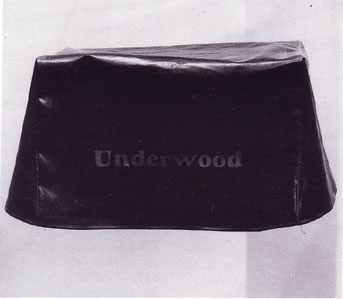 Stockholm Moderna Museet |  Centre Pompidou |  Box in a Valise |
As a work of Post-Appropriation, this model is an independent digital manifestation optimized specifically for flexible multi-material FDM fabrication, structural durability, and scale variance. The geometry deliberately adapts historical visual motifs into a printable medium, celebrating the physical deviations required by the additive manufacturing process as part of the artwork's transformative expression.
Other contemporary practitioners have famously engaged with this specific visual motif,, including Pierre Bismuth's consumerist critique, Greg Allen's take on authoritarianism, and Anja Bohnhof's reflection on time and memory.
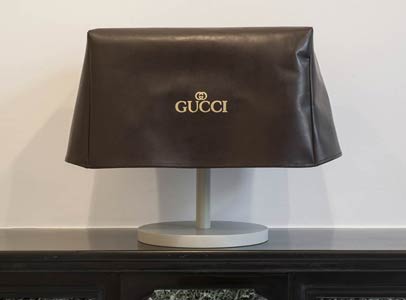 Pierre Bismuth, Gucci Traveler's Folding Item, 2012 | 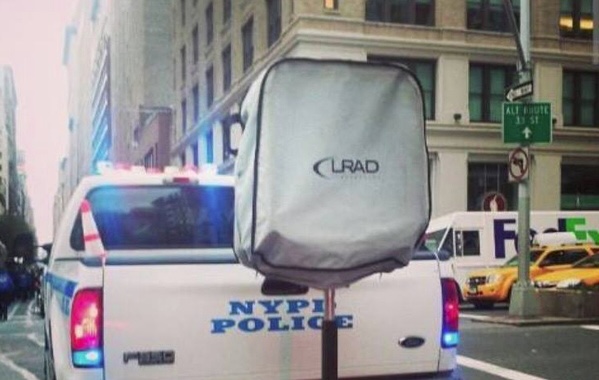 Greg Allen, Protestor's Folding Item, 2014 |  Anja Bohnhof, Dans la nuit de temps, 2023 |
|---|
2 | Scope & Scale
Reconstructing a soft, collapsible typewriter cover for layer-by-layer deposition presents unique slicing challenges. The source files are drawn at full historical size and can be scaled down in your slicer. Changing scale parameters arbitrarily is not recommended, as it will alter the integrated wall clearances and flexible joint behaviors. While the models print smoothly on standard desktop systems at reference scales, larger executions require a large-format manufacturing bed (such as a Prusa XL). A full-scale version is available under a separate commercial license at this link.
3 | Printing Notes
3.1 | General Recommendations
Use the supplied 3MF files with preconfigured orientations, multi-material painting, and settings.
These settings were validated on a well-tuned Prusa XL using dehydrated filament.
STL and STEP files are provided for users who wish to experiment.
A multi-material TPU print requires some babysitting to get a clean first layer, due to material stringiness.
File Formats
[Model_Name].3mf/.stl→ Best for quick printing. Pre-meshed at a high resolution, these files will slice exactly as they appear in the smooth website preview.[Model_Name].step→ Best for remixing and maximum quality. These files contain precise CAD data. Note: Ignore the blocky look in the online browser viewer; it will download and slice perfectly inside your slicer.
To honor the spirit of Duchamp's desire to "introduce softness," this file directory provides two distinct physical paths for makers:
The Rigid Configuration: travelers_hardshell is appropriate for PLA or PETG multi-material printing between 40% and 67% scale, depending on printer size.
The Flexible Configuration: Optimized for flexible TPU or elastomeric FLEX filaments. This setup leverages the natural pliability of the material to explore the fluid movement of the historical cover in a multi-material configuration. It is designed for printing in two different scale configurations:
travelers_25: Can be printed at scales ranging from 25% to 33.3% of the original on a Prusa XL.
travelers_50: Two side flaps have been separated from the main body, for a total of 3 files that can be printed at a range of scales up to 50% on the XL in TPU. For those who wish to print on an MK3/4 with MMU, it can be scaled to 25%, but see notes below.
In addition to these variations, we offer travelers_stand, a model for a stand to print at the same scale as any of the above in PLA or PETG. Supports are required but minimized in the recommended plating.
Notes for these variations:
travelers_hardshell: No supports are needed if this file is printed upside down. When scaling in the slicer, confirm that at least 3 perimeters are printing. Print either with 3 perimeters or 100% infill to stabilize vertical walls and optimize the multi-material printed lettering.
travelers_25 and travelers_50: Print with logo side DOWN. As seen in the photographic documentation, results are optimized using a textured build plate. It is challenging to print TPU unless circumstances are perfect (a well-tuned machine, dehydrated fresh filament, controlled climate, cleanest possible build plate, etc.):
Use ONE perimeter and let the top and bottom infill layers do the work. Experiment with increasing top and/or bottom infill layers to eliminate any need for interior infill.
When painting materials in the slicer, letterforms are tricky to select to achieve multiple layers of the lighter-color material for the logo. This is critical for quality. Select the face of the letter, then zoom in to observe the side face of the letter and select it. Alternatively, assign the entire object to the lighter material, then assign non-letterform geometry to the darker material.
Assigning 6 layers to the large flat areas of the front, top, or sides achieves a good compromise between structural integrity and the desired “soft” feel of the work. To achieve this optimal thickness, NON-UNIFORMLY SCALE the Z direction. For example: using the 25 file, a non-uniform Z scale of 40% yields 6 layers: 2 for the bottom holding the letterforms, 2 with the bridges at the folds, and 2 for the inside structure.
travelers_stand: Orient this 90 degrees on the build plate with its longest face on the plate, and assign support to hold the central column.
Recommended material:
Prusament Jet Black PLA for the hardshell and/or stand
Elegoo Brown PLA for the hardshell lettering is a good match for the faded “gold” color
SUNLU Black TPU for the main body of the soft version
Overture Brown TPU for soft version lettering: I'm not a big fan of Overture, but this color is the best match in TPU
Settings for the stand:
Print Settings: 0.2mm Structural
Filament: Prusament PLA
Printer: As appropriate for scale (see above)
Supports: Everywhere
Infill: 15%
Brim: None
Advanced settings:
Layers and perimeters: All defaults
Infill: Gyroid fill pattern, Aligned Rectangular top and bottom fill pattern, set to 0 degrees
Support material: Snug
Settings for the hardshell version:
Print Settings: 0.15mm Structural
Filament: Prusament PLA
Printer: As appropriate for scale (see above)
Supports: None
Infill: 100%
Brim: None
Advanced settings:
Layers and perimeters: 1 Perimeter
Infill: Rectangular fill pattern, Aligned Rectangular top and bottom fill pattern, set to 0 degrees
Settings for the soft version:
Print Settings: 0.15mm Structural
Filament: Generic FLEX
Printer: As appropriate for scale (see above)
Supports: None
Infill: 100%
Brim: None
Advanced settings:
Layers and perimeters: 1 Perimeter
Infill: Rectangular fill pattern, Aligned Rectangular top and bottom fill pattern, set to 0 degrees
Statistics for a 50% size hardshell print:
Total material used: ~350 grams black, 4 grams brown
Total time: ~18 hours
Total number of build plates: 2
Statistics for a 50% size soft print:
Total material used: ~126 grams black PLA, ~146 grams black TPU, ~2 grams brown TPU
Total time: ~11 hours 15 minutes
Total number of build plates: 3
4 | Assembly Notes
If using the hardshell model, simply place it on the stand. No glue or assembly needed.
For any TPU versions, you'll need to fold the appropriate flaps inside the main body of the work and attach them with adhesive.
There is no easy way to adhere TPU:
PVC adhesive is said to work, but it is carcinogenic and difficult to work with precisely.
We have achieved successful long-term results using industrial-strength 3M Adhesive Transfer Tape. Our prototypes at 25% and 50% scale have held together for over a year. However, we cannot guarantee archival results beyond that time frame.
Before using the transfer tape, I folded the flaps over and weighed them down to “train” the fold. TPU has a terrific memory, which can be both a blessing and a curse. We managed to convince a fold to take hold after a few days of training.
TPU is a very experimental material in this context, not for the faint of heart. Use it at your own risk.
5 | Presentation Notes
As noted in the art-historical analysis from Seekamp at Tout Fait:
Joselit explains, "This item, which Duchamp identifies with a feminine skirt, should be exhibited on a stand high enough to induce the onlooker to bend and see what is hidden by the cover" (90).
In this way, this Readymade acts as an invitation to voyeurism. There is of course nothing actually underneath the skirt; the viewer's imagination must complete the artwork. As Duchamp always believed, "The onlookers are the ones who make the picture" (Moffitt 233)
To prompt this interaction, display the finished fabrication on a custom stand, table, or pedestal high enough to encourage observers to actively lean down and peek underneath the cover.
6 | Change Log
9 JUL 2026: Optimized file nomenclature and technical text for consistency. Integrated universal STEP files across the directory and added a reference link to the full-scale deluxe edition.
14 DEC 2025: Integrated documented historical artist precedents, added a technical exploded isometric assembly diagram, and uploaded a pre-painted multi-material 3MF slicing profile.
22 NOV 2025: Revised project documentation for layout clarity and consistent formatting across the Prêt à Faire collection.
6 OCT 2025: Uploaded photographic documentation of completed physical prototyping loops: the flexible TPU variant is validated at 25% scale, and the rigid PLA variant is validated at 50% scale.
5 OCT 2025: Developed a specialized flat-pack TPU alternative that prints completely flat against the bed and assembles via folding flaps to eliminate slicing support requirements. Updated documentation to reflect the addition.
Disclaimer
Prêt à Faire is an autonomous artistic project, scholarly reference work, and institutional critique by williamCromar, supported by a faculty grant from Penn State Abington with fabrication assistance from the Abington MakerSpace. This project is entirely independent and maintains no formal affiliation, endorsement, or sponsorship with Association Marcel Duchamp, the Estate of Marcel Duchamp, ARS, ADAGP, or any curating museum. When referencing or sharing this work, users must maintain a clear distinction in authorship and nomenclature from the historical referent. Cite this asset as: Model of Marcel Duchamp’s [Object Name] by williamCromar. Basic models are available under a CC BY-NC-SA 4.0 license; premium tiers operate under a separate commercial framework. For full conceptual and legal text, visit https://sites.psu.edu/pretafaire/disclaimer-and-licensing/