
Educational Gear Examples 3 - Lantern
We calculate the final price from your selected file. You review and accept it before payment.
Saved on this device.
Model information
- Source
- Printables
- Category
- Engineering
- License
- Creative Commons — Attribution
My Educational Mechanical Examples Series
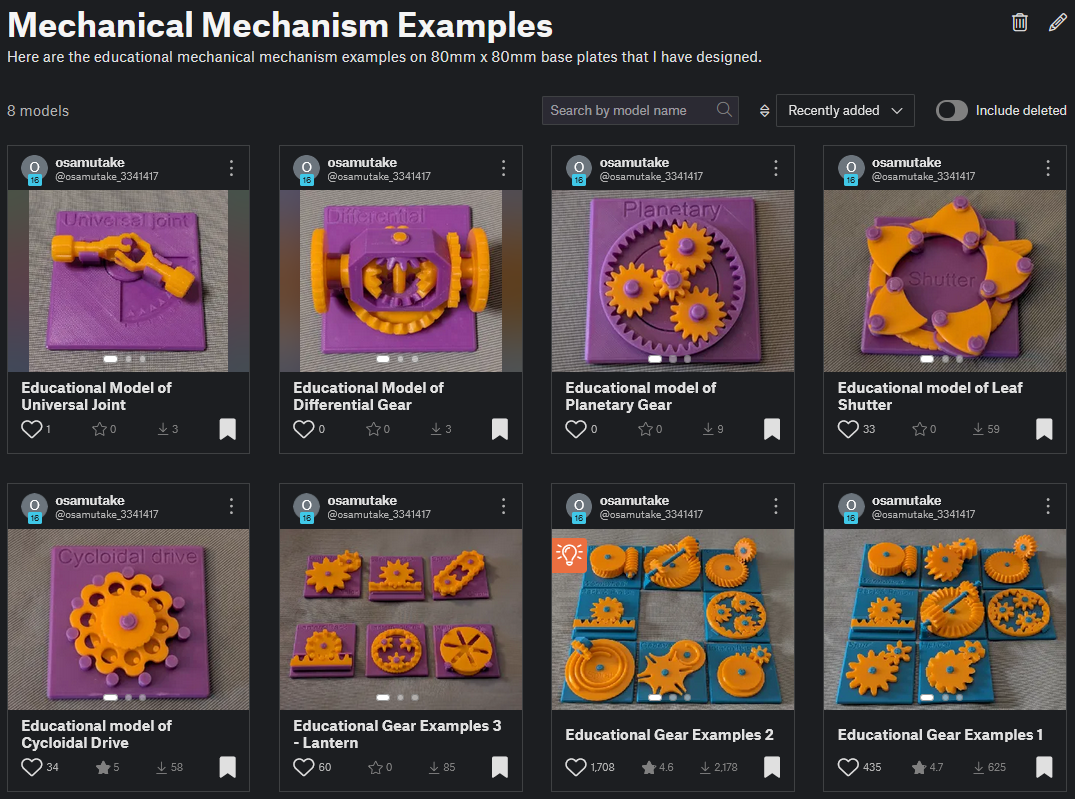
This model is one of my educational mechanical mechanism examples on 80mm x 80mm base plates.
You can find all models of the series in this collection => [Mechanical Mechanism Examples]
This set
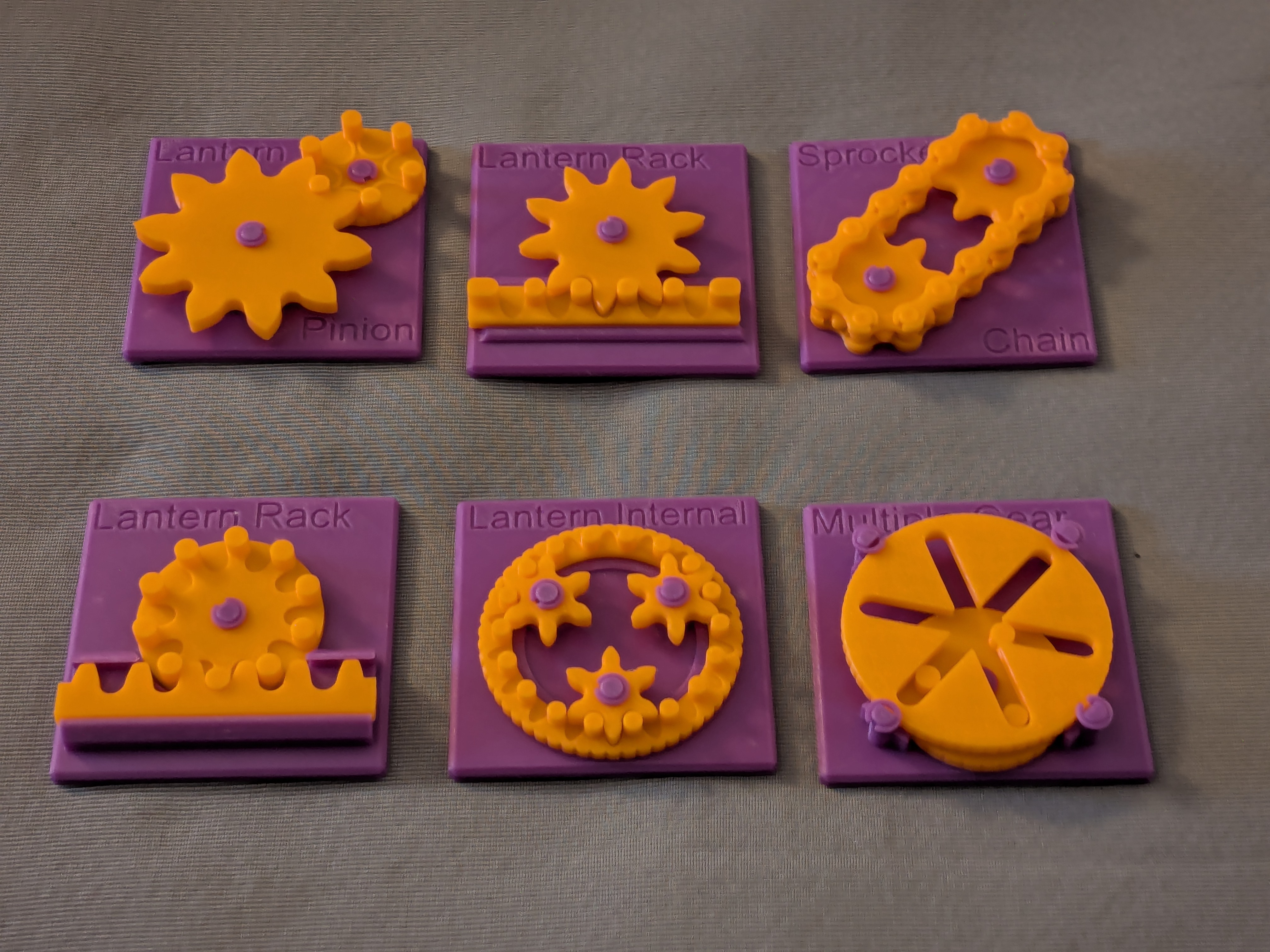
This present set includes:
Lantern gears
External
Rack and rack pinion
Internal
Chain & Sprocket
Multiple Trammel Gear

Brief description
Lantern gears are gears that mesh with pins instead of conventional teeth.


If the pins have zero thickness and are located on the reference circle, the tooth profile of the mating lantern gear becomes cycloid. If they are shifted from the reference circle the profile becomes trochoid. The actual tooth shape for pins with finite thickness can be obtained by offsetting the cycloid or trochoid by the radius of the pins. When pins are made rotatable, the friction between the pins and the lantern gear becomes pure rolling friction, with no sliding friction.
Multiple Trammel gear can be regarded as a special case of an internal lantern gear, in which the pin wheel has only three pins, and the reference radius is exactly the half of that of the internal gear. The word trammel represents the small piece that runs in a straight track as in the Archimedes' trammel, a well-known ellipsograph mechanism. In this system, three trammels running in the straight slots smoothly transfer the rotational motion between the two wheels.

Chain and sprocket system looks very similar to a lantern rack at first glance. However, if you look more closely, the motion of the pins is completely different. When a pin is released from the sprocket, it moves along a circular path, with the neighboring pin – which remains engaged in the sprocket slot — serving as the center of rotation. Therefore, the theoretical tooth profile of the sprocket is an arc. In practice, however, the tooth shape of a sprocket is determined empirically, because the chain gradually elongates during use. Industrial standards define tooth profiles that can still mesh properly even with slightly elongated chains. Chain and sprocket mechanisms are widely used in bicycles, motorcycles, and industrial machines, where efficient power transmission and adjustability are important.
References
Multiple gear https://507movements.com/mm_027.html
Introduction Video
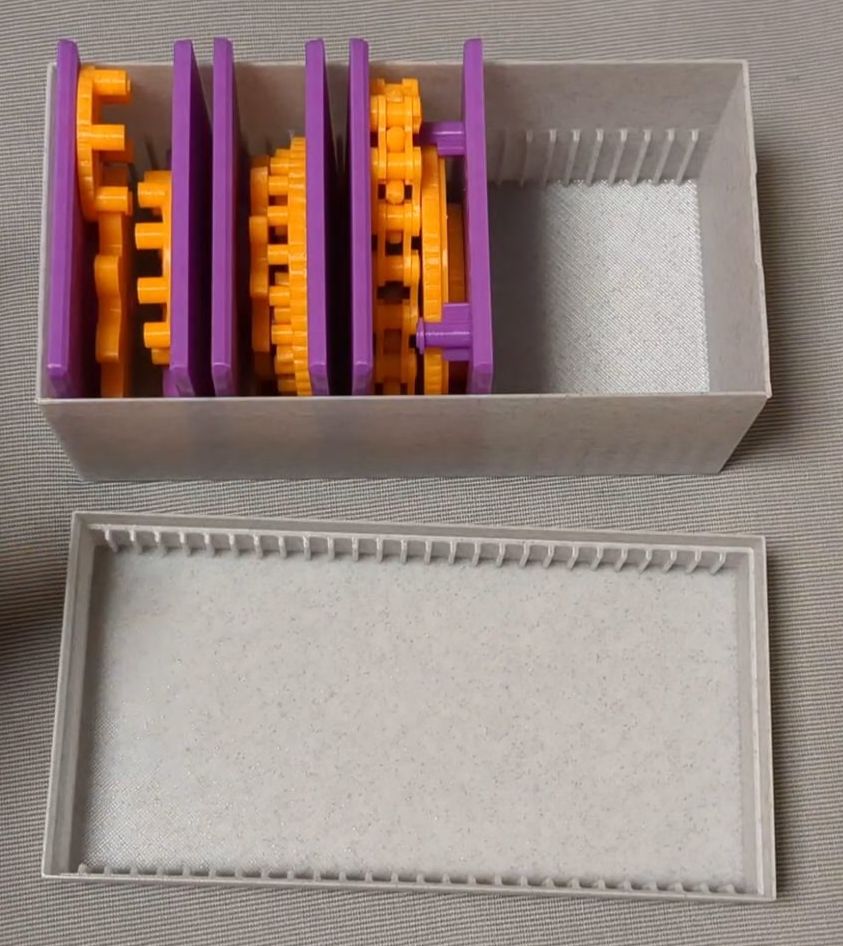
Case
These models are compatible with the case included in my first set.
Printing
Use the models named
???-printable.stlfor printing.
The models named???-assembled.stlare provided just to show how they should be assembled.
Use well-dried PETG to have better dimensional accuracy.
Use 0.1 mm or 0.08 mm layer height to have smoother surfaces.
Use slow printing speed for overhangs.
Select “Random” seam position to have smoother rotation.
Randomly distributed seam should be easily worn out after some wearing.
Sanding and Filing
Sometimes, the gears suffer from the stringing effect and/or elephant foot effect, resulting in a too tight fit to the shafts (they are designed with a 0.15 mm radial clearance).
If you see rough surface on the shafts due to stringing, sand off the roughness with a small piece of sand paper.
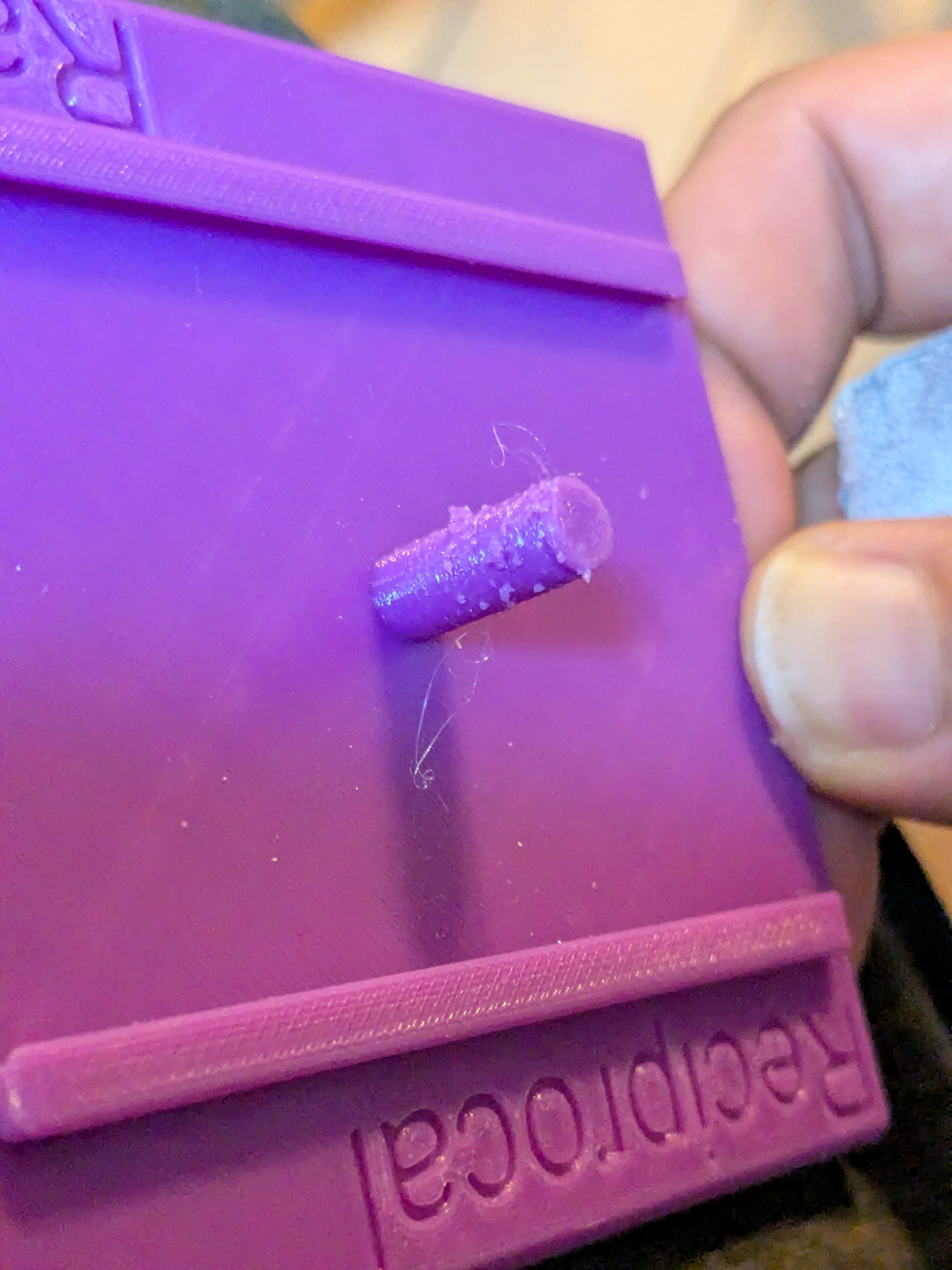
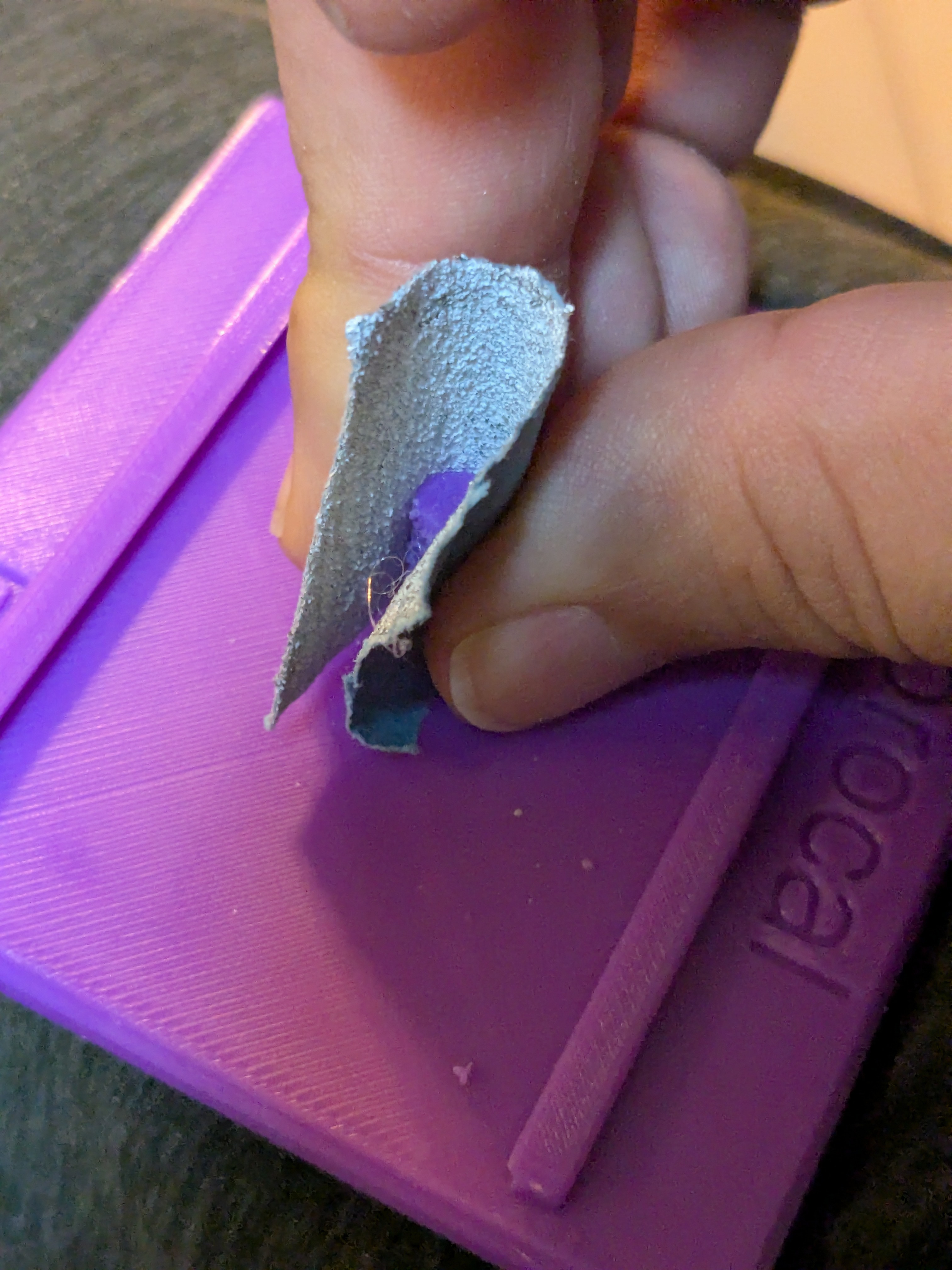
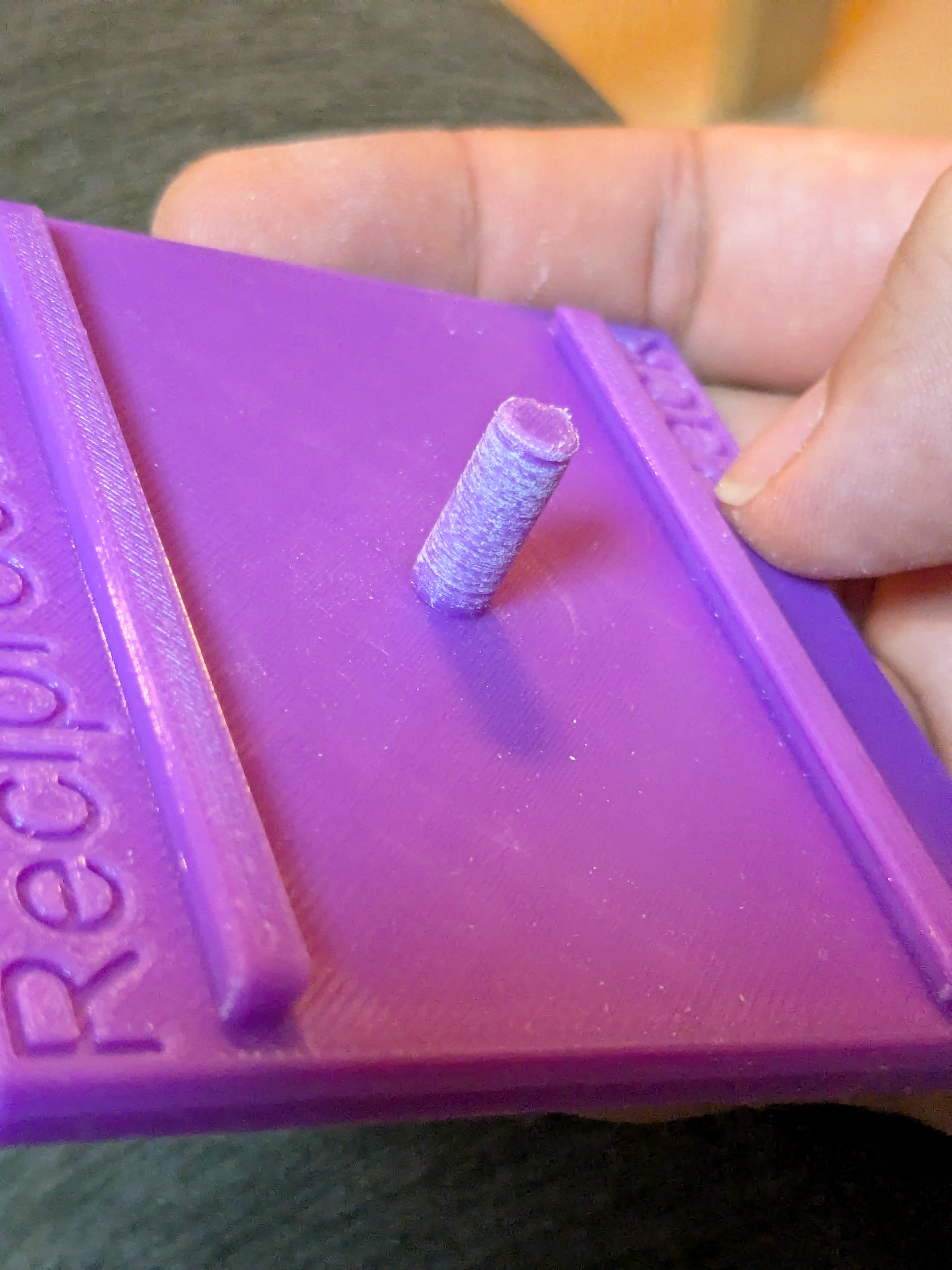
If you feel the gears do not rotate smoothly due to an elephant effect, widen the hole slightly by using a thin round bar file.

Without those issues, the gears should rotate very smoothly with minimal friction.
Assembly
No glue is needed.
Just snap the retaining rings onto the shafts.
The plates of the chain has almost the same structure with the retaining rings, with which the plates can be snapped onto the short shafts of the chain units. Fully assemble the chain first. Then mount on the plate with the sprocket.

Other educational models
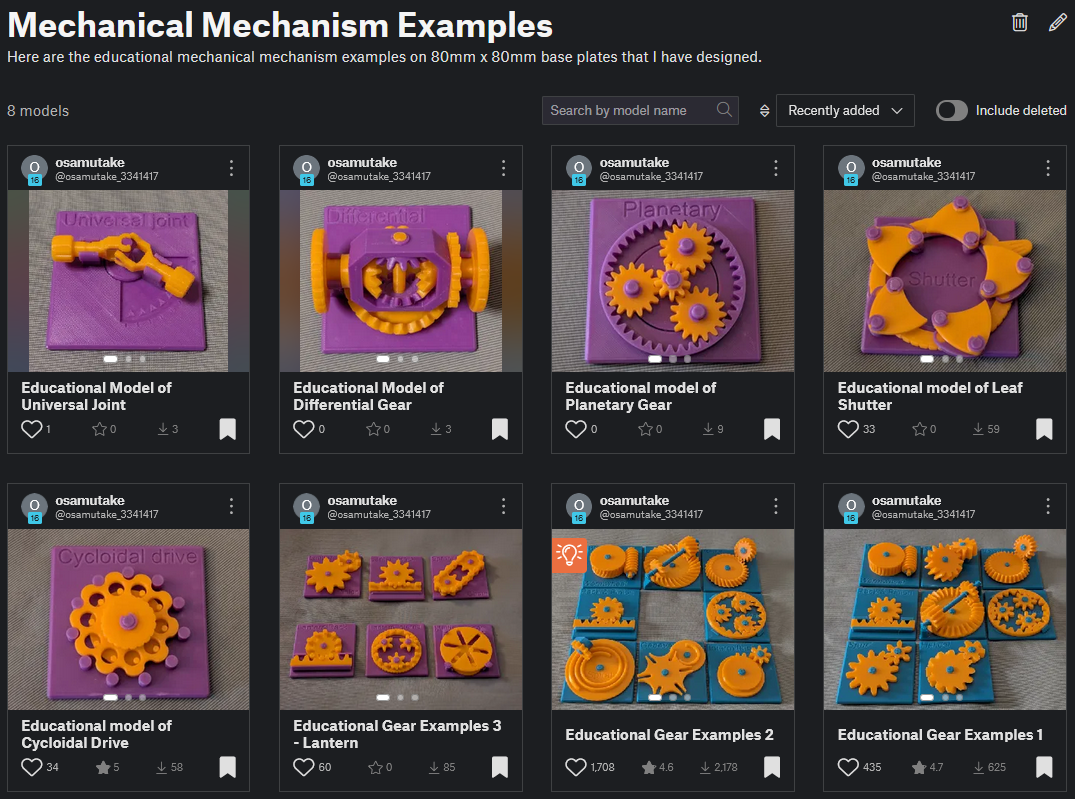
You may also be interested in the models in my educational mechanical mechanism examples.
Find them in this collection:
https://www.printables.com/@osamutake_3341417/collections/2728214
Updates
2025-10-31
Flipped the large disk in Multiple Gear v80-printable.stl, thanks to @RemlURelmI_2427798's comment.
Acknowledgement
I got into gears thanks to K.$uzuki's amazing articles and YouTube videos. Many of the mechanisms shown here came from the introductions on his website. He also makes excellent gear models himself. This series wouldn’t have existed without his inspiration.
I learned a lot about technical detail of designing gear tooth profiles from Haguruma-No-Hanashi website. I’m truly grateful for that.Happy printing!