
Hydrofoil stab compression mold
We calculate the final price from your selected file. You review and accept it before payment.
Saved on this device.
Model information
- Source
- Printables
- Category
- Outdoor Sports
- License
- Creative Commons — Attribution — Noncommercial — Share Alike
Update: Doing post processing is very much worth it! A good printer, spray filler and a top coat, sanded to a 1500 grit finish creates a mirror finish.
This is probably the easiest/fastest way to make a stabilizer since it only needs a singe layup. You can either post process the mold to get a perfect surface or you can just apply mold release and then use it. It uses the eppler 817. 60mm chord, 460mm span and area of 240cm². 45mm hole distance (m6).
PVA only(grav + glass) vs sanding and spray filler (black + carbon)
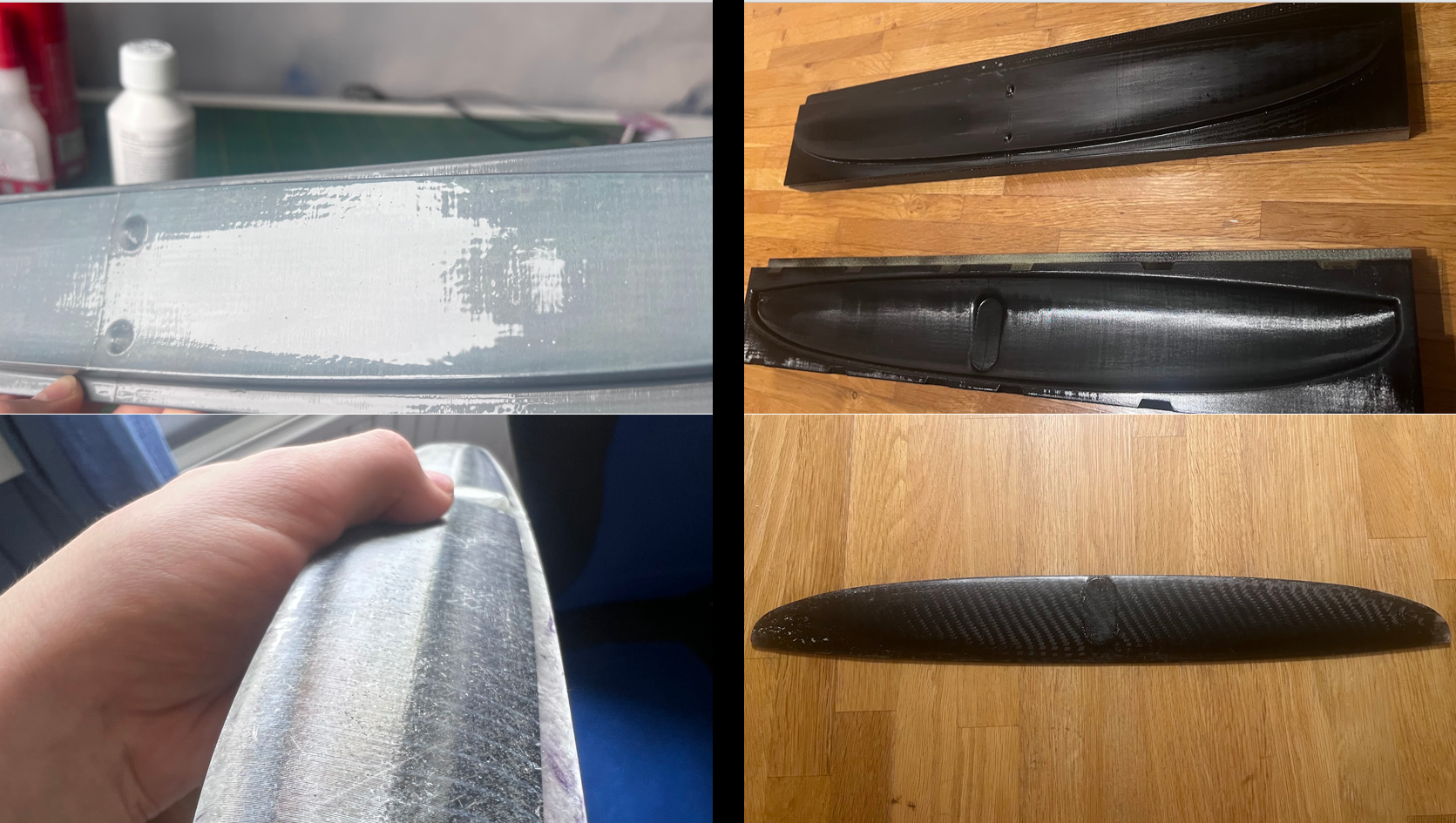
As shown in the pictures of the black mold there are still visible layer lines, i should have used more filler to eliminate them entirely before using the mold. When using only PVA it will smooth out some of the layer lines but not completely. If you plan on building multiple wings i would recommend to properly sand and finish the mold before using it.
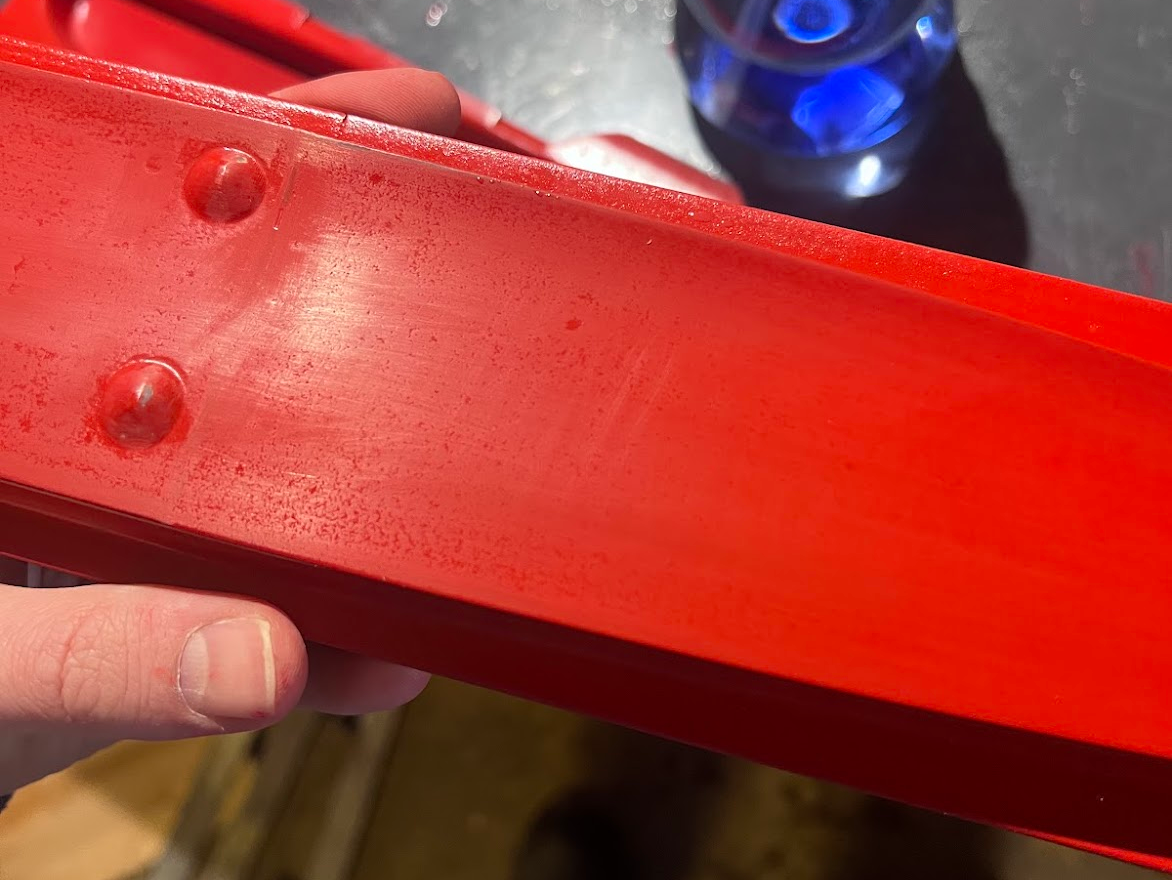
Mold finished to a 1500 grit finish. You can see some low spots (dark red), I used PVA release agent, wicht fills some defects.
Materials
Mold: I've printed multiple in PLA with 3 walls and 15 infill. If you can print PETG totally warp free i would use it instead, because when you demold you will bend and twist the mold. PETG could also let you Post cure the wing. (This depends on the epoxy you use)
Mold release: I have used PVA it works ok and is easy to apply. Wax or chemical release agents would probably work also. Use mold release on all surfaces if you want to reuse the mold, epoxy gets everywhere.
Layup: You can scale the core, or not use it to fit however much reinforcment you want. The current core allows for about 1.2mm skin thickness.
Outer Layer: 1x Twill (160 g/m²)
1x Uni-directional (600 g/m²)
1x Biaxial (430 g/m²)
Total weight per side: 1190 g/m²
By using a core you can Cut the weight in half from ≈200g solid wing to ≈100g with a hollow printed core.
If you dont use a core you will need to put much more reinforcement at the thickest part of the wing.
Clamping: Use lost of screw clamps and tighten slowly to allow excess epoxy to escape. The flange of the two mold parts should basically be pressed together.
Printing:
You don't want any elephants foot. Also manually position your seams on the outside of the mold so it does not affect the finish of the wing. Make sure there arent any holes in the core, or epoxy will leak in and increase the weight
Ive used .20 and .24 mm layer height. No big difference, you could also use adaptive layer height.