
Spool Humidity Sensor Clip
We calculate the final price from your selected file. You review and accept it before payment.
Saved on this device.
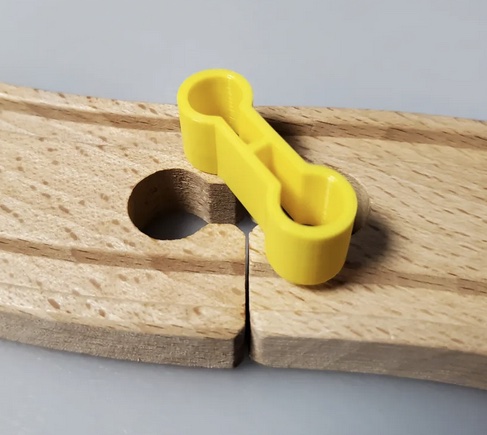
Evaluate the dryness of your spools in storage
- Rating
- 4.857 / 5
- Likes
- 31
- Downloads
- 157
- Makes
- 6
- Views
- 764
- Reviews
- 7
Updated at source:
Model information
- Source
- Printables
- Category
- Accessories
- License
- Creative Commons — Attribution — Noncommercial
Do you store your spools in vacuum bags for storage between prints, only to find it is super wet when you want to use it?
This was the use case which led to this model - a humidity sensor which you can clip onto your spool while storing it.
Other than that, there is not much to explain about this model.. pretty straight forward.
Here are the sensors I used:
Amazon US: https://www.amazon.com/TAIWEI-Electronic-Temperature-Thermometer-Hygrometer/dp/B07MCGDN5C
Amazon Germany: https://www.amazon.de/dp/B094N2KM7B
Experience with Filament:
- Never assume that because a spool is new that it is also dry
- Paper spools absorb moisture and pass it on to the filament, so they are usually always more wet than plastic spools
Experience with the sensors:
These sensors are super-slow to adjust and usually take around 60 min to come to a final value. But for this use case it is sufficient.
I've had both good and bad luck with these sensors, depending on which seller you purchase them from. Some sellers appear to be selling the sensors which do not meet the manufacturer's specs.
My recommendation: Once you receive the sensors, place them all together on a table and leave them over night. If the humidity varies more than 5% between the sensors, send them back and look for another seller.
From one seller, 2 of the 8 had defective LCD screens where something was missing and some sensors were showing humidity 10% higher than the others.
From another seller, all sensors were within 1% of each other.
Happy printing!