
Human Alpha4Beta2 nicotinic receptor
Obliczymy ostateczną cenę na podstawie wybranego pliku. Sprawdzisz ją i zaakceptujesz przed płatnością.
Orientacyjna cena wydruku pliku
0,19 € – 0,24 € netto (bez VAT)
Dla pliku: CE5_nic Formwerk PLA lw 0.4mm lh 0.08mm if 5% ext1 210.0C bed 60C.gcode
To wstępna wycena jednego pliku. Dokładną cenę poznasz przed zamówieniem.
Plik i założenia wyceny
Plik użyty do wyceny
Średnia wycena orientacyjna: 0,21 € netto (środek widełek).
- Masa podana przez autora
- 3 g
- Czas druku podany przez autora
- 12 min
- Materiał u źródła
- PLA
- Materiał wyceny
- PLA
- Drukarka wyceny
- Bambu Lab P1S - 0.4 nozzle
- Proces wyceny
- 0.20mm Standard
Orientacyjna wycena wyłącznie wybranego pliku, oparta na masie i czasie druku podanych przez autora. Warianty plików nie są sumowane. Ostateczna cena zostanie obliczona po analizie pliku.
Zapisane na tym urządzeniu.
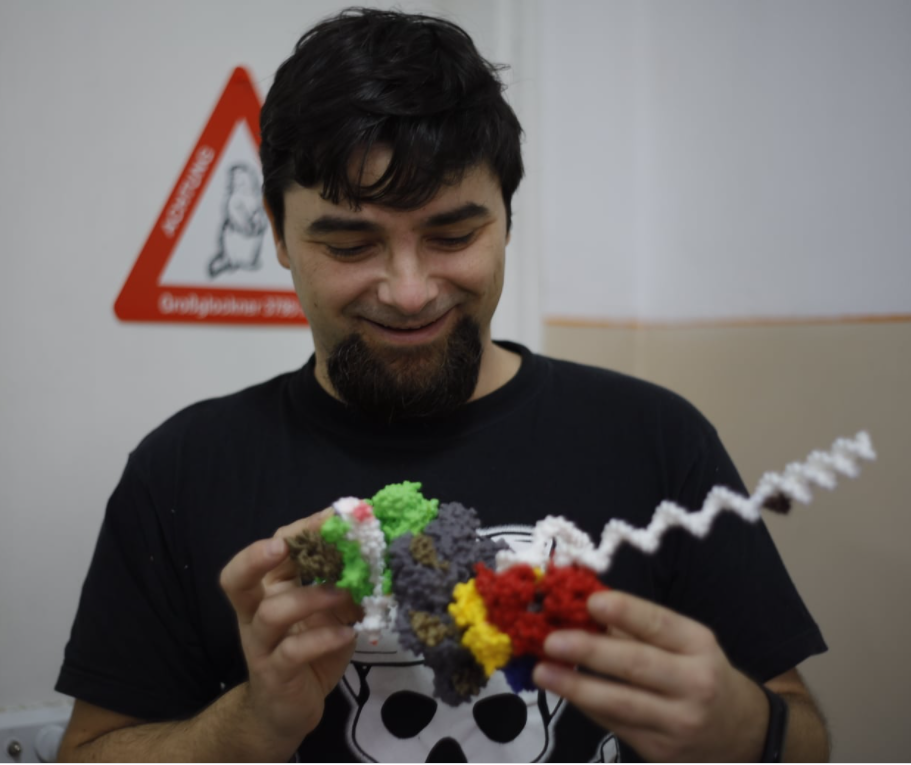
Surface model of a human Alpha4Beta2 nicotinic receptor sliced in half to better visualize the ion channel
- Ocena
- 0 / 5
- Polubienia
- 3
- Pobrania
- 19
- Wydruki
- 0
- Wyświetlenia
- 227
- Oceny
- 0
Aktualizacja u źródła:
Informacje o modelu
- Źródło
- Printables
- Kategoria
- Chemistry & Biology
- Licencja
- Creative Commons — Attribution
Surface model of a human Alpha4Beta2 nicotinic receptor (PDB ID 5KXI) sliced in half to better visualize the ion channel. The two halves can be joined together and are held in place by magnets. Nicotine can be printed at scale to show the ligand to protein size ratio. The model was created to help teach the Biochemistry course.
Segmentation Software : Cura (Any 3D slicer will work)
3D Modeling/CAD Software : Chimera
Printer Technology/Material : Polylactic Acid (PLA)
Printer Make/Model : Creality Ender 5 Pro
Print Units : mm
Scale At Given Print Units : 100x
Pre- and Postprocessing Instructions Printed at 0.2 resolution with 2 wall lines and 5% infill for the protein model; 0.2 resolution with 2 wall lines and 50% infill for the ligands. I have used concentric supports and found to be easier to remove. The magnets were added after printing by machining the already existing holes and gluing them.