
Human Alpha4Beta2 nicotinic receptor
We calculate the final price from your selected file. You review and accept it before payment.
Estimated printing price per file
€0.19 – €0.24 net (excluding VAT)
For file: CE5_nic Formwerk PLA lw 0.4mm lh 0.08mm if 5% ext1 210.0C bed 60C.gcode
This is an estimate for one file. You’ll confirm the exact price before ordering.
File and estimate settings
File used for this estimate
Average indicative estimate: €0.21 excluding VAT (range midpoint).
- Weight reported by the author
- 3 g
- Print time reported by the author
- 12 min
- Source material
- PLA
- Estimate material
- PLA
- Estimate printer
- Bambu Lab P1S - 0.4 nozzle
- Estimate process
- 0.20mm Standard
Indicative estimate for the selected file only, based on the author’s weight and print time. File variants are not added together. The final price is calculated after file analysis.
Saved on this device.
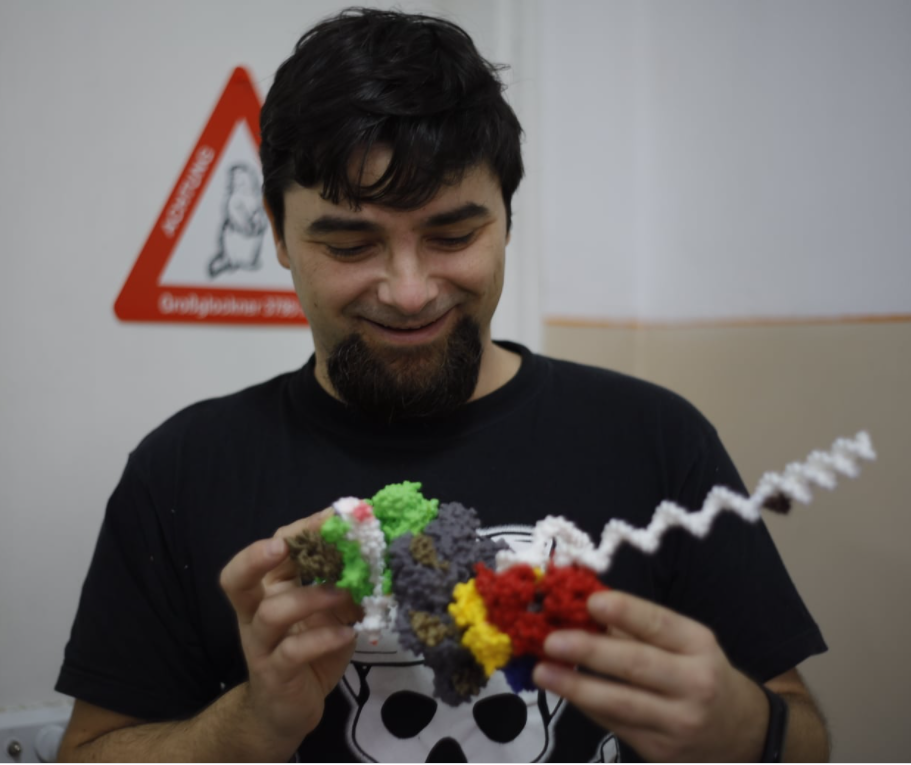
Surface model of a human Alpha4Beta2 nicotinic receptor sliced in half to better visualize the ion channel
- Rating
- 0 / 5
- Likes
- 3
- Downloads
- 19
- Makes
- 0
- Views
- 227
- Reviews
- 0
Updated at source:
Model information
- Source
- Printables
- Category
- Chemistry & Biology
- License
- Creative Commons — Attribution
Surface model of a human Alpha4Beta2 nicotinic receptor (PDB ID 5KXI) sliced in half to better visualize the ion channel. The two halves can be joined together and are held in place by magnets. Nicotine can be printed at scale to show the ligand to protein size ratio. The model was created to help teach the Biochemistry course.
Segmentation Software : Cura (Any 3D slicer will work)
3D Modeling/CAD Software : Chimera
Printer Technology/Material : Polylactic Acid (PLA)
Printer Make/Model : Creality Ender 5 Pro
Print Units : mm
Scale At Given Print Units : 100x
Pre- and Postprocessing Instructions Printed at 0.2 resolution with 2 wall lines and 5% infill for the protein model; 0.2 resolution with 2 wall lines and 50% infill for the ligands. I have used concentric supports and found to be easier to remove. The magnets were added after printing by machining the already existing holes and gluing them.