
Lukisegler 2.0 (electrical RC glider)
Obliczymy ostateczną cenę na podstawie wybranego pliku. Sprawdzisz ją i zaakceptujesz przed płatnością.
Zapisane na tym urządzeniu.
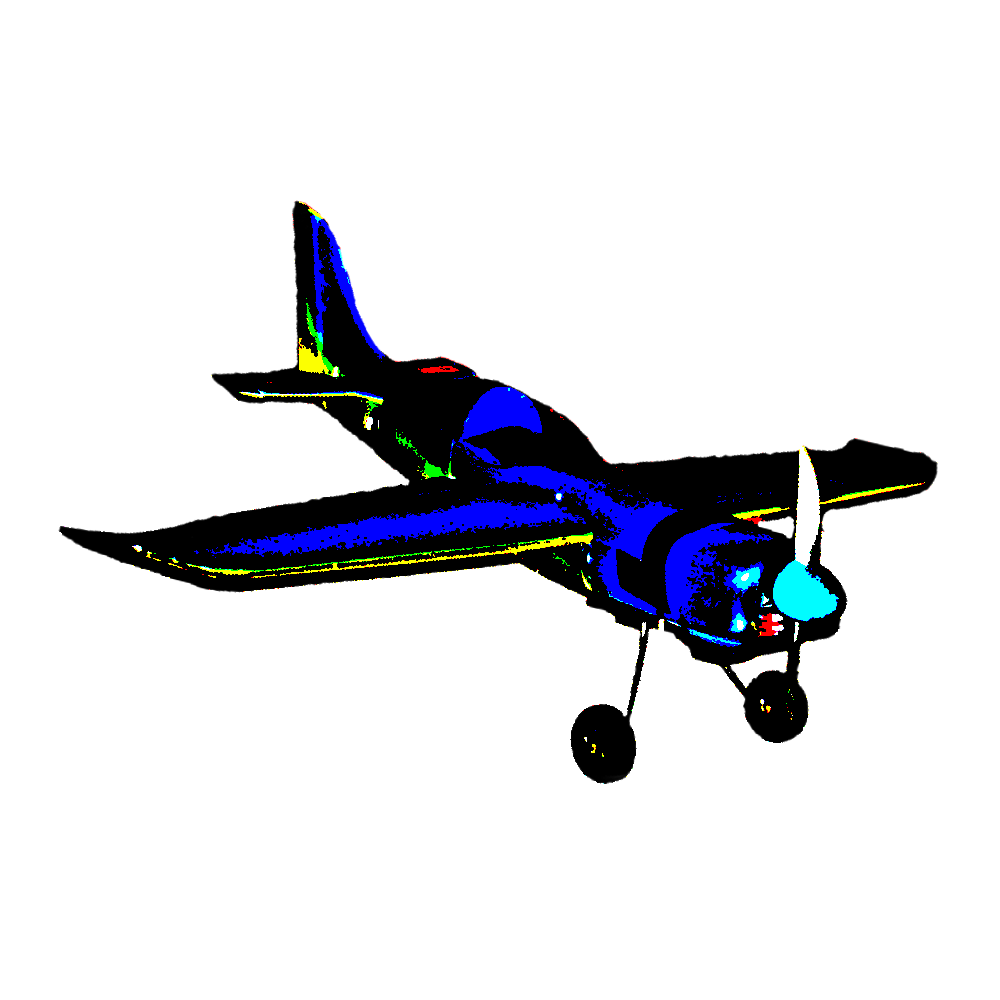
A updated version of my Lukisegler electrical RC glider
- Ocena
- 5 / 5
- Polubienia
- 112
- Pobrania
- 652
- Wydruki
- 0
- Wyświetlenia
- 4855
- Oceny
- 1
Aktualizacja u źródła:
Informacje o modelu
- Źródło
- Printables
- Kategoria
- RC & Robotics
- Licencja
- Creative Commons — Attribution — Noncommercial — Share Alike
Lukisegler 2.0 an RC electric glider with brushless drive
Attention!
Since this is a large project with many files, I will add more instructions here in the near future!
Instructions for the fuselage are included in PDF format.
The first assembly videos are online.
Flight videos are still to come!

After two years, it was time to completely rework the Lukisegler. My goal was to simplify the assembly of the fuselage and make the interior more spacious so that it would be easier to install the RC components. I was also able to take into account suggestions for improvement from some users.
The result:
- a more spacious, stiffer fuselage
- a canopy with a locking mechanism
- a redesign of the elevator that makes it much easier to build
- an adjustable motor mount for a wide variety of motor lengths
- an extended fuselage nose, which makes adjusting the center of gravity much easier, especially in the PETG version.
However, the new fuselage is still compatible with the old wing (https://www.printables.com/de/model/76098-lukisegler-electric-rc-glider) and also with the 2.6 m thermal wing (https://www.printables.com/de/model/260412-lukisegler-swappable-thermal-wing-2650mm-wingspan), as these have proven to be quite robust (at least for me).
The CArts Lukisegler 2.0 is an electrically powered glider that comes entirely from the 3D printer.
The design is most closely based on a hotliner. As a pilot you should have some experience, as in my opinion 3d-printed models are not suitable for beginners.
The building-instructions are added as a pdf.
I also made some instruction videos for the assembly of the fuselage:
The building-instructions for the wings can be downloaded from my website:
https://c-arts-modelle.de/carts_modelle_web/fluggeraete/carts_lukisegler/carts_lukisegler.html
(It is a german website, but the translator in Chrome or Chromium will do quite a good job!)
The Lukisegler can be printed from PETG or lightweight PLA (LW-PLA). The construction of the parts is designed for a minimum of retracts is necessary when printing. This minimizes stringing especially when using PETG or LW-PLA.
I placed more than one part on the printplate but they are printed sequetially one by one. This saves a lot of time and reduces stringing when printing in LW-PLA or TPU!
When designing and printing the parts for my RC flight models, I use PrusaSlicer, which can be downloaded from https://www.prusa3d.de/prusaslicer/, to realize special desired properties for 3D printed parts. These properties (e.g. adhesive surfaces or internal support structures) cannot be achieved at all or only with great difficulty using a CAD program alone.
Modifiers are used in the print files . These are essential for the stability and for the structure of the individual parts! The surfaces for connecting the individual parts are made by using modifiers .
I do not provide stl-files, but 3mf-files for download. If you still need stl files, I made a short vido on YouTube how stl files can be exported in PrusaSlicer.
The overall printing time of the whole model is about 100 hours.
- Span: approx. 1700 mm
- Body length: approx. 1000 mm
- Take-off weight (LW-PLA): approx. 650-750 g
- Take-off weight (PLA / PETG): approx. 1200-1350 g
- Drive: brushless motor
- Propeller : folding propeller
- Battery: 3S-4S Lipo 1000-1300 mAh
- Controls: elevator / rudder / aileron / motor
- Center of gravity: 70-75 mm behind the profile nose
- Rudder deflections: 15-20 °
Parts for the construction
Carbon rods or fiberglass rods as well as various adhesives are required for the construction.
The 3d-printed parts are printed in PETG or LW-PLA.
Carbon rods
- Carbon rod 1 mm: 2 pieces (1000 mm length)
- Carbon rod 1.5 mm: 5 pieces (1000 mm length)
- Carbon rod 2 mm: 6 pieces (1000 mm length)
Steel wire
- Steel wire 0,8 mm: 2 pieces (1000 mm length)
Screws
- Wood screws 2x10 mm (d x h): 26 pieces
- Wood screws 2x12 mm (d x h): 4 pieces
- Screw M3x20 mm: 1 piece
- Screw M3x30 mm: 1 piece
- Nuts M3: 2 pieces
Electronics
Servos
- Micro servos: 2 pieces (maximum dimensions (L x W x H) 23.5 x 10 x 24 mm)
- 9g Mini-Servos 2 pieces
I use high quality servos with metal gears. These can cope with even greater loads (e.g. in the event of undesired contact with the ground) without damage. The additional costs for this are worthwhile.
Receiver
- Minimum: 5 channels
Engine
- Brushless motor (maximum dimensions (d x H) 28 x 50 mm)
ESC (controller)
- Minimum: 20A (3-4S)
- BEC minimum: 2A