
Stackable Eppendorf tube rack - Open Source
We calculate the final price from your selected file. You review and accept it before payment.
Saved on this device.
Model information
- Source
- Printables
- Category
- Chemistry & Biology
- License
- Creative Commons — Public Domain
Introducing an Eppenderof tube rack. Stackable, designed for FDM manufacturing and Open Source
Efficient and consistent organisation
This is a stackable Eppendorf tube rack. Provided in 2 sizes: 5x2 and 10x4. It is stackable so, for those of you who work with dozens of them, this will allow you to organise them without taking much space.
The stacking comes with indexing pins. This will prevent them from sliding and falling and, most important, you won't accidentally flip them and organise a batch of them backwards. Tube 1 always sits above the rest of Tube 1.
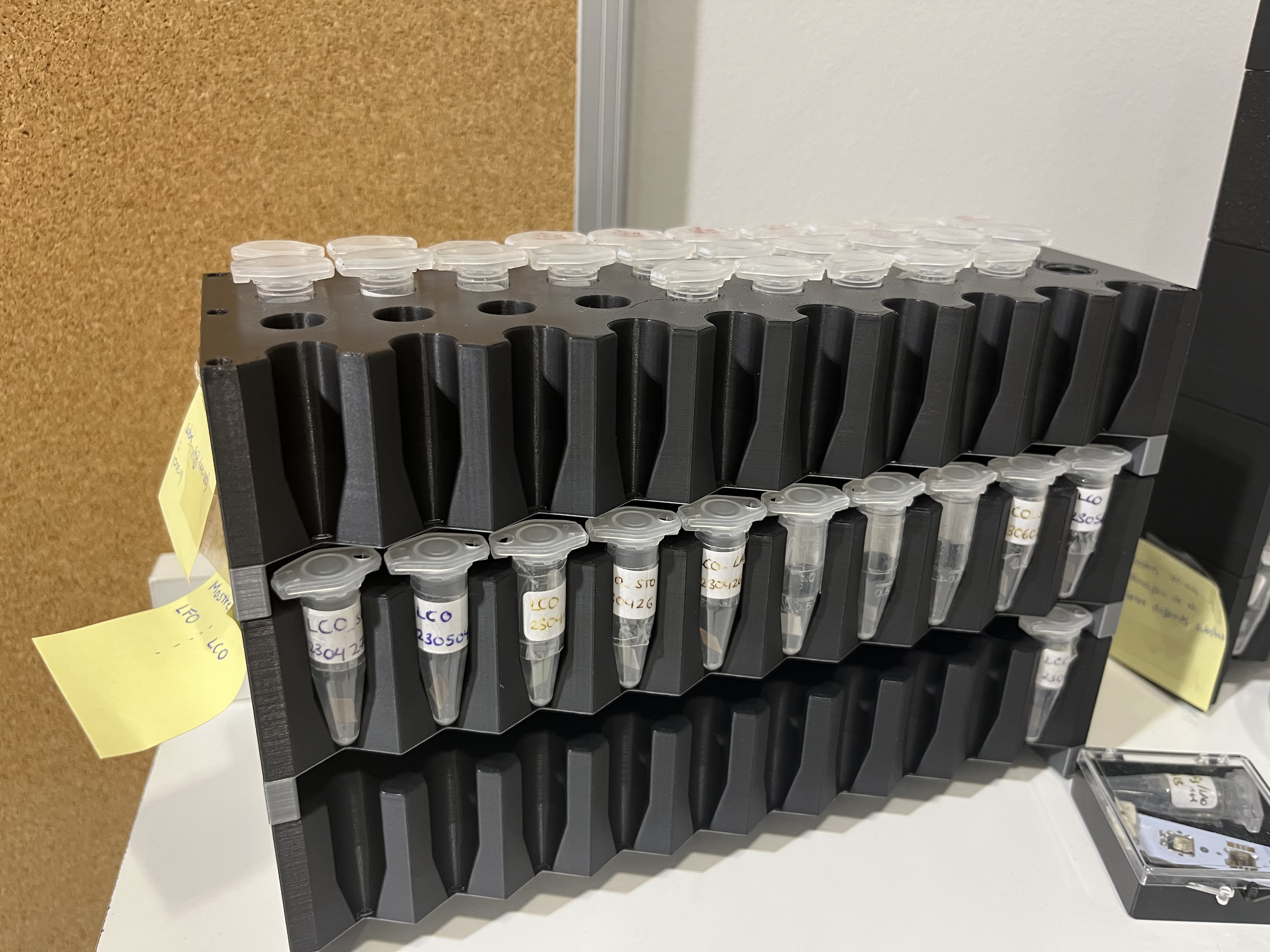
Easy to print in any FFF 3D printer
The design is FDM optimised so, it doesn't require supports. The numbers are 0,2 mm deep so, if you want, you can program a colour change on layer 2 and have a contrasting lettering, no MMU, toolchanger or any other multifilament solution required.
Designed for convenient use in the lab
The tube protrudes a little bit from the surface. By not sitting flush, this allows for an easier pickup and not need to stick your nails underneath the lid even when you're wearing gloves.
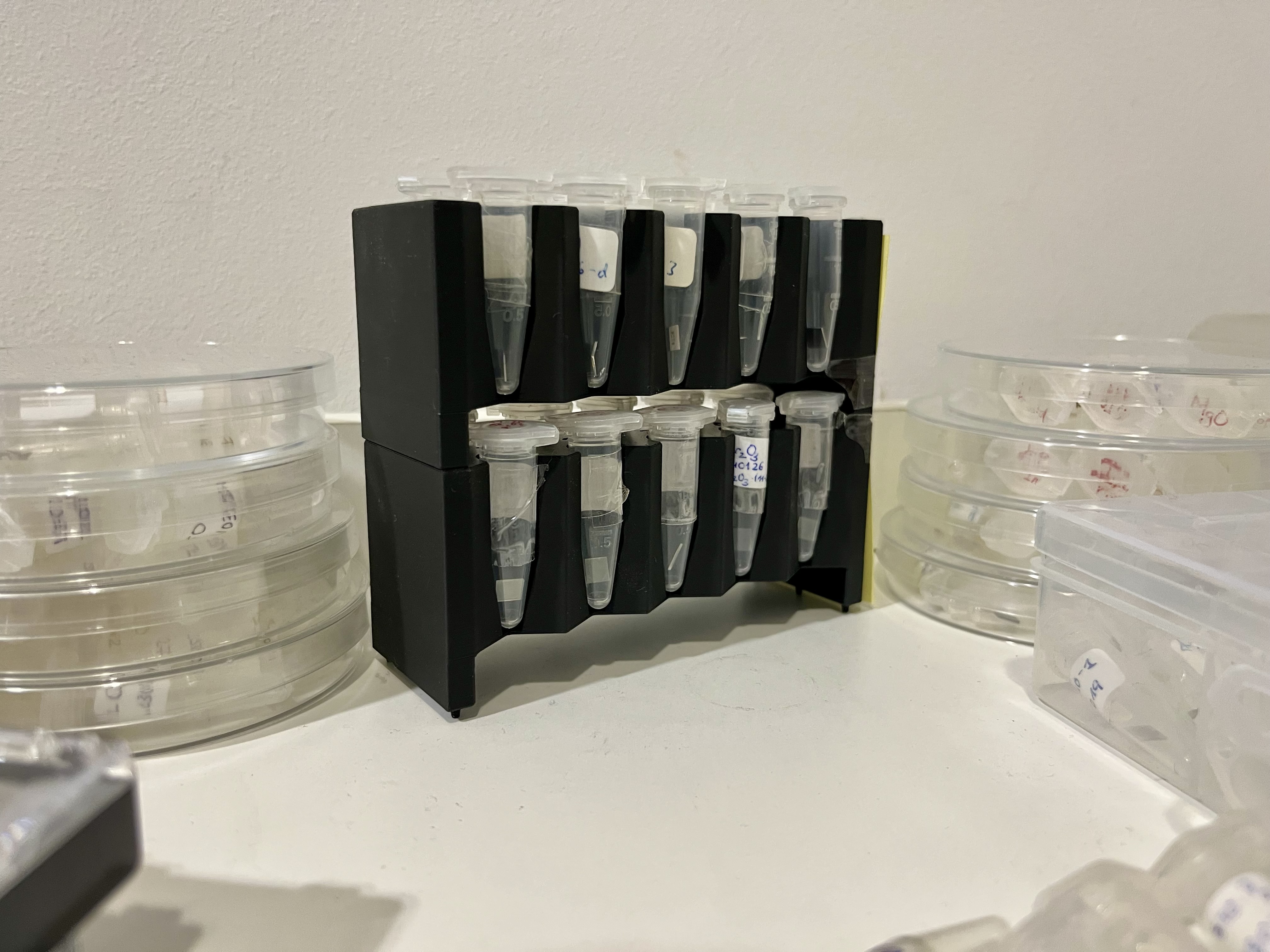
Secured in place
Each slot is spring loaded. That means that the rack will grip the tube and keep it in place regardless of any diameter variability or if you add a label on top. Don't worry if the rack falls to the floor. The tubes are not going to slip out of their position and you won't have to invest half an hour reorganising them.
One more thing…
It's open source so you can custumise it an make your own combinations. A generative STEP file is provided. Just multiply and mirror the external and internal tube slot bodies to create the rows x columns that you like, combine everything and pattern the pins and send it to print! Tweak it and modify it as you need.
Credit to the authors
Designed by Gerard Albujer Bascompte. A big thanks to Joan Esquius Fuentes and Meritxell Toda Casaban for their contribution and support to the project.