
Rocket Car
We calculate the final price from your selected file. You review and accept it before payment.
Saved on this device.
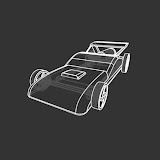
Rocket car I designed, 3D printed, and launched myself.
- Rating
- 0 / 5
- Likes
- 4
- Downloads
- 33
- Makes
- 0
- Views
- 148
- Reviews
- 0
Updated at source:
Model information
- Source
- Printables
- Category
- Vehicles
- License
- Creative Commons — Attribution
Description:
READ THIS FIRST:
I AM NOT LIABLE FOR YOU LIGHTING YOURSELF ON FIRE BECAUSE OF THIS.
JUST BECAUSE I LAUNCHED A ROCKET CAR DOES NOT MEAN YOU SHOULD TOO.
This is JATO, a small, fully 3D-printed rocket car I designed and built for a high school physics project.
The goal was to demonstrate Newton’s Third Law in the most reasonable way possible: strap a rocket to wheels and see what happens. The car reached a peak speed of approximately 14 m/s (50.4 km/h) on a flat surface before running out of fuel and somehow landing in the only net at the launch site.
The model is designed to be lightweight, rigid, and printable on any printer with a build volume of at least 256 x 256 x 256 mm. Assembly is fairly straightforward, and the geometry is simple enough to survive very high acceleration… briefly.
This model can be used as:
A physics demonstration
A display piece
A reminder that engineers should sometimes be supervised
Materials Required
4 bearings
Designed for 17 mm OD, 6 mm ID bearings.
I used Ender 3 bearings (flanged, 16–18 mm OD, 8 mm ID) with an adapter, and it worked fine.Solid fuel (optional, if launching)
I used something similar to gunpowder. I will not explain how to make this.
If you do not already understand solid rocket propellants, stop here.Safety equipment
Non-negotiable if you are working with anything combustible.
Print Settings
Print profiles for P1S coming soon!
Body
Printed on its side, diagonally across my P1S build plate
Material: PLA
Nozzle: 0.4 mm (others should work)
Walls: 2
Infill: 15% (gyroid)
Supports:
Manual supports painted:Inside the wheel wells
Along the upper edge of the reaction chamber cavity
Wheels, Axles, Reaction Chamber, etc.
Material: PETG (other materials may work)
Nozzle: 0.4 mm
Walls: 16
Bottom shell layers: 24
Supports: None
Assembly
Insert the bearings into the wheel wells.
Attach the two left wheels to their axles.
Secure those wheels using glue or a screw through the 2 mm hole in each wheel.
This is optional unless you want the car to stay together while moving.Thread the axles through the body, ensuring the larger wheels are at the rear.
Insert bearings for the remaining wheels.
Secure the final two wheels to lock the axles in place.
Make sure the bearings are installed before doing this.Load propellant into the reaction chamber.
I packed it using a wooden dowel and capped it with ground, filtered, compressed cat litter with a hole drilled through the center.
Design Notes
I had to reprint the axles a couple of times to get the length right. They're hexagonal, 6 mm corner to corner, and around 110–115 mm long.
The version posted here differs very slightly to the model I printed. I've removed the hood scoop, hole for a phone as a measuring device, and made it easier to put the reaction chamber into the body of the car. Everything else remains the same.
Print a second reaction chamber cap to use as a spacer between the reaction chamber and the body, otherwise you'll have 10 mm of empty space for the reaction chamber to jiggle around in.
Important Notes
This design was created for an educational project
Rocket propulsion is inherently dangerous if you do something dumb
Do not print or launch this unless you understand the risks and your local regulations
I am not responsible if you recreate a Darwin Award
If you end up in the ER, do not cite this page
If you just want a ridiculous shelf piece or a conversation-starting physics demo, this works great for that too.