
Guyver (Chibi)
We calculate the final price from your selected file. You review and accept it before payment.
Saved on this device.
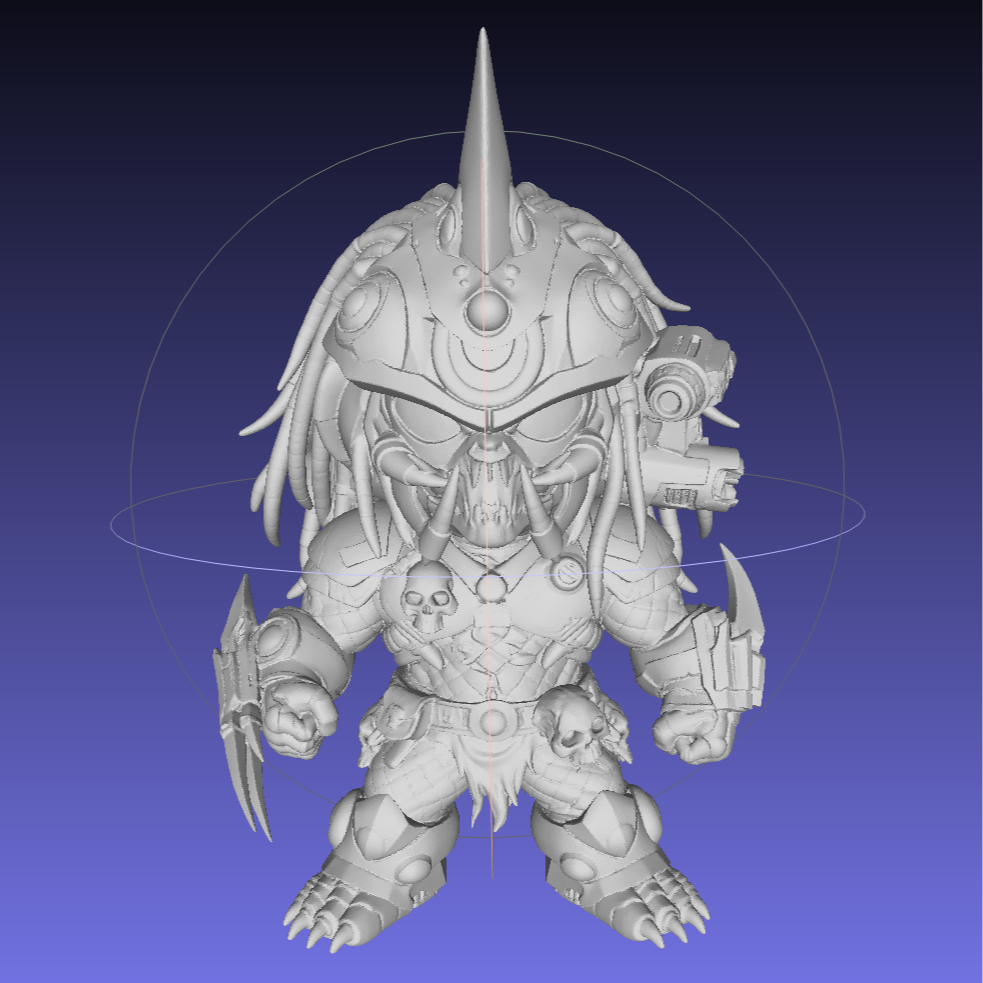
I Made and am Making more Guyvers, will be added over time. These are chibi version's and also hybrids.
- Rating
- 0 / 5
- Likes
- 3
- Makes
- 0
- Views
- 160
- Reviews
- 0
Updated at source:
Model information
- Source
- Printables
- Category
- Sculptures
- License
- Commercial Use
This approach combines the artistic freedom of digital sculpting with the technical precision required for high-quality physical manufacturing. By utilizing both ZBrush and Blender, you create a versatile pipeline that optimizes designs for the specific mechanical and aesthetic properties of PLA Plus, PETG, and Resin.
The Workflow: Artistic Sculpting to Technical STL
Using a hybrid workflow ensures that every 3D design is not only visually detailed but also structurally viable for different printing technologies.
Organic Sculpting (ZBrush): This is where the "digital clay" is formed. You leverage ZBrush’s high-poly capabilities to sculpt intricate textures and complex organic shapes that define the character or object.
Technical Engineering (Blender): The sculpt is then brought into Blender for "manifold" preparation. This includes:
Boolean Operations: Ensuring the model is a solid, watertight shell.
Tolerance Adjustments: Offsetting joints or pegs to account for the material shrinkage of Resin or the layer expansion of PLA+.
Orientation & Scaling: Setting the exact real-world dimensions (mm) for the print bed.
Material-Specific Optimization
Each material you work with demands a different design philosophy, which this dual-software approach handles perfectly:
1. PLA Plus & PETG (FDM Printing)
The Goal: Durability and ease of print.
The Process: In Blender, you optimize the geometry to minimize the need for supports and ensure "bridgeable" angles. For PETG, which can be "stringy," you focus on cleaner topological paths to reduce travel-move artifacts.
2. UV Resin (SLA/DLP Printing)
The Goal: Extreme detail and smooth surfaces.
The Process: You utilize ZBrush’s Decimation Master to keep file sizes manageable while preserving every micro-detail. In Blender, you can precisely hollow out models and add internal drain holes to save material and prevent "suction cups" during the resin curing process.