
Twisted vase with strands
We calculate the final price from your selected file. You review and accept it before payment.
Saved on this device.
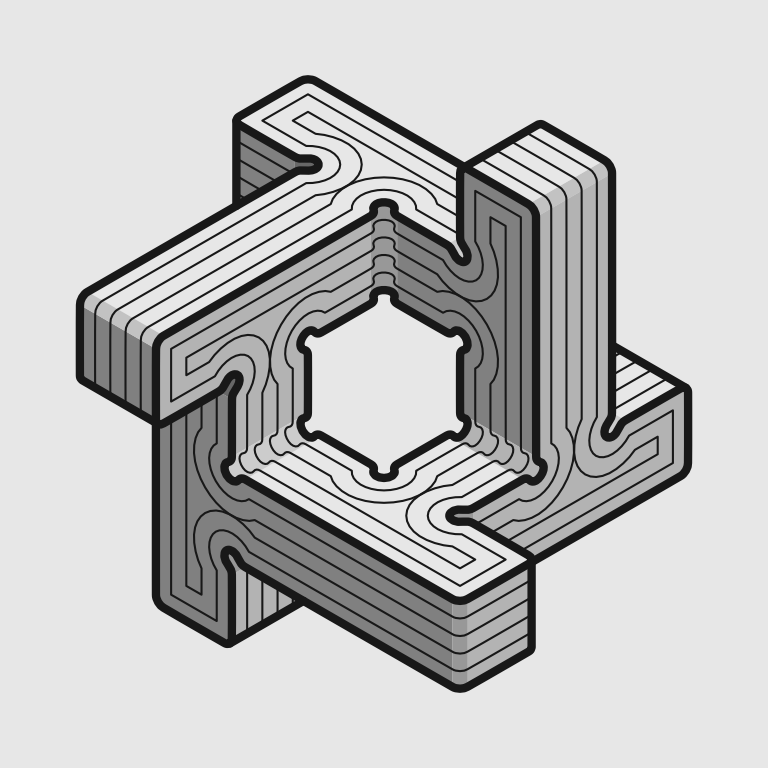
Twisted vase with strands. An experiment on introducing stiffness into a thin wall structure by adding strands of…
- Rating
- 4.783 / 5
- Likes
- 852
- Downloads
- 3,779
- Makes
- 30
- Views
- 15,988
- Reviews
- 23
Updated at source:
Model information
- Source
- Printables
- Category
- Sculptures
- License
- Creative Commons — Attribution — Noncommercial — Share Alike
Twisted vase with strands.
An experiment on introducing stiffness into a thin wall structure by adding strands of filament on both sides of a shell. The shell itself is a parametric modell, the strands are attached to specific points in a repeating manner. They're printed by extruding material "into the air". This technique is called bridging, because it doesn't make use of support structures. Each strand consist of two layers. This leads to a very stiff structure, which won't deform when squeezed. The diameter of the vase is about 90mm, the height ~200mm.
Geometry was created using Rhino/Grasshopper.
Print Settings
Printer:
Generic
Rafts:
No
Supports:
No
Resolution:
0.3mm
Filament:
Generic PLA
Notes:
Default settings with a 0.3mm layer height should work. Supports are not needed, bridging can be optimized by printing slower and increase cooling.
For PrusaSlicer activate "detect thin walls", in Cura "print thin walls".
The walls are 0.5mm, this is also recommended for extrusion width.
Scaling the model up or down won't probably work well, you might want to make use of XY-expansion in this case.
Please note: The model was not intended to be used for vase mode or spiral mode.