Surly OD washers
Obliczymy ostateczną cenę na podstawie wybranego pliku. Sprawdzisz ją i zaakceptujesz przed płatnością.
Zapisane na tym urządzeniu.
Informacje o modelu
- Źródło
- Printables
- Kategoria
- Outdoor Sports
- Licencja
- Creative Commons — Attribution — Noncommercial
Context
QR option is designed to adapt any 135, 141, 170, or 190mm O.L.D. QR axle hub to work with a 142, 148, 177, or 197mm spaced thru-axle Surly frames only
10mm Axle option is designed to adapt any 135, 141, 170, or 190mm O.L.D. 10mm solid axle hub with a 142, 148, 177, or 197mm spaced thru-axle Surly frames only
- This is for the QR version only
- I may make a 10 mm version in the future
- this is probably only compatible with open dropouts that accept 12 x 142 mm thru axles (TA)
- AFAIK, only Surly makes frames like this
- I made this for 142 mm OLD & not others – others may work by using the same print file
- this is likely because Surly only sells the one set of QR washers; I'm guessing some amount of acceptable frame flex may be expected to compensate for small differences in the original OLD from 135 mm
- as of 2025-10-25, this is untested
Design
Typical hub dimensions
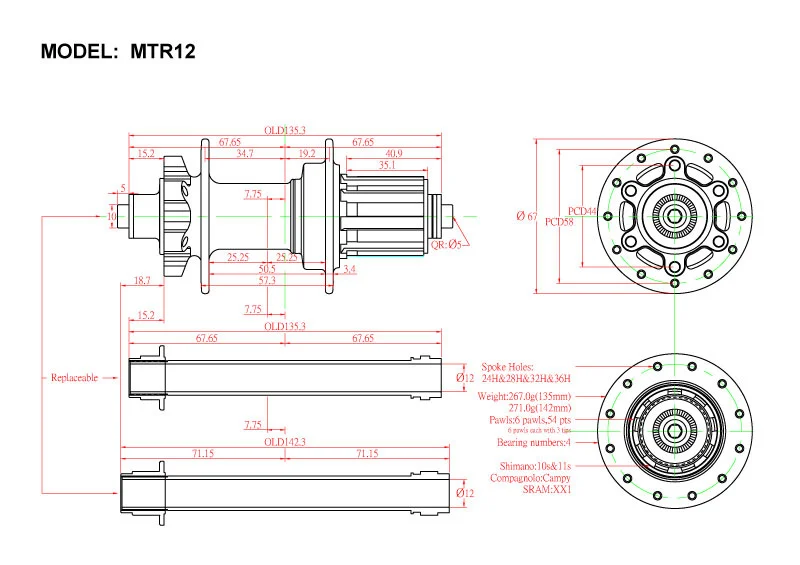
- typical hub dimensions: note the 135 mm hub axles terminate with about 5 mm of M10 thread stickout beyond the locknuts
- note also that a standard 135 mm hub axle measures 135 mm OLD, but the actual overall length across the hub axle is 135+5+5 = 145 mm, which is obviously > 142 mm
- we get around this by overlapping the extra length inside the dropout
Cassette lockring
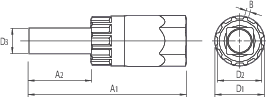
we need to make sure the OD of our washer is smaller than a cassette lockring ID, or else they will touch & rub & cause drag.
Unior's website tells us this dimension D2 is 21.25 mm
notably, M10 locknuts (which form the OLD measurement) are typically 19-20 mm OD
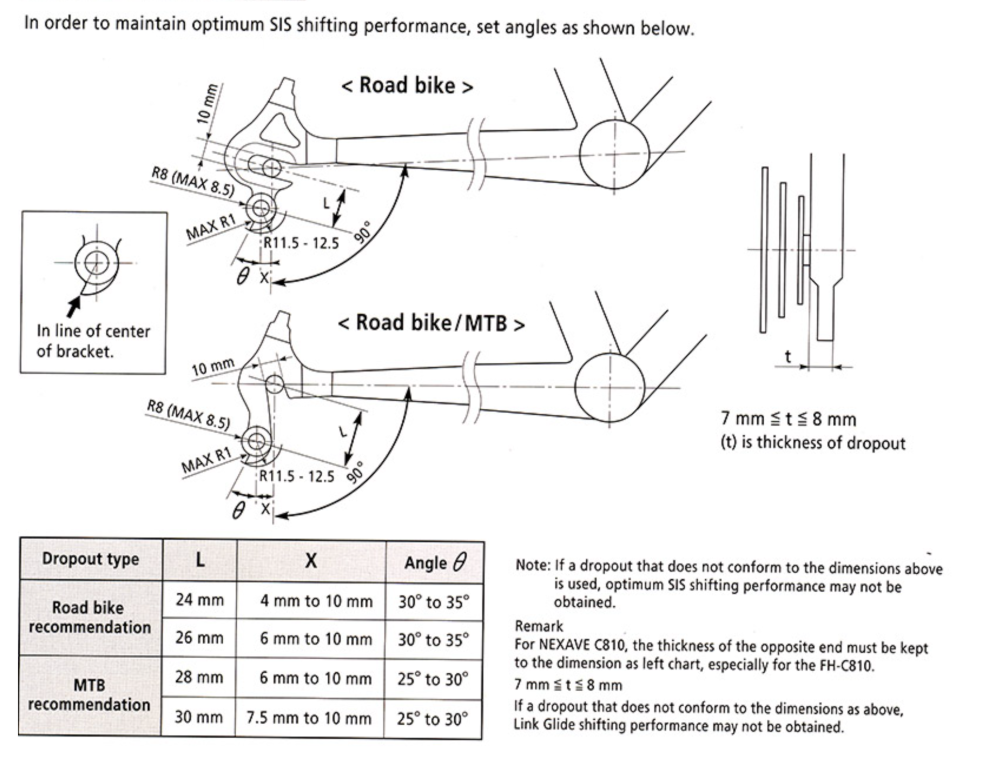
Frame dropout thickness
I'm too lazy to measure a Surly dropout thickness, but it's probably 5-8 mm based on literature
Putting it all together
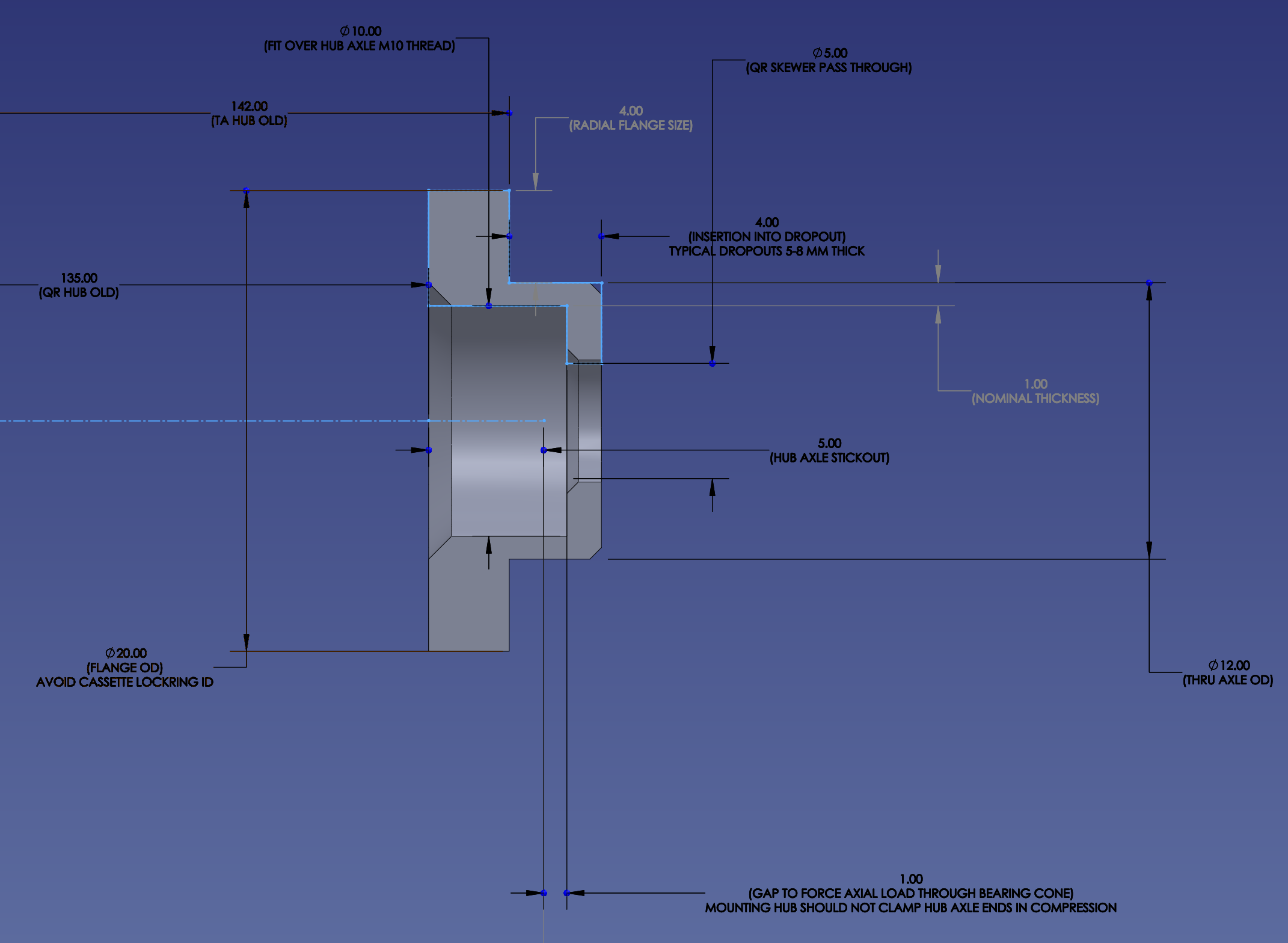
IIUC, the 5 mm passthrough for the QR skewer isn't critical; the clamping load of the QR skewer goes from the skewer, through the dropout, the adapter, then the bearing locknut + cone pair, then mirrored on the other side
I believe the M10 thread clearance could be completely through with essentially no loss in functionality
a deliberate gap exists of 1 mm to prevent the adapter from prematurely bottoming out on the end of the hub axle, which is a much less controlled dimension than the OLD & the hub axle ends are not necessarily intended to be clamped, unlike the locknuts/cones.