
Rollator 4040
Obliczymy ostateczną cenę na podstawie wybranego pliku. Sprawdzisz ją i zaakceptujesz przed płatnością.
Zapisane na tym urządzeniu.
Informacje o modelu
- Źródło
- Printables
- Kategoria
- Home Medical Tools
- Licencja
- Creative Commons — Attribution — Share Alike
⚠ This rollator is intended for indoor use on flat floors due to its weight and lack of hand brakes. Its weight makes it hard to carry around.
Bill of materials
Alumin(i)um extrusion
I used 4040 extrusion with an 8.2 mm slot width, 40 mm internal width and 14 mm depth from the exterio(u)r inwards.
4 x 800 mm for the fixed length legs and the perpendicular struts (cut the latter ones to size or order 600 mm instead)
6 x 500 mm for the parallel joint legs and the grips
2 x 400 mm for the longitudinal struts
Joining materials
18 x regular right angle joiners (with "noses" that protrude into the groove)
8 x right angle joiners for perpendicular joints (so without "noses")
4 x L plates 120 mm x 120 mm
4 x T plates 120 mm x 120 mm
84 x bolts and profile nuts (they are often included with the other products)
16 x Flat screws and matching profile nuts, for the grips
8 x Cone head screws M4*35
Other materials
4 wheels with 150 mm wheel diameter and a 63 mm x 93 mm base plate
about one kg of filament, preferably PETG
Assembly
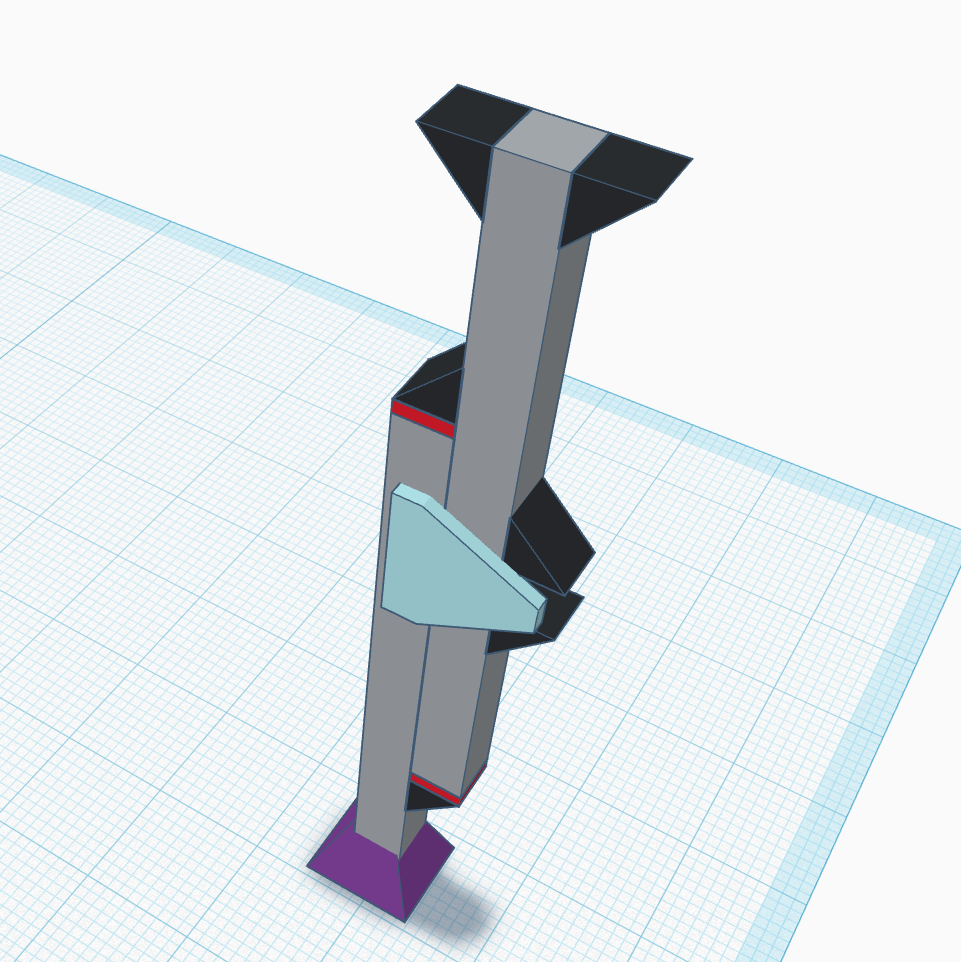
Legs
Build twice, with the T plate on different sides
Gra/ey: 500 mm profiles
Black: Regular angle joiners
Red: "Parallel" adapters, see print files
Purple: Wheel adapter, see print files
Bright blue: T plate
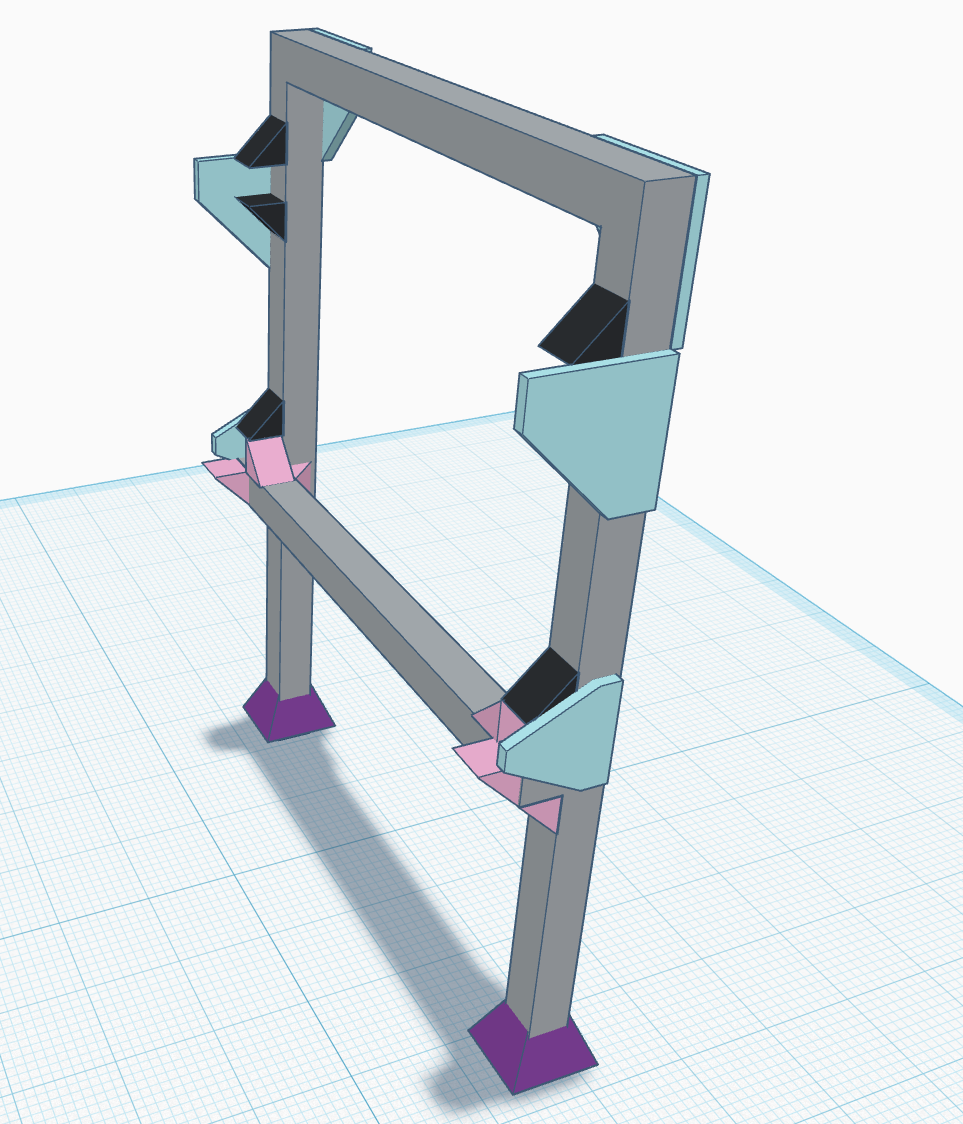
Main frame
(same colo(u)rs)
Vertical: 800 mm profiles
Horizontal: Test with 800 or 600 mm profiles, then cut to needs (leave out T plates while testing)
Accessories
I recommend these for covering the open grooves, especially ones facing up:
Scale to your needs, add text or patterns as you like, ...