
Flying Biplane v5
Obliczymy ostateczną cenę na podstawie wybranego pliku. Sprawdzisz ją i zaakceptujesz przed płatnością.
Zapisane na tym urządzeniu.

A miniature thrown indoor biplane.
- Ocena
- 4,556 / 5
- Polubienia
- 463
- Pobrania
- 2109
- Wydruki
- 11
- Wyświetlenia
- 8579
- Oceny
- 9
Aktualizacja u źródła:
Informacje o modelu
- Źródło
- Printables
- Kategoria
- Vehicles
- Licencja
- Creative Commons — Attribution — Noncommercial
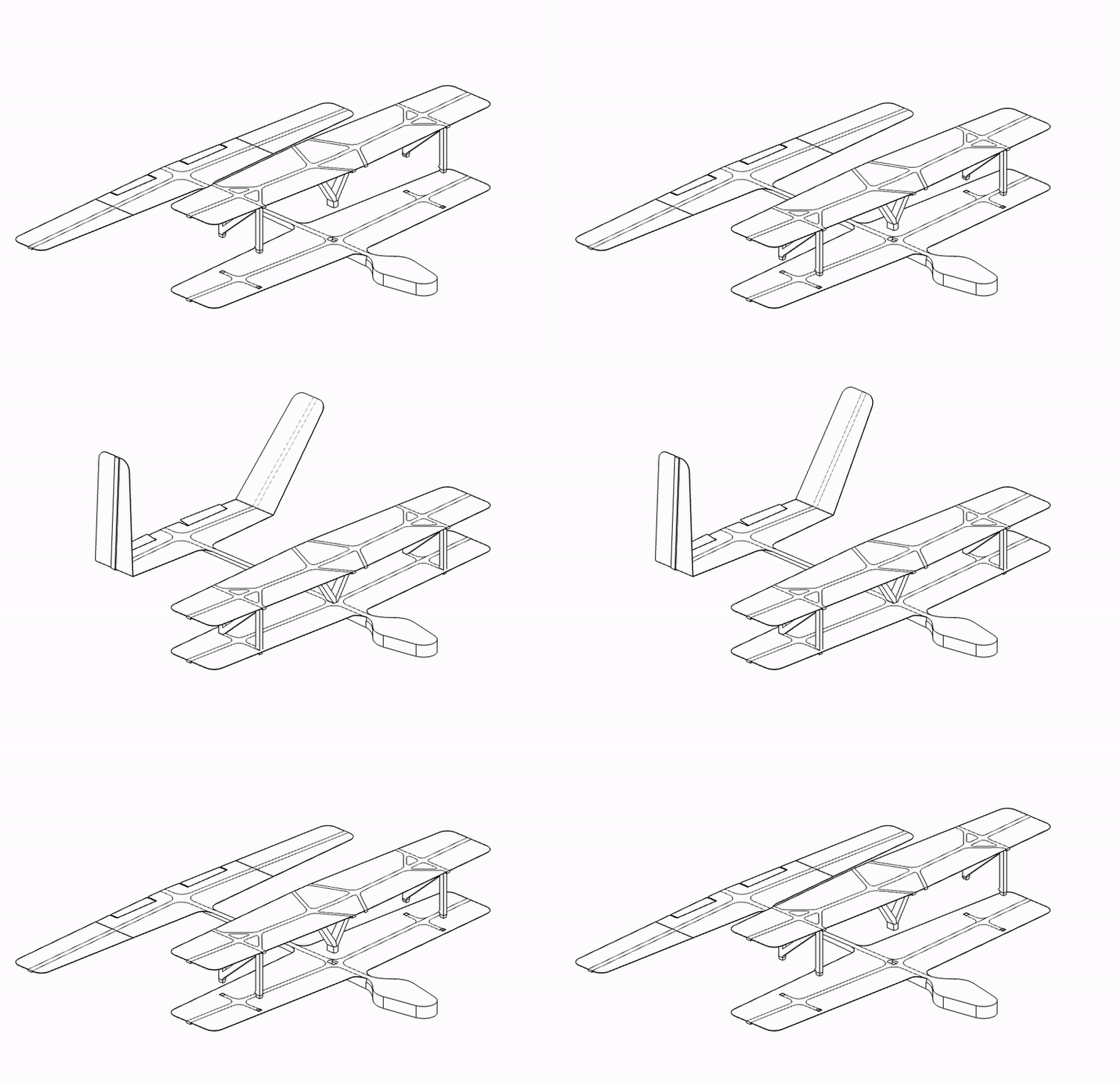
The model prints in PLA at 100% infill in 45 minutes.
There are two parts, the plane and wing. Remove both from the bed, being careful not the bend anything. The main structures of both wings will be facing towards the back wings at a 2.5 degree angle, make sure that the seperate wing is facing the right way when assembled.
To assemble, place the wing on a flat surface with the connections facing up. Carefully but forcefully press the plane down onto the center connection of the wing until it locks into place, and there is no gap between the connection and the plane. Pick up the wing with the plane attached and carefully press the 4 side connections into their respective slots, making sure not to bend the plane's wing. The tolerances are very close to ensure that the plane doesn't come apart during flight.
Next, fold up the two stabilizers fully and lightly fold up the elevators 15-25 degrees as shown in the GIF. Give the plane a light test throw like a dart. If it veers to one side, you didn't connect the wing carefully enough. This can be fixed by finding the bend in the wing and trying to correct it. If it flies straight, but goes up and then down, lower the elevators. You can optionally fold up the four ends of the wings slightly to change the look of the plane and increase its horizontal stability (Helps with incorrectly connected wing).
A textured PEI plate or glue is recommended, as the N shapes on the separate wing are difficult to print. This model slightly trades off the ease of use of previous models for much better looks, and while it can outperform v4, it was not specifically designed to. It took many iterations to fine-tune the tolerance and performance of the plane.