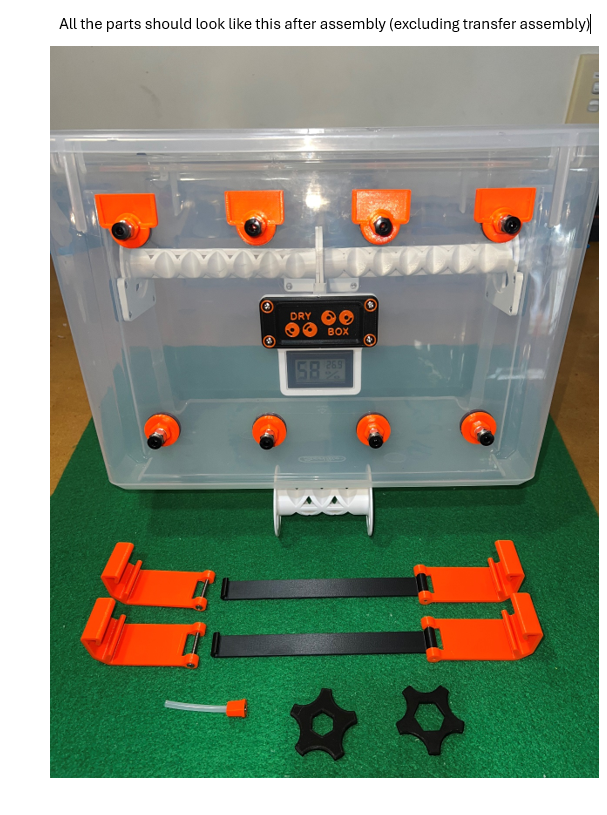
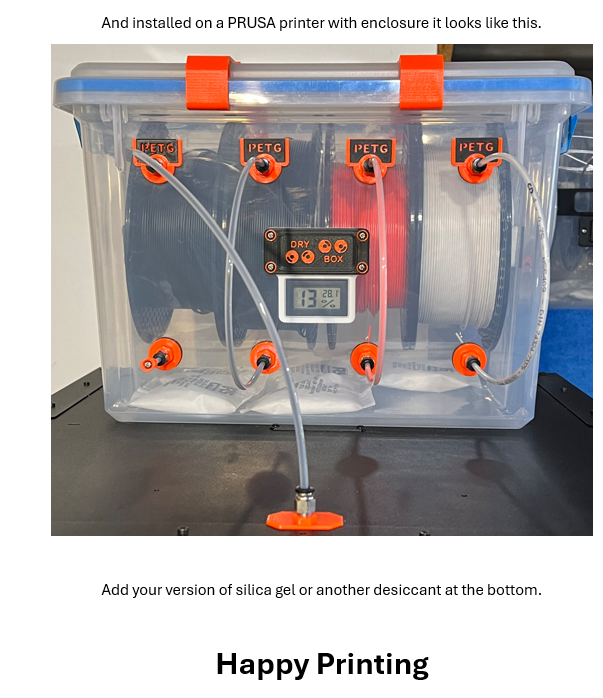
True Universal Drybox
We calculate the final price from your selected file. You review and accept it before payment.
Preliminary estimate for PETG
€0.76 – €0.93 net (excluding VAT)
For file: Clip_Tie_x_2_0.4n_0.2mm_PETG_MK4IS_43m.bgcode
This is an estimate for one file. You’ll confirm the exact price before ordering.
File and estimate settings
File used for this estimate
Average indicative estimate: €0.84 excluding VAT (range midpoint).
- Weight reported by the author
- 14 g
- Print time reported by the author
- 43.2 min
- Source material
- PET
- Estimate material
- PETG
- Estimate printer
- Bambu Lab P1S - 0.4 nozzle
- Estimate process
- 0.20mm Standard
Indicative estimate for the selected file only, based on the author’s weight and print time. File variants are not added together. The final price is calculated after file analysis.
Saved on this device.
I could not find a turnkey dry-box that sealed water tight while being usable in doing so. So, I designed one, enjoy.
- Rating
- 4.667 / 5
- Likes
- 375
- Downloads
- 443
- Makes
- 3
- Views
- 8,813
- Reviews
- 3
Updated at source:
Model information
- Source
- Printables
- Category
- Prusa Parts & Upgrades
- License
- Creative Commons — Attribution — Noncommercial — Share Alike
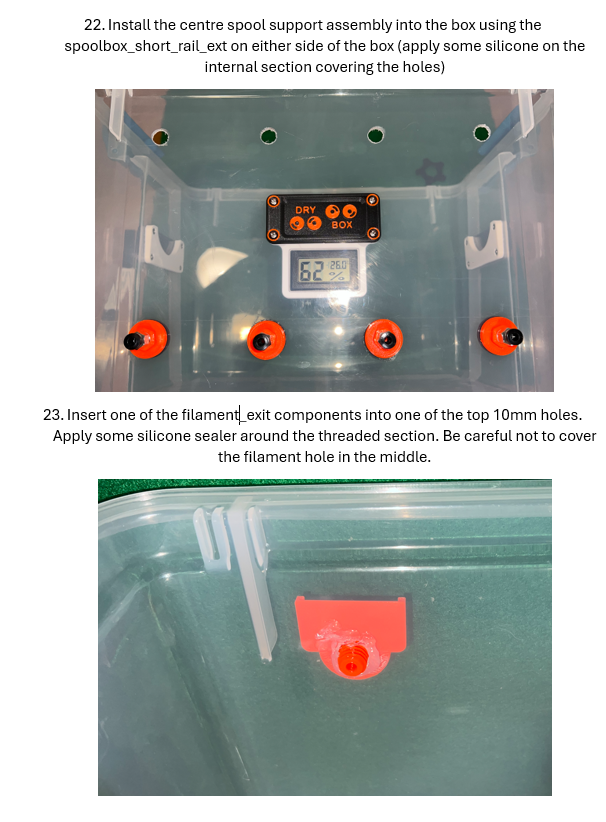
Makes swapping filament in a dry environment super easy. No more packing / unpacking spools when switching filament.
A drybox is needed for filament because most 3D printing filaments are hygroscopic, meaning they absorb moisture from the air, which can lead to poor print quality with issues like bubbling, stringing, and layer adhesion problems if not properly dried before printing; a drybox helps maintain a low humidity level to prevent moisture absorption and ensure consistent print results, especially for filaments like nylon, TPU, and PETG that are particularly susceptible to moisture.
Key points about using a drybox for filament:
When filament absorbs moisture, the water can turn to steam in the hot nozzle during printing, causing imperfections in the print.
Wet filament can lead to poor layer adhesion, surface irregularities, and even cracks in the printed part.
While most filaments benefit from being stored in a dry environment, some like nylon, TPU, and PETG are especially sensitive to moisture and should be permanently stored in a moisture deprived environment.
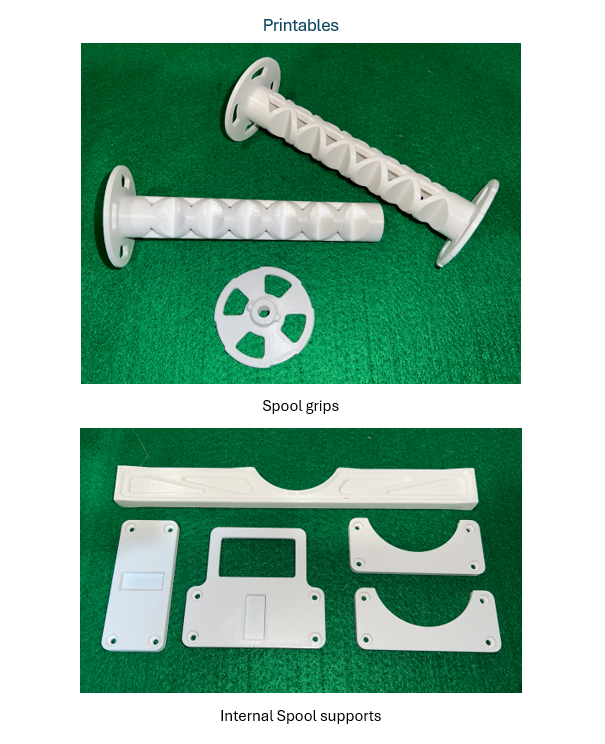
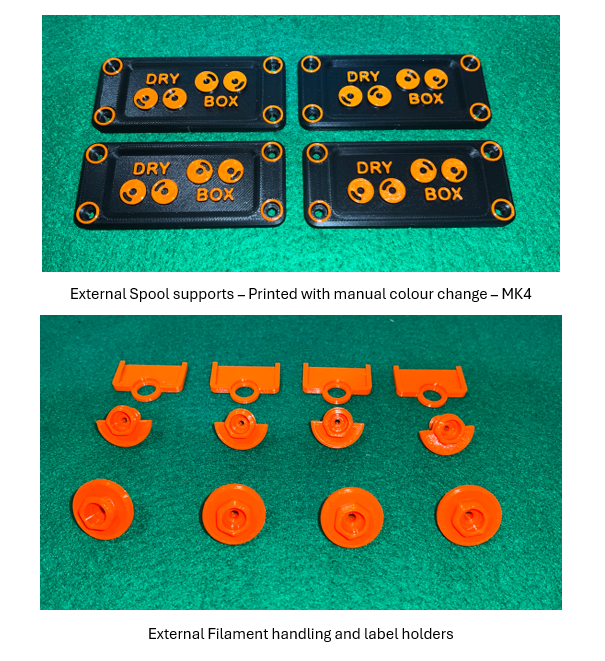
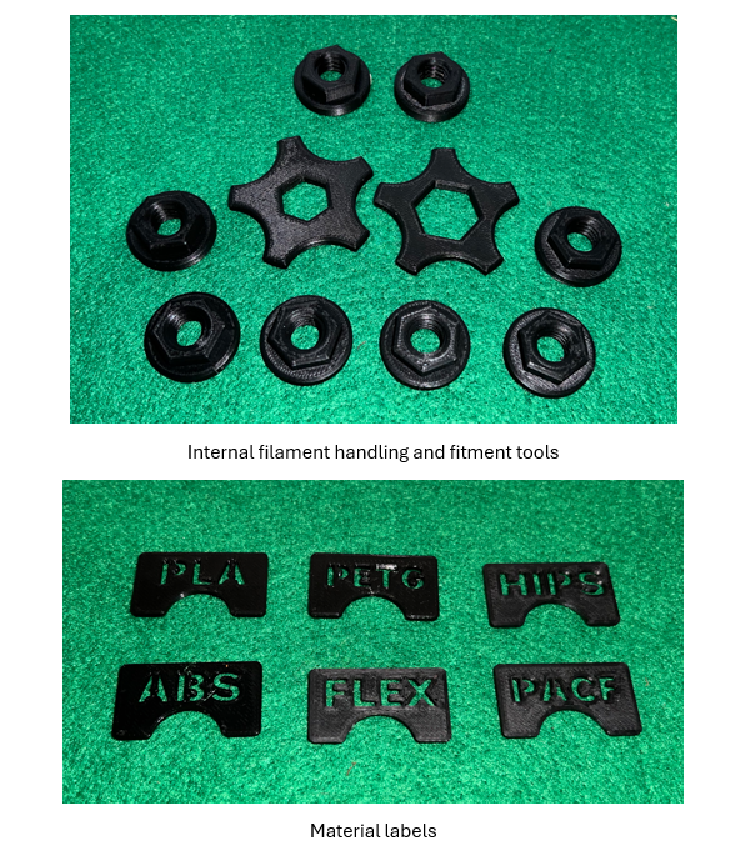
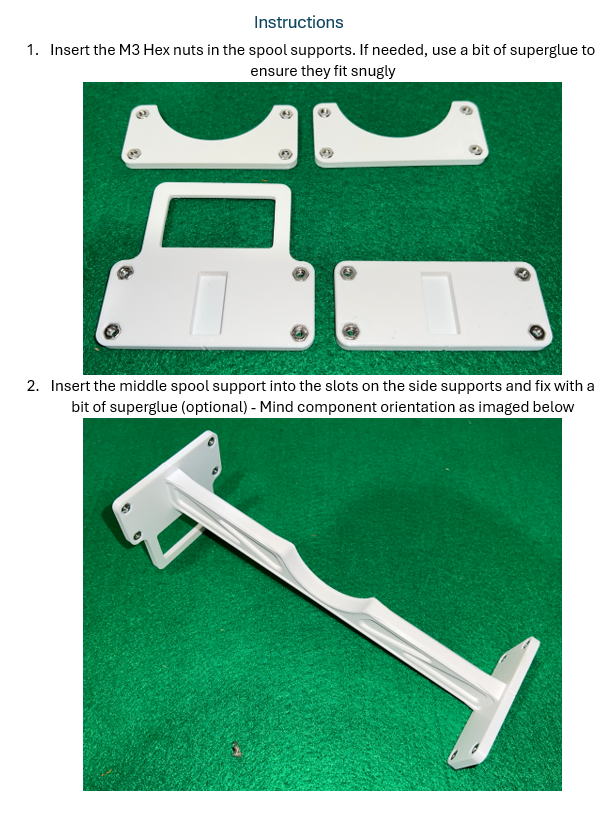
Components
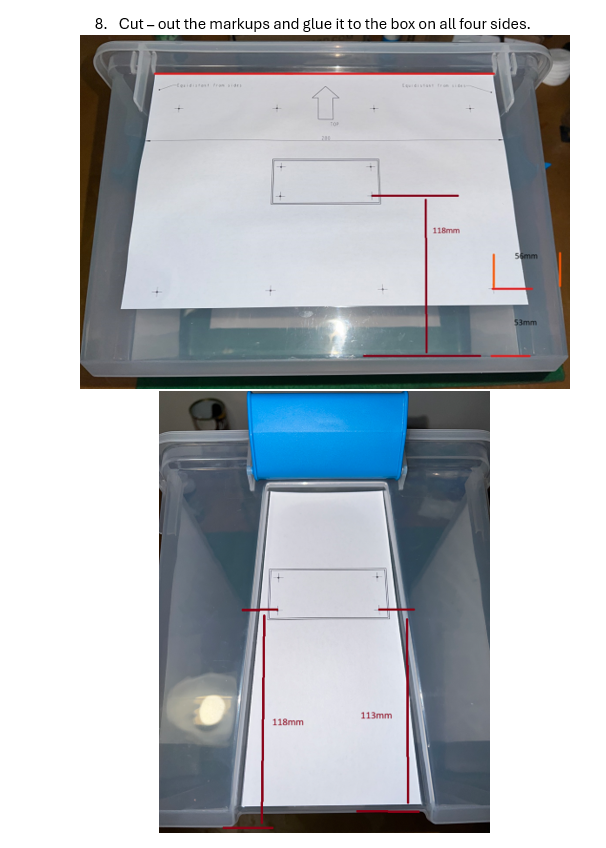
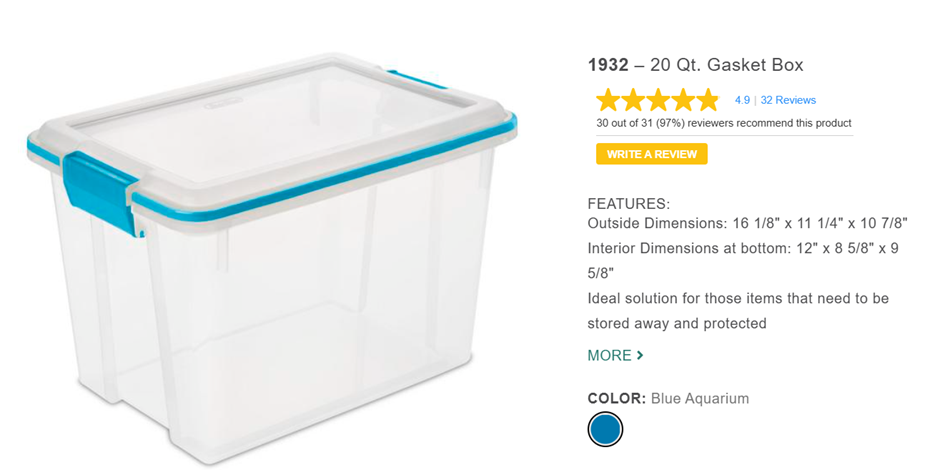
- 1 x Storage Box (Specific model required, Sterilite's Gasket Box, 1932 – 20 Qt ) Dimensions: 40.958 cm x 28.575 cm x 27.623 cm
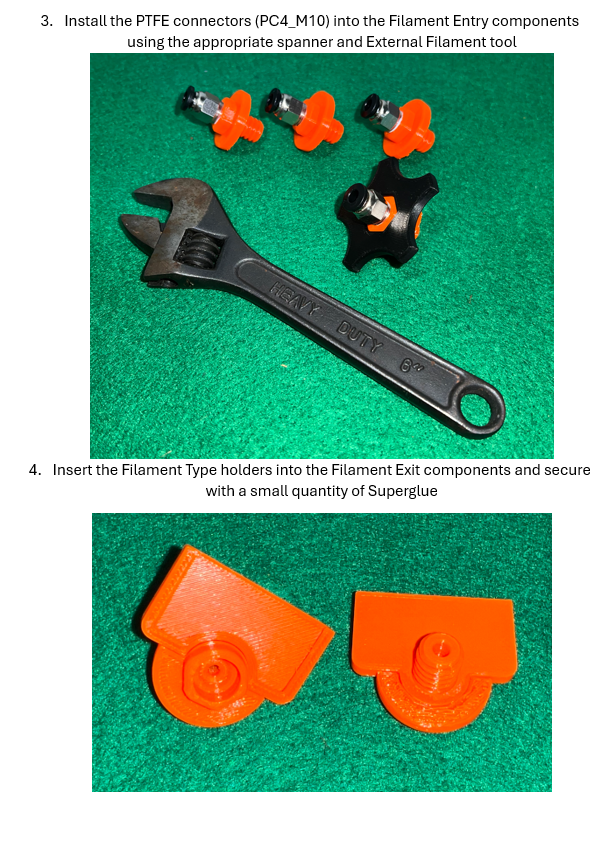
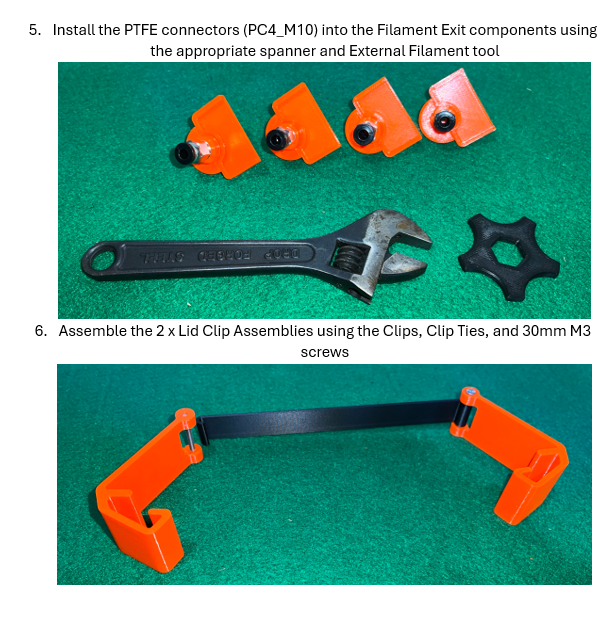
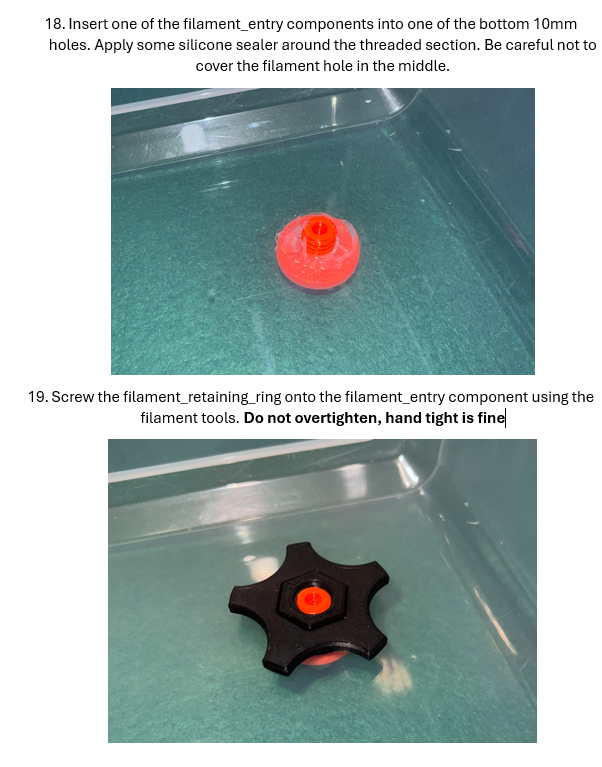
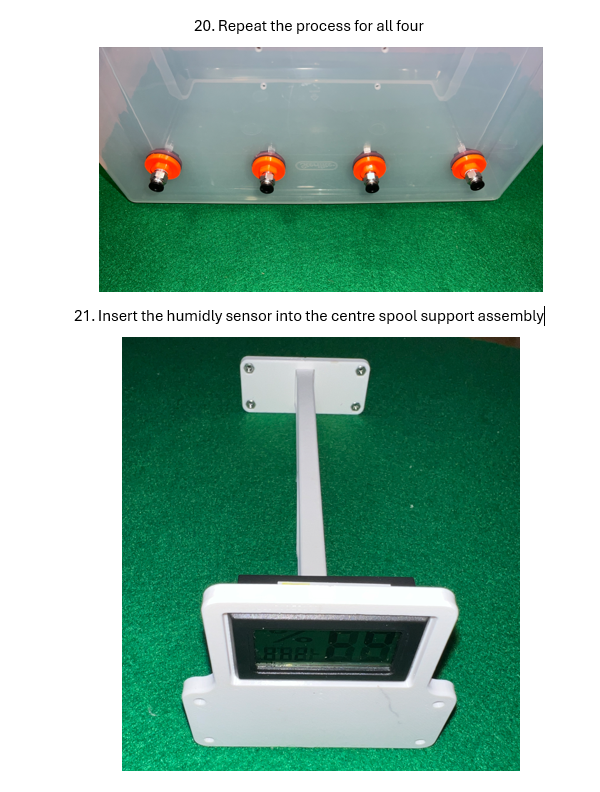
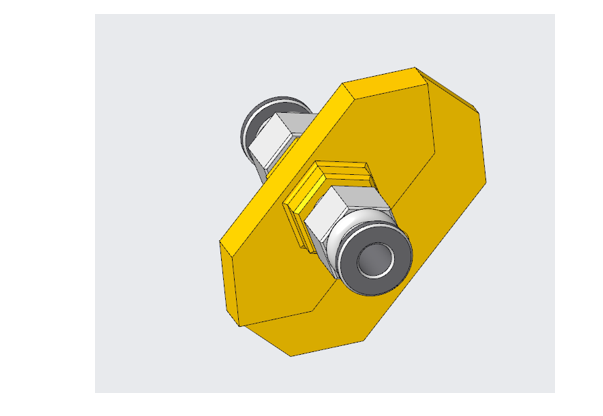
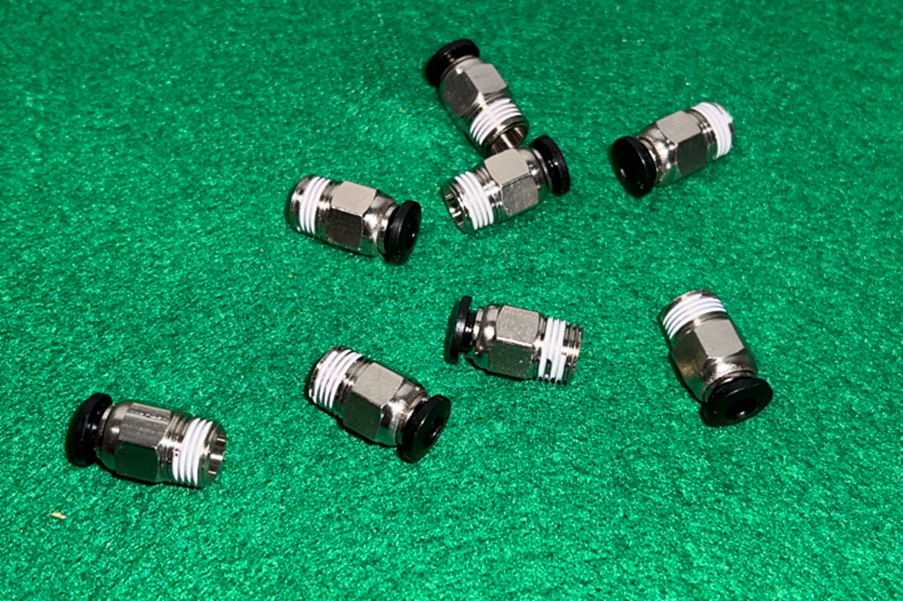
- 8 x PTFE PC4-M10 connectors (2 extra if Prusa enclosure interface is used)
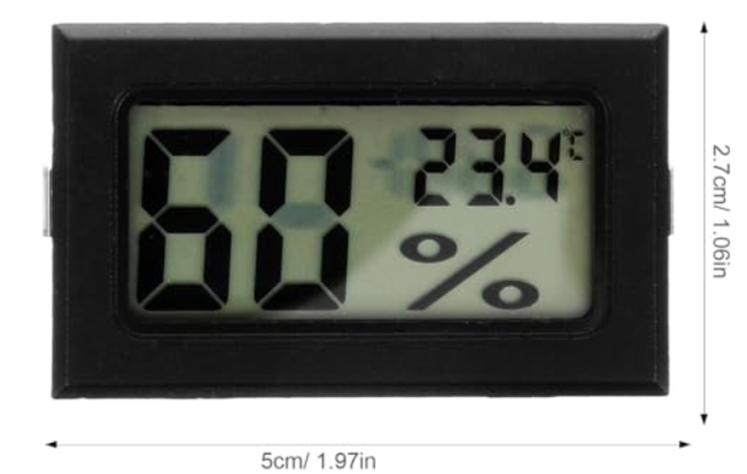
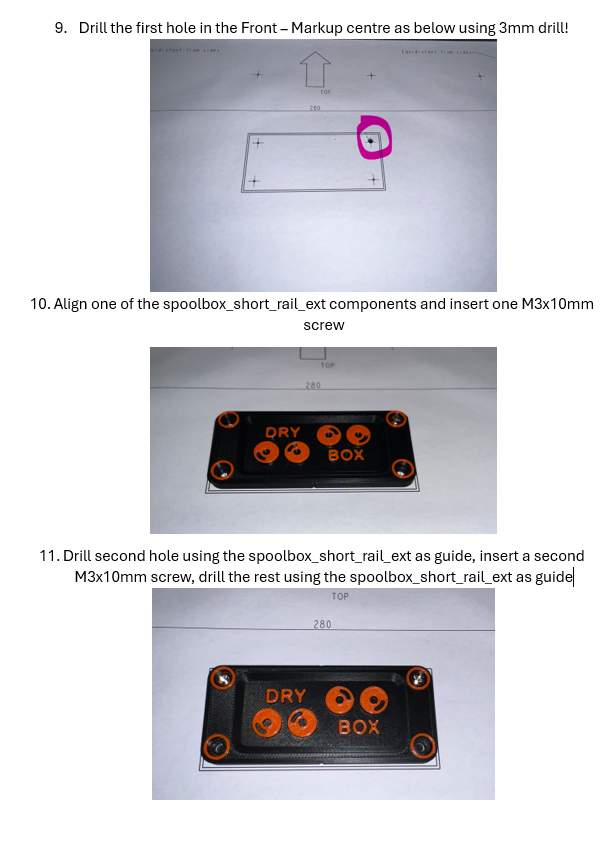
- 16 x M3x10mm Screws + 16 x M3 Hex Nuts (and a few extra for spare)
- 4 x M3x30mm Screws
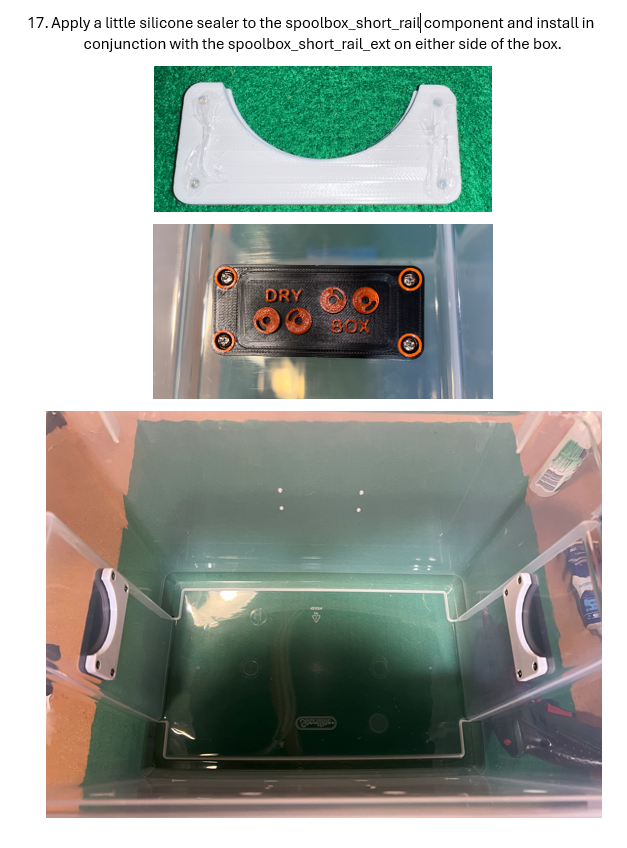
- Clear Silicone Sealer
- Glue stick
- Isopropyl alcohol
Tools needed
- Speed control drill (most handheld battery-operated drills will do)
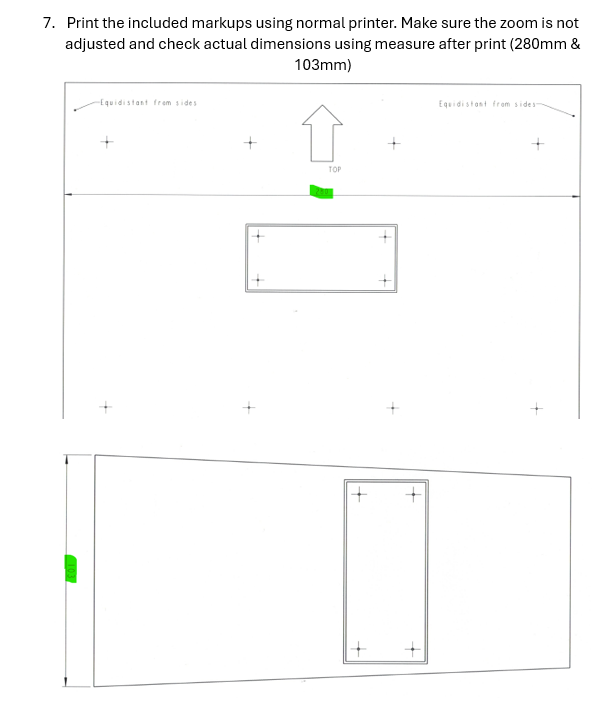
- 3mm steel/plastic drill bit
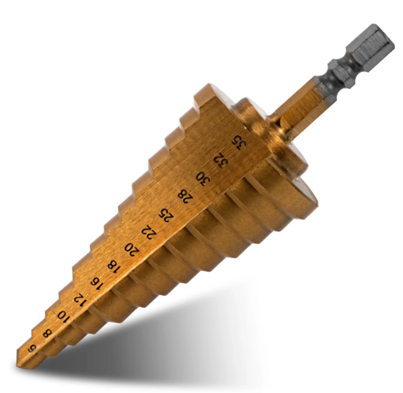
- Stepped drill bit (4mm to 10mm, 2mm steps maximum) or heat iron capable of making a 10mm hole in the storage box
- Philips Screwdriver
- 3D Printer PETG capable with at least 0.5mm tolerance and (230mm longest part, 160mm highest)
- A4 Printer