
Snatch Block
We calculate the final price from your selected file. You review and accept it before payment.
Estimated printing price per file
€1.40 – €1.71 net (excluding VAT)
For file: Snatch Block_0.2mm_PLA_MINI_1h29m.gcode
This is an estimate for one file. You’ll confirm the exact price before ordering.
File and estimate settings
File used for this estimate
Average indicative estimate: €1.55 excluding VAT (range midpoint).
- Weight reported by the author
- 21 g
- Print time reported by the author
- 1.48 hr
- Source material
- PLA
- Estimate material
- PLA
- Estimate printer
- Bambu Lab P1S - 0.4 nozzle
- Estimate process
- 0.20mm Standard
Indicative estimate for the selected file only, based on the author’s weight and print time. File variants are not added together. The final price is calculated after file analysis.
Saved on this device.

One of the most useful pulley systems in existence, now 100% 3D-printed and snap-fit!
- Rating
- 5 / 5
- Likes
- 72
- Downloads
- 269
- Makes
- 2
- Views
- 1,520
- Reviews
- 1
Updated at source:
Model information
- Source
- Printables
- Category
- Mechanical Parts
- License
- Creative Commons — Attribution — Noncommercial
I first learned about the power of the Snatch Block from Destin's SmarterEveryDay video - and I've been curious about putting together a printable design for one ever since - so this challenge was a perfect excuse. These are meant to be printed and snapped together using the Rod and Retaining Clip design I created a long while ago as part of my Ornithopter project.
If you're interested in understanding pulleys, and more specifically - the awesomeness that is the Snatch Block pully, check out SmarterEveryDay's video here:
Putting this this print together is a quick and easy process.
Step 1: Print one of each part - Plate A, Plate B, Pully, and Retaining Clip.
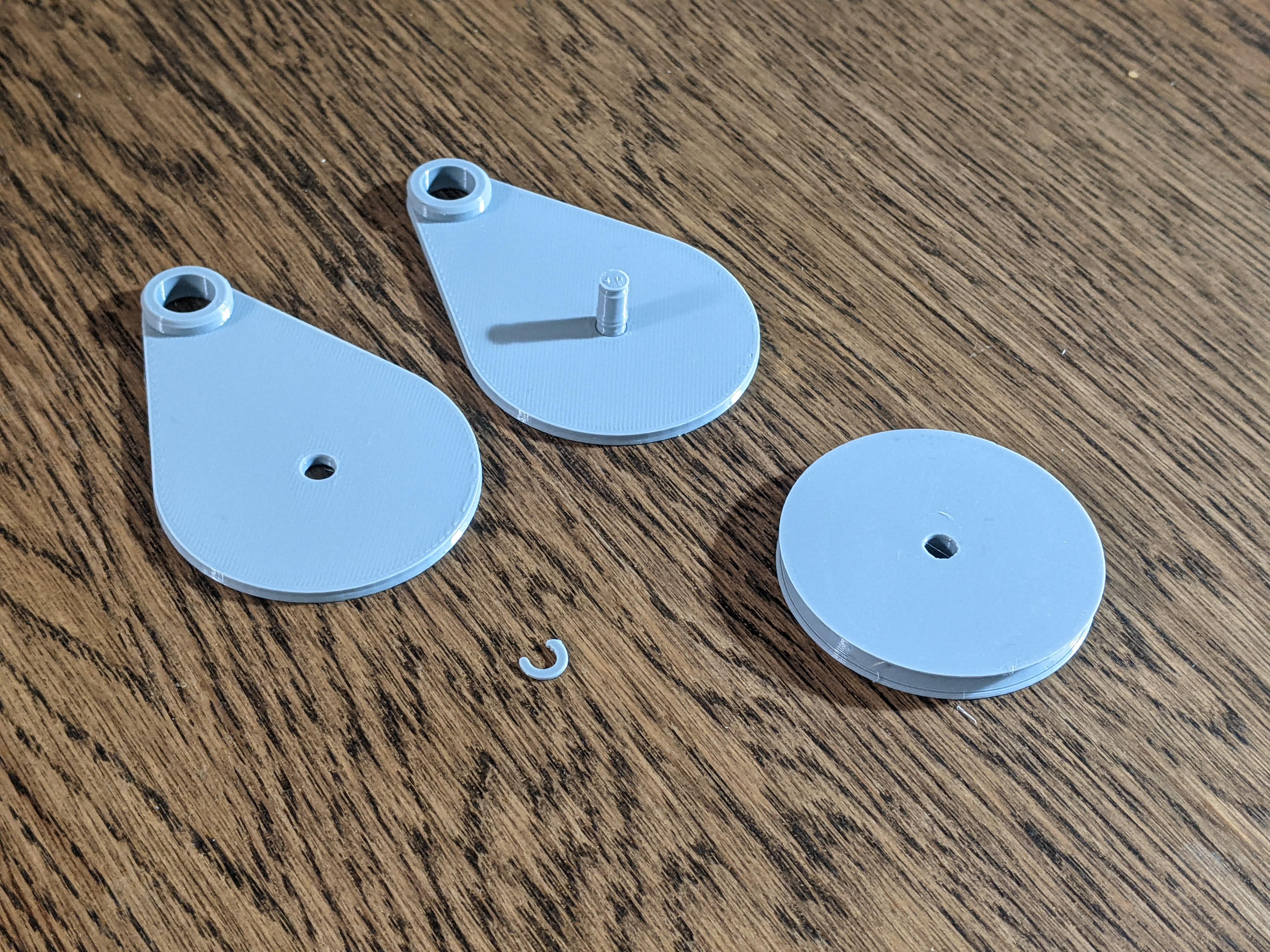
Step 2: Slot the Pully onto the rod of Plate A.

Step 3: Slot Plate B onto the rod of Plate A, ensuring the connecting rings of Plate A and B are facing each other.
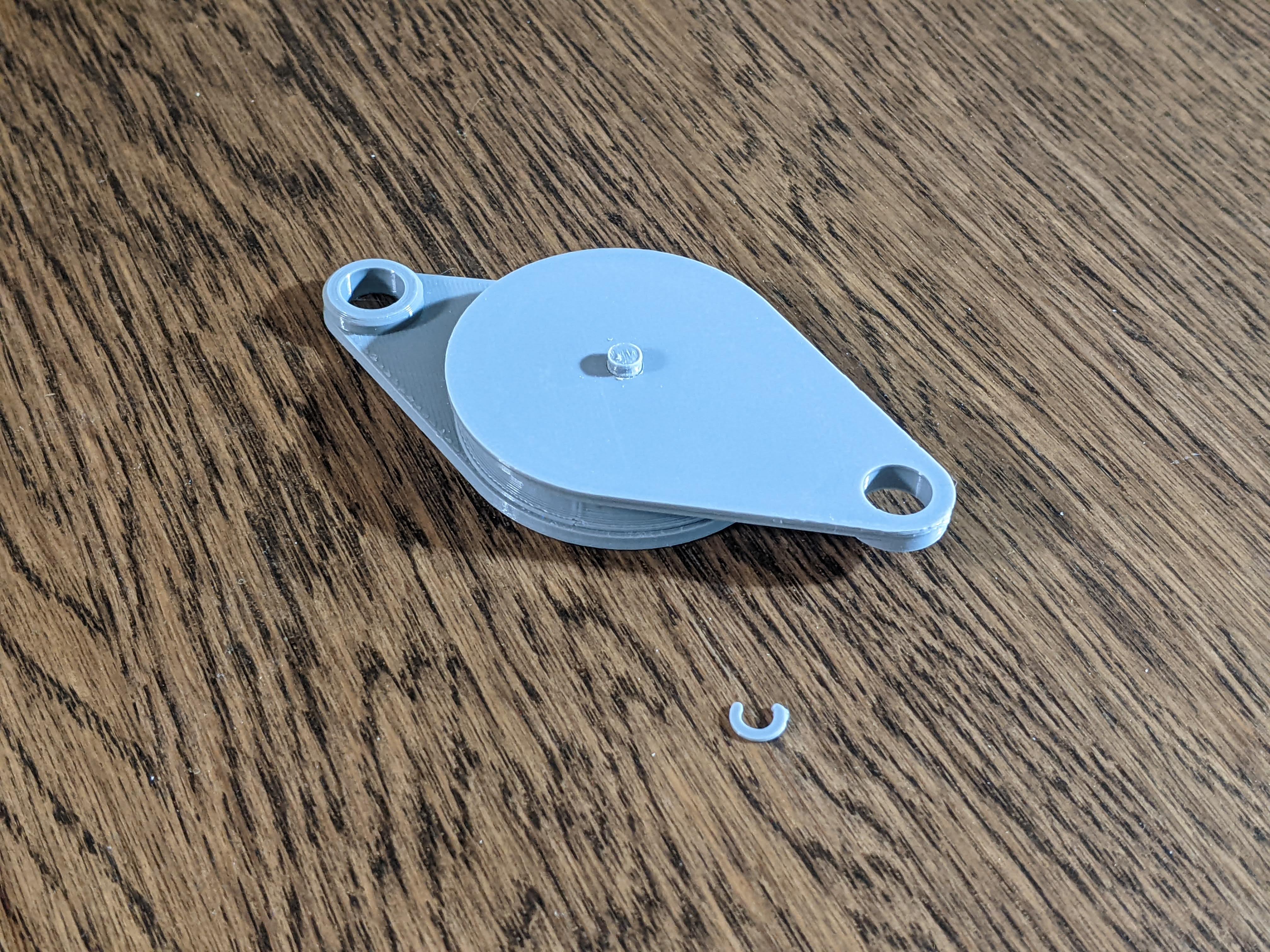
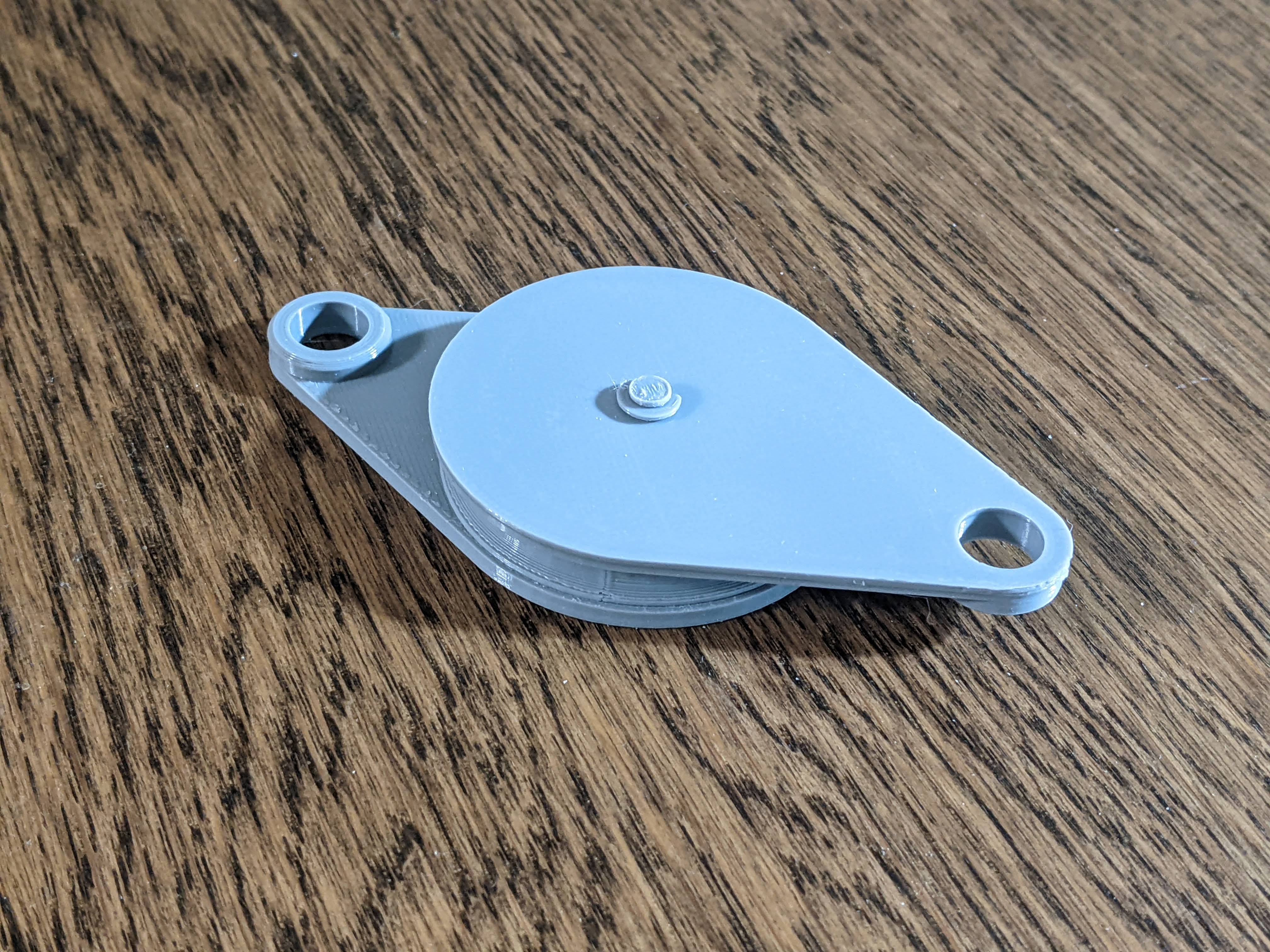
Step 4: Snap the Retaining Clip into place in the small groove in the rod of Plate A to lock the whole assembly together.
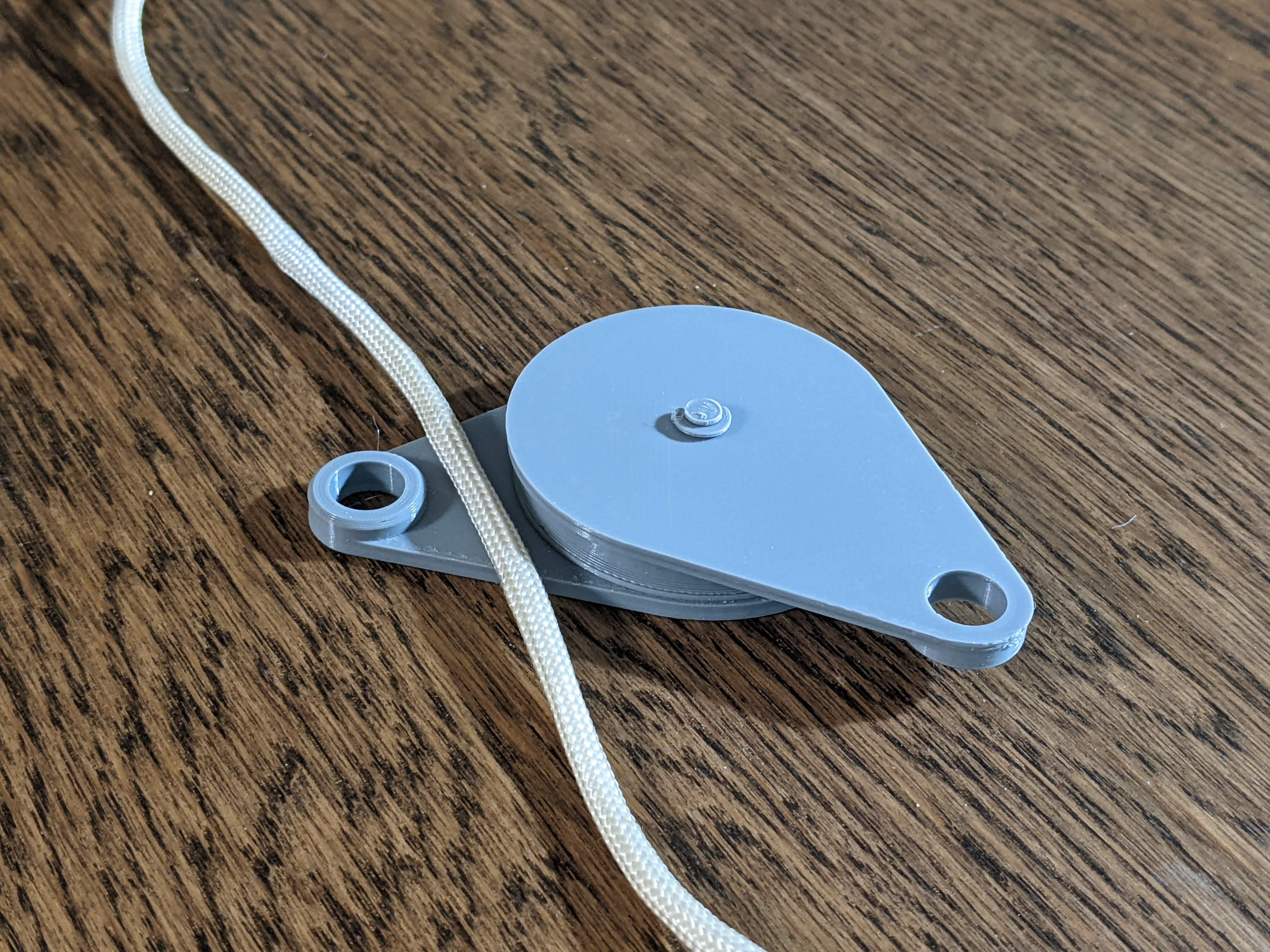
Step 5: Snatch a rope!

Safety warning: This design has not undergone any engineering analysis for strength or reliability, and the type of material you print it out of will significantly impact its mechanical properties. For these reasons, I strongly recommend against using this design for safety-critical or emergency applications. But for smaller (non-safety-critical) mechanisms, learning about mechanical efficiency, or for school projects, these should be great!
As always, I welcome comments and criticism, and I'd love to see your makes of these.