
Dehumidifier For Spools
We calculate the final price from your selected file. You review and accept it before payment.
Saved on this device.

A Cheap Silica Gel Alternative.
- Rating
- 0 / 5
- Likes
- 10
- Downloads
- 53
- Makes
- 0
- Views
- 412
- Reviews
- 0
Updated at source:
Model information
- Source
- Printables
- Category
- Accessories
- License
- Creative Commons — Attribution — Noncommercial — Share Alike
Details:
Silica gel is quite expensive with about 20-30 bucks per kilo. There are even versions that can change color that contain toxic chemicals like cobalt chloride and it's not as easily available as car and home dehumidifier. So I was looking into them as an alternative.
Household dehumidifier - Calcium Chloride
I did look into the safety information of a house dehumidifier the store had and figured out it is using calcium chloride. It's supposed to be even more efficient than silica gel and with a kilo price of around 2 bucks way cheaper.
The flaws are that it can't be regenerated and rather than storing the moisture itself it is converted into a liquid solution that needs to be collected. In fact the calcium chloride will completely dissolve into the liquid brine and “vanish”. Hence it's NOT a water container. It's a brine. It also can cause irritations, nothing too bad tho, but still be careful, especially if you know you got sensitive skin. Follow the local disposal guidelines. That might be different for you. Here it's just flushed down the drain. This should be mentioned on the packing anyway.
Car dehumidifier - Palygorskite
The handy car dehumidifier did cost about 7.5 bucks per kilogram and was palygorskite. It works similar to silica gel, it usually can be regenerated in e.g. a microwave (according to manufacturer) and stores the absorbed moisture itself. Sadly it has a lower efficiency than silica gel.
Conclusion
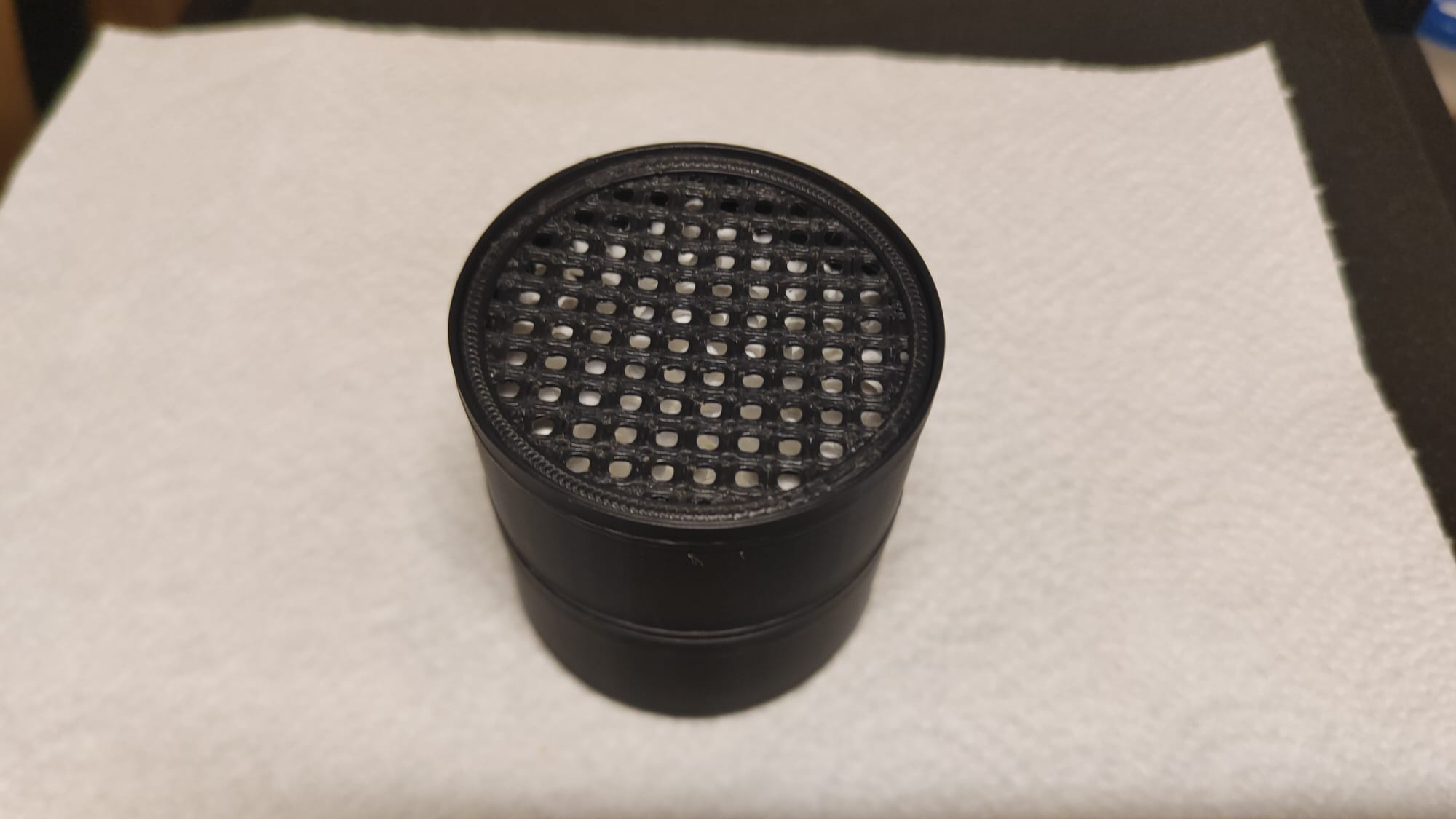
Nothing that did scare me off. So I designed a small container that basically works exactly as the bigger household ones with the measurements that it should fit pretty much any 1 kilogram spool.
Also this is what my store had. I'm sure there are more alternatives and not every household dehumidifier is calcium chloride and not every car dehumidifier is palygorskite. So check the safety information first.
Also according to my research the calcium chloride brine might have a negative impact on the 3d printed container or even on the filament if it gets in contact with it. I can't give you long term experience by now.
Print List
- 1x Lid
- 1x Pellet Container (for any)
- either closed sides
- some holes in the sides
- 1x Liquid Container (only needed for calcium chloride)
I noticed sometimes it seems like the vacuum might close the container itself, so I added some holes to the side. I keep both versions online.
Print Settings
Usually this doesn't require special settings, but… I did print it with a lot of filaments by now and I had one that had so little shrinking I guess, that it did not fit together, this required some work with a deburring tool. Also a too big elephant foot might might cause issues and might needs some compensation. I didn't have the latter so far.
Instruction
If you're using calcium chloride or any other agent that requires a liquid container, fill it up with paper towels, a sponge or sponge cloths.

Fill the pellet container and if you use a liquid container, put the pellet container on top of the liquid container. This should have a firm connection. I only used it with calcium chloride so far. it fit's about 35g of pellets. This would result in an approximately maximum moisture absorption of 140g water and create 175g brine. So the liquid container is clearly undersized, with approximately 50ml capacity. But I don't expect half a mug of water being in my bags. Also that way it lasts longer and doesn't need to be refilled but probably only emptied from time to time.
Side note: Even with palygorskite and silica gel being regeneratable that doesn't mean that your container is safe for e.g. the use in a microwave. Double check that with the manufacturer of your filament, the pellets and even the printer. With your microwave usually be used for food and this might not be food safe.

Close it off with the lid.
Put it into a vacuum bag along with your spool, close it and remove all air. Don't forget to put the unused pellets into another vacuum bag.
